7.3-Magnitude Earthquake Strikes Tonga, Triggering Tsunami Warning
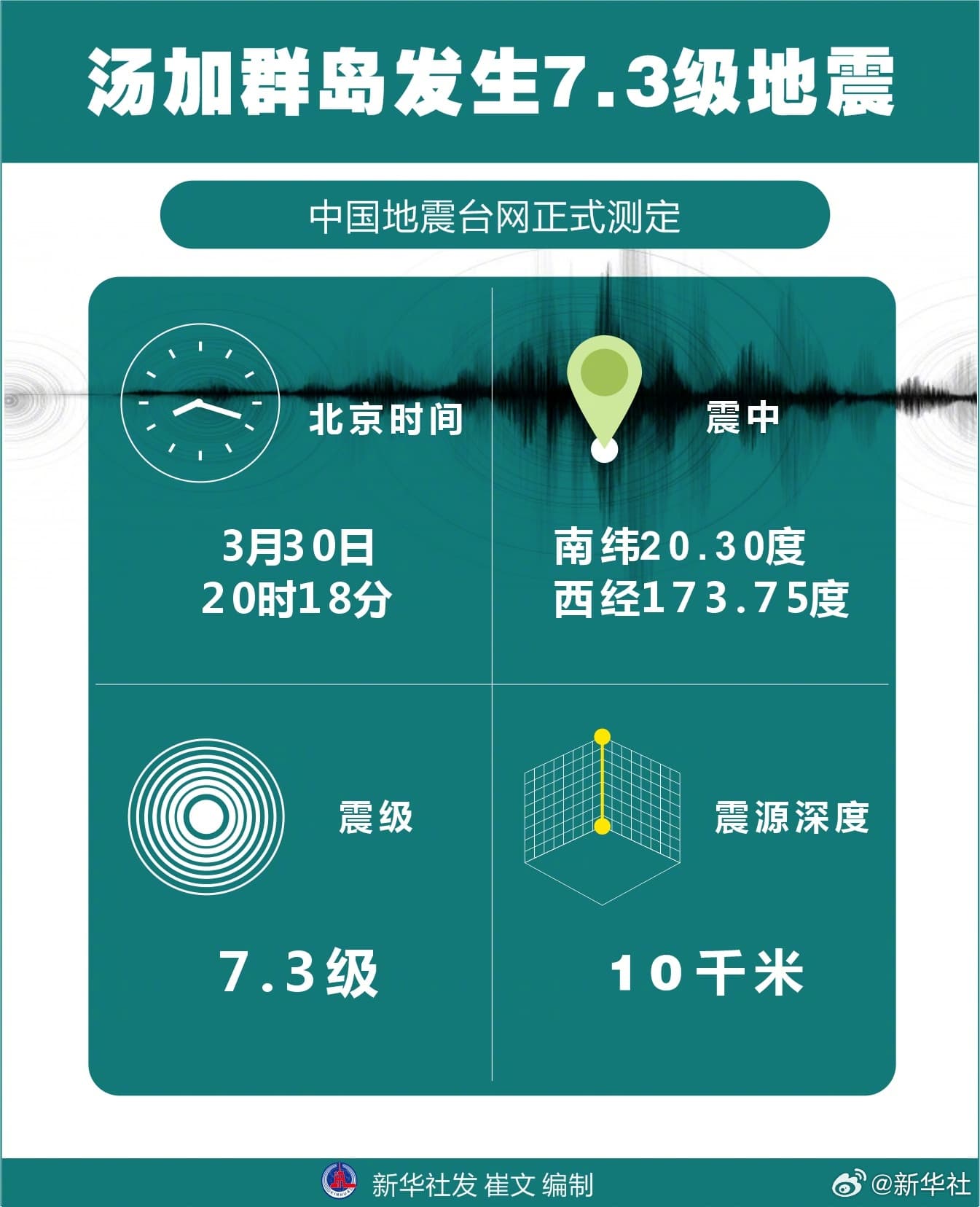
On March 30, at 20:18 local time, a 7.3-magnitude earthquake struck the island nation of Tonga, located in the South Pacific. The epicenter of the quake was determined to be at 20.30 degrees south latitude and 173.75 degrees west longitude, with a depth of 10 kilometers, although different agencies reported varying depths. The United States Geological Survey (USGS) recorded a depth of 58.6 kilometers, while the European-Mediterranean Seismological Centre reported a depth of 30 kilometers. The China Earthquake Networks Center officially measured the quake at 7.3 magnitude with a depth of 10 kilometers. The quake occurred approximately 127 kilometers southeast of Tonga's island of Pangai, according to the USGS.

30 March 2025
The earthquake may trigger a local tsunami in the surrounding areas, but will not affect the Chinese coastline, according to reports from the American Geological Survey and China's Natural Resources Department. The US National Weather Service's National Tsunami Warning Center has observed tsunami waves with heights possibly reaching 0.3 to 1 meter above tide level, affecting parts of Tonga's coastline. As of the latest reports, there have been no casualties or property damage reported. The Chinese Natural Resources Department's Tsunami Warning Center has stated that based on preliminary earthquake parameters, the earthquake could cause local tsunamis around the epicenter but will not impact China's coastline.
The international community has been swift to respond, with both the USGS and the European-Mediterranean Seismological Centre confirming the seismic event. However, there is a noticeable discrepancy in the reported seismic depths, with different agencies providing varying measurements. This discrepancy underscores the complexities involved in seismic data collection and analysis. The recent surge in earthquake frequency has sparked concerns within the community regarding the Earth's stability, echoing a broader public apprehension about the implications of increased seismic activity on the planet's geological balance and the potential repercussions for human societies and ecosystems.
In the aftermath of the earthquake, concerns have been raised about public safety, especially for those traveling to or residing in seismic zones. It is advisable for individuals to exercise caution and, if possible, avoid areas known to be earthquake-prone. The recent quake has also sparked discussions regarding the safety and durability of prefabricated buildings during seismic events, particularly the potential vulnerability of modular constructions to earthquakes. Questions have been posed about whether the prefabricated sections of such buildings could disconnect and collapse during strong tremors, posing significant risks to occupants. This issue highlights the need for stringent building codes and regular inspections to ensure that all structures, including those made from prefabricated components, can withstand earthquakes and protect the people inside.
As the region assesses the damage from the recent earthquake, it is crucial for local authorities and building experts to address these concerns, providing assurances about the safety of residential and commercial buildings. This includes conducting thorough inspections of prefabricated structures and implementing any necessary reinforcements to mitigate risks during future earthquakes. The safety of the public is paramount, and addressing these concerns proactively can help prevent potential disasters and save lives.