Moscow State University Moves to Repatriate a Student Who Wore a Rising Sun Flag in Class
A photograph of a Chinese student wearing a rising-sun-flag garment in a Moscow State University lecture hall has set off the week's angriest debate among Chinese students abroad. The university's Chinese students' association says the school has opened an investigation; circulating screenshots claim repatriation has already been ordered — but the official result is still pending.
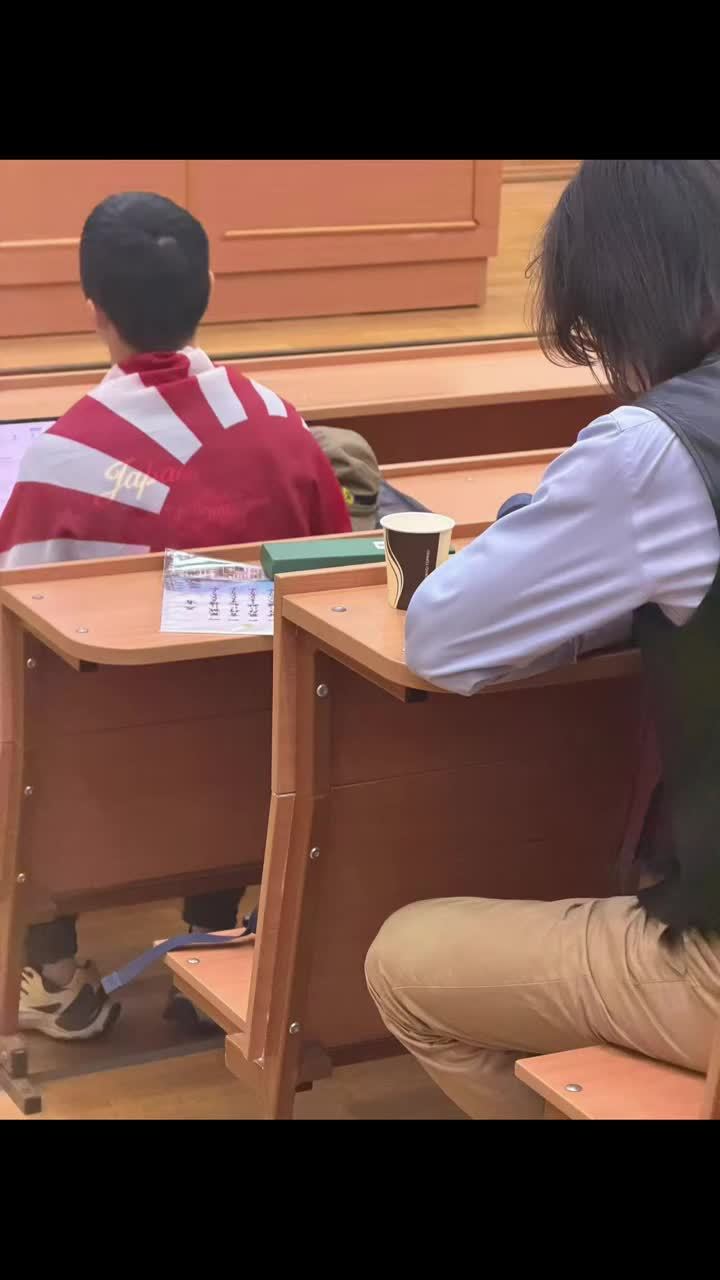
A photograph from a Moscow State University lecture hall — a Chinese student draped in a garment patterned after the Japanese rising sun flag — has become the most inflammatory story of the week among Chinese students abroad, and the university's response has moved faster than most.
For Chinese readers the symbol needs no explanation: it is the flag of the army that invaded China, and the student is reportedly from Nanjing, a city whose wartime massacre left more than 300,000 dead under that flag, and is studying history — a detail that has made the disbelief sharper.
On October 17 the university's Chinese Students and Scholars Association issued a formal statement: after the images spread, it says, the association verified the facts and gathered evidence, approached the university repeatedly to demand serious handling, and reported the case to the education office of the Chinese embassy in Russia. The university has opened an investigation, with results "to be announced soon." The association stressed that this was one student's "extremely wrong individual behavior" that does not represent Chinese students at the university, condemned it as an offense to national feeling and to the war dead, and — notably — paired the condemnation with a call for students to express their anger "rationally."
What has moved the story from condemnation to consequence is a chain of screenshots, not an official announcement. A widely shared post by a Chinese student at the university (@南归孤夷) claims the school has already started repatriation procedures and that the dean's assistant confirmed the student would be sent back to China. One circulating chat message reads: "The assistant to the dean stated that he will be repatriated today," and says a joint letter from history students was submitted to the dean's office in written form. A document quoting the university's ethical code, in Russian, is also circulating among students. None of this is confirmed by the university itself; the association's own statement says only that the investigation is underway.
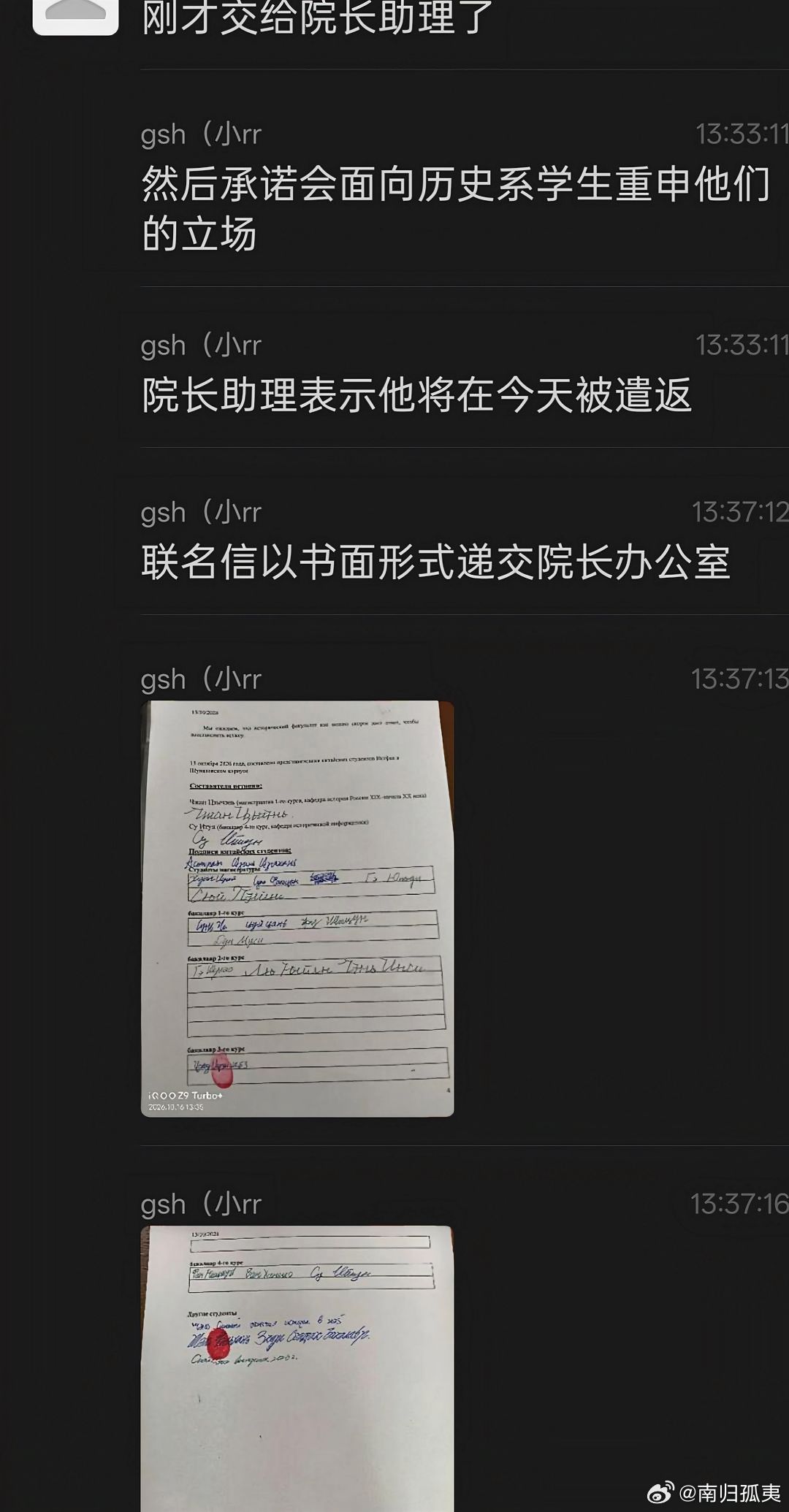
The post also carries a detail that has itself become an argument: some Chinese students, it says, refused to sign the punishment document — for reasons that are unclear. Whether that reflects procedural doubt, sympathy, or something else, nobody is saying. The student has apologized, but the post's author, like many commenters, reads the apology as fear of losing a future rather than remorse.
Beyond the expulsions-and-flags argument, the discussion has widened: whether universities should add historical-education consequences at home for students sent back, and how military-era symbols keep being repackaged online as subculture or fashion. The association has promised to "watch the outcome to the end." The university's formal result — the only statement that will settle what actually happens — has not yet been published.