Pregnant Celebrity Fang Yuan Spotted Dropping Off Daughter at Hong Kong School, Earns Praise for Authentic Motherhood
When morning commuters in Hong Kong caught a glimpse of a heavily pregnant woman stepping out of a taxi outside a primary school, they were not surprised by the scene’s celebrity aura – they recognized Fang Yuan, the wife of Cantopop icon Aaron Kwok, known locally as “the Heavenly King.” What made the moment newsworthy, however, was not the star power on display but the ordinary nature of the chore: dropping off her daughter at school while eight months pregnant with her third child.

20 August 2025
The incident, first reported by local Hong Kong media outlets, unfolded at roughly 7 a.m. on a weekday. Fang, who has been publicly known as “Moka Fang” in recent years, was seen waving a taxi driver goodbye after delivering her daughter – a girl described by on‑lookers as unusually tall for her age – to the school gate. She then climbed into her own vehicle and headed home, still dressed in a flowing long dress and a pair of Chanel‑branded slippers. The sight of a near‑term mother handling a typical school run without a personal driver or nanny sparked a flurry of commentary across China’s biggest social platform, Weibo.
Netizens reacted overwhelmingly positively, praising what many saw as a display of genuine motherhood. One commenter wrote, “方媛尽职尽责的好妈妈,太羡慕2个女儿了,” which translates to, “Fang Yuan is a conscientious good mother – I’m so envious of her two daughters.” Another added, “方媛为孩子的付出真的肉眼可见,” meaning, “Fang Yuan’s dedication to her children is truly visible.” The admiration was not limited to her parental devotion; her poised appearance attracted its own chorus of compliments. Users noted she was “穿着小香拖鞋,一袭长裙优雅松弛” – “wearing Chanel slippers, a long dress, elegant and relaxed” – and marveled that she remained “怀着三胎还能这么美,” or “still so beautiful while pregnant with her third child.”
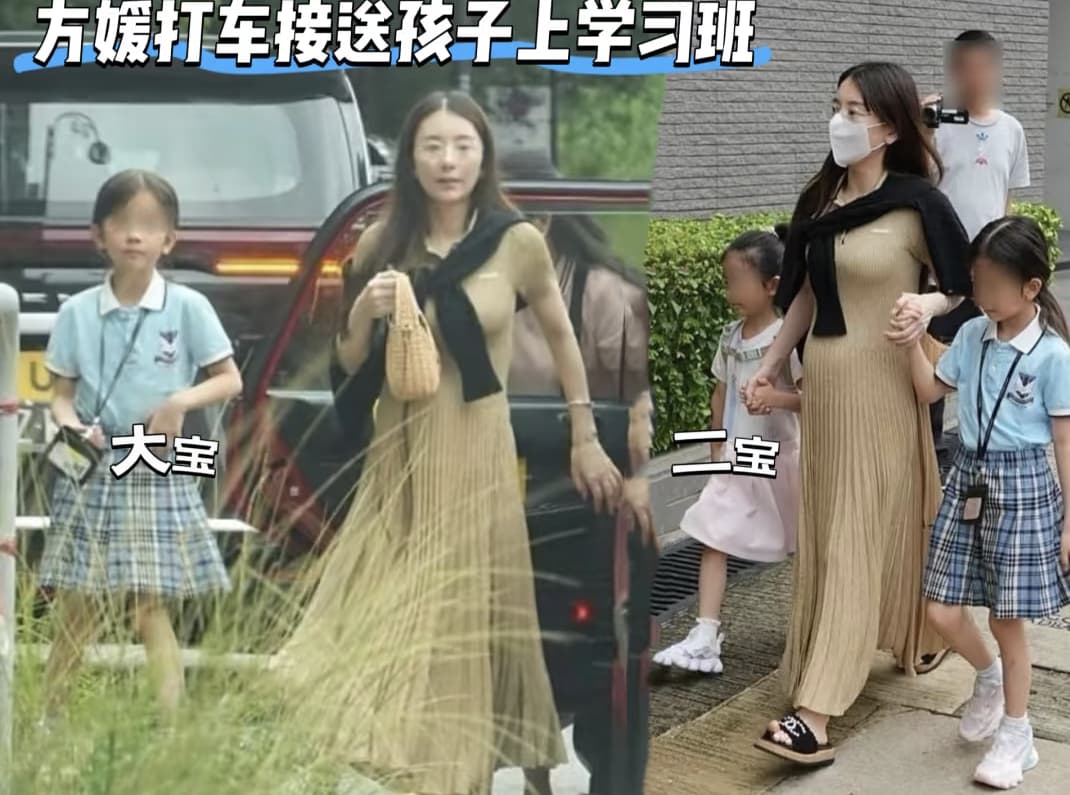
A secondary current of the discussion was light‑hearted surprise at the choice of transport. Several users joked that a family of Fang’s stature would normally have a driver on call, quipping, “像她们家这种条件应该都配有司机保姆啥的!不用打车的吧!” (“Given their family’s resources, they should have a driver and nanny! No need to take a taxi, right?”). The tone, however, remained affectionate rather than critical, underscoring a broader public fascination with moments when celebrity lives intersect with everyday routines.
The episode has been framed by observers as a glimpse into the evolving expectations placed on the rich and famous. In a culture where celebrity authenticity is increasingly prized, the simple act of hailing a cab is read as a signal of down‑to‑earth values. While Fang’s wardrobe – designer slippers and a tailored dress – unmistakably reflects her affluent background, the decision to use a public taxi rather than a private car staffed with a driver suggests a willingness to engage in commonplace tasks, a quality that resonates with fans and casual observers alike.
Commentators also note how the incident subtly reshapes the archetype of the “wealthy mother.” Traditionally, affluent mothers in East Asian pop culture have been depicted as distant figures surrounded by staff, their parenting role relegated to a symbolic presence. Fang’s hands‑on approach – physically escorting her daughter to school while navigating a third trimester pregnancy – projects an image of a mother who, despite privilege, remains directly involved in day‑to‑day childcare. The visual of her in elegant attire, yet performing a routine school drop‑off, blends luxury with relatability, offering a modern template for aspirational motherhood that balances personal style with parental responsibility.
Beyond the social media buzz, the story illustrates the power of digital platforms to amplify seemingly mundane events into cultural talking points. In a few hours, a brief sighting turned into a trending topic, generating hundreds of thousands of comments and reshaping Fang’s public persona. For entertainment industry analysts, such moments are valuable currency: they humanize stars and foster a sense of connection between celebrity and audience, potentially bolstering fan loyalty and media coverage.
No political or industry‑specific ramifications have emerged from the episode. Its significance lies principally in the way it reflects attitudes toward celebrity authenticity, parental devotion, and the negotiation of public image in the age of social media. As the story continues to circulate, it offers a reminder that, even for luminaries like Fang Yuan and her husband Aaron Kwok, the ordinary moments of family life – a taxi ride to school, a hurried wave goodbye – can capture the public imagination in profound ways.
Share this article
Related Articles

Ruby Lin Says She and Wallace Huo Are Still “Adjusting” After Seven Years, Igniting Viral Debate on Celebrity Marriages
By Trending on Weibo
Entertainment
15 Sept 2025

“Too Much Qi”: A Light‑hearted Joke on ‘Sisters Who Make Waves’ Sparks Celebrity Smear Campaign, Wellness Debate and Online Meme Frenzy in China
By Trending on Weibo
Entertainment
15 Sept 2025
Li Ronghao’s Tour Surge, New Video Release, and NFC Album Glitch Spotlight Quality‑Control Challenges in China’s Pop Scene
By Trending on Weibo
Entertainment
13 Sept 2025
Mu Zhicheng Emerges as TF Entertainment’s Hottest Trainee Amid Viral Social‑Media Surge and Anticipated Debut
By Trending on Weibo
Entertainment
13 Sept 2025
China’s Emerging Acting Sensation Zhang Kangle Poised for High‑Profile Film, Fashion, and Digital Stardom
By Trending on Weibo
Entertainment
13 Sept 2025