Spring Airlines Embroiled in Controversy Over Expired Peanuts and Confidentiality Agreements
A recent incident has sparked controversy and passenger dissatisfaction with Spring Airlines, a Chinese airline, after a passenger claimed that the airline provided expired peanuts to passengers on board flight HO1256 from Urumqi to Shanghai Hongqiao. The peanuts were allegedly 10 days past their expiration date, with a production date of August 13, 2024, and a shelf life of six months. When passengers discovered the issue, the flight attendants offered a compensation of 1,000 yuan (approximately $140 USD) per person, but with a condition: passengers had to sign a confidentiality agreement.
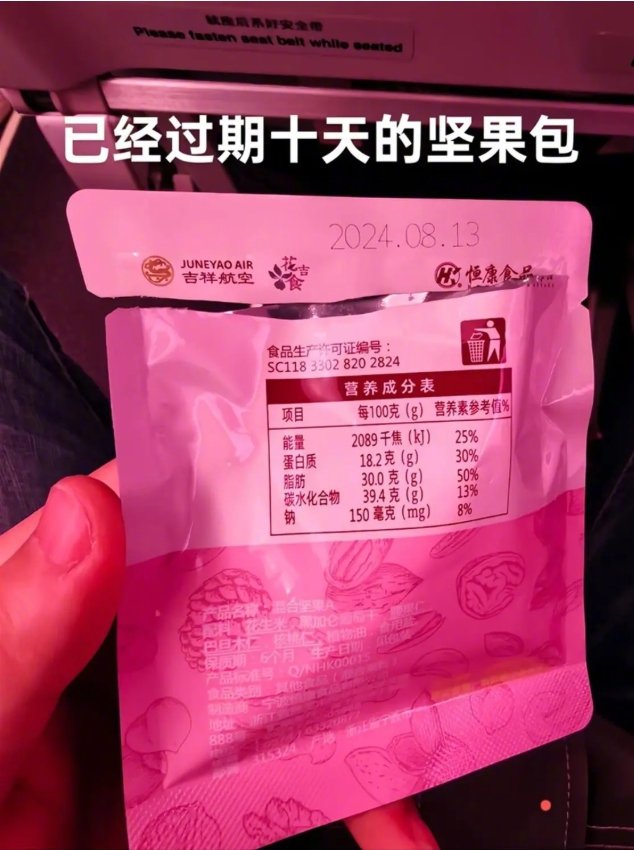
The incident has raised concerns about food safety and the airline's handling of the situation. Many passengers reportedly signed the agreement, but some refused, including the passenger who first reported the incident. The passenger who spoke to the media claimed that they were asked to sign the agreement before being allowed to disembark the plane and that they were hesitant to provide their ticket information to the airline for fear of repercussions on their future flights.
In response to the incident, Spring Airlines has apologized and confirmed that the expired peanuts were indeed distributed to passengers. The airline has stated that it has taken immediate action to investigate the incident and has implemented measures to prevent similar incidents from occurring in the future, including re-examining its snack distribution process and strengthening its supervision mechanisms. However, the airline's requirement for passengers to sign a confidentiality agreement in exchange for compensation has been met with criticism, with some experts arguing that such agreements are invalid and that the airline should prioritize transparency and accountability.
The controversy surrounding the airline's handling of the incident has sparked debate among passengers and experts alike. Passengers have taken to social media to express their concerns and frustrations, questioning the airline's decision to offer a settlement in exchange for a non-disclosure agreement. Many have deemed this approach as unacceptable, arguing that the airline should take responsibility for their actions and provide a transparent explanation for the incident. According to an aviation lawyer, the provision of expired food on a flight is a serious offense that violates China's Food Safety Law and Consumer Protection Law, and the airline's request for passengers to sign a non-disclosure agreement in exchange for compensation is "unacceptable and lacks legal validity."
The incident has also sparked a wider discussion about food safety in the aviation industry. Experts argue that airlines have a responsibility to ensure that the food they serve is safe and fresh, and that any failure to do so can have serious consequences for passenger health and safety. The Civil Aviation Administration of China has strict regulations in place to ensure food safety, and airlines that fail to comply can face severe penalties.
The incident has sparked widespread outrage on social media, with many netizens expressing indignation and concern over the airline's alleged prioritization of cost-cutting over passenger health. Many have taken to Weibo to voice their discontent, criticizing the airline's reported attempt to silence passengers by requiring them to sign a non-disclosure agreement before departing, calling it "arrogant". The incident has led to calls for greater scrutiny and regulation of airline food safety and corporate accountability, with netizens demanding that authorities take action to ensure that airlines prioritize passenger health and safety above profits, and that such incidents are thoroughly investigated and addressed to prevent similar occurrences in the future.