Starbucks China Rolls Out a 'Purchase to Sit' Policy Nationwide
From October 20, Starbucks cafés across China will display signs asking people to make a purchase before taking a seat — a quiet recalibration of the free 'third space' that built the brand's reputation here. Staff say riders, pregnant women and others with real needs can still sit without buying, and baristas are the ones most uneasy about enforcing it.
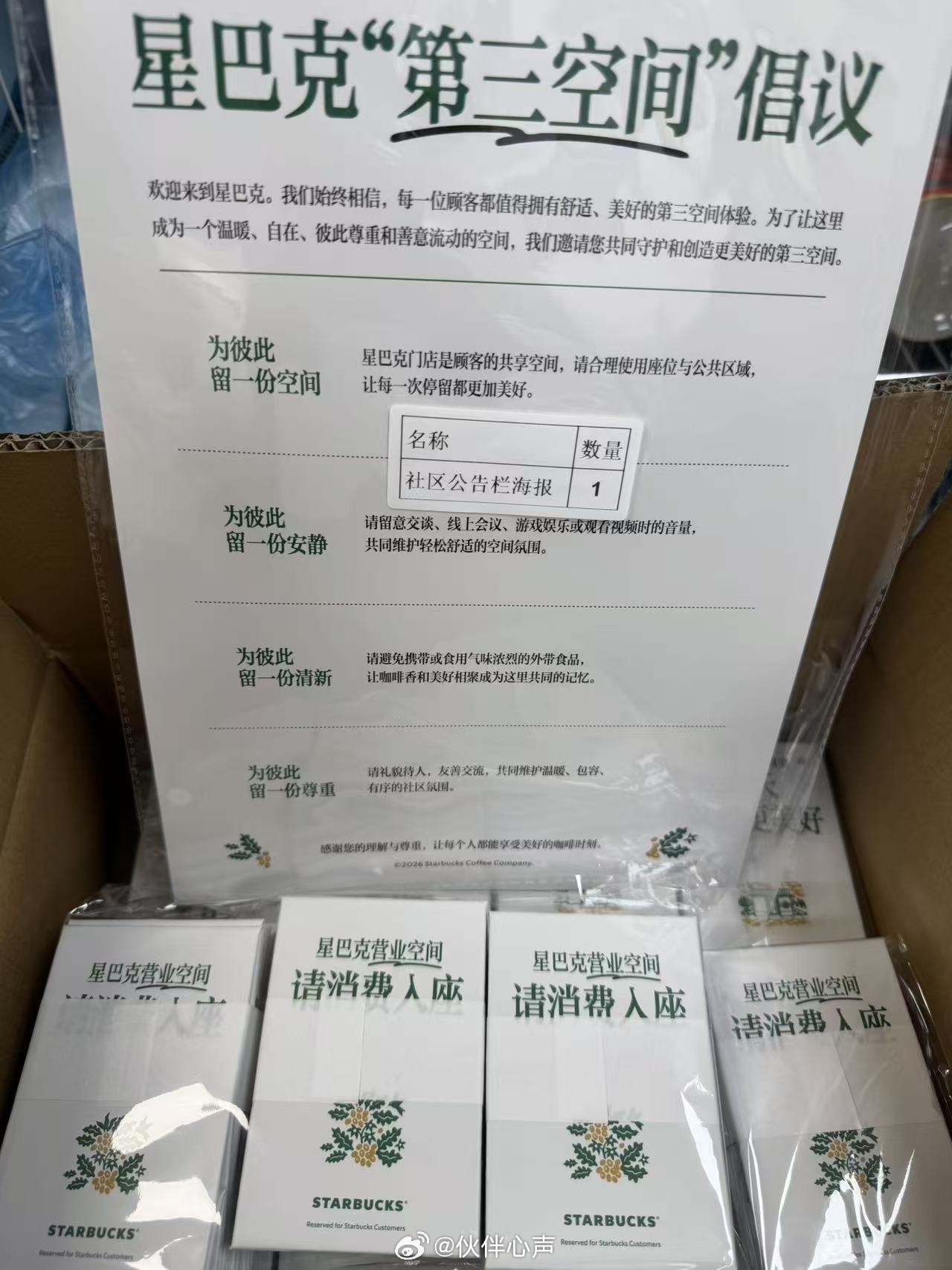
The evidence arrived in sealed boxes: a poster titled "Starbucks 'Third Space' Initiative," stacked above table cards that read "Starbucks business space — please make a purchase to sit." When photos of the unopened material spread across Weibo this week, the country's most ubiquitous café chain confirmed what they implied. Staff told Jiupai News, which visited stores posing as customers, that the policy had reached their locations this month and would take effect nationwide on October 20.
The rule is deliberately not a blanket one. Delivery riders, passers-by sheltering from rain, security guards on duty nearby and pregnant women can all sit down without buying anything, and stores still provide free hot water. Nor will anyone be shown the door: if a customer has already settled in without ordering, staff will offer a gentle reminder, and the exact approach is left to each store. What changes on October 20 is the assumption that anyone can claim a table for an afternoon with a laptop and no order.
That assumption was the foundation on which Starbucks built its business in China. The company popularized the "third space" — neither home nor work — here, and for two decades its cafés have doubled as the country's de facto study halls and meeting rooms: students cramming for the postgraduate entrance exam, freelancers between assignments, friends killing a Sunday afternoon, all welcome over a single latte. But the arithmetic tightened as the brand saturated prime locations. Shops in good addresses are small, rents are high, and one americano does not pay for an afternoon of table time.
The awkward part falls on the baristas. An account run by Starbucks employees posted what it described as internal guidance: staff should not say "consume to sit" (消费入座), but use the softer formulation "Third Space Initiative" (不说消费入座,说"第三空间倡议") — while still approaching seated non-customers with menus. The poster called the instruction a dead loop: nudge a customer, risk a complaint, nudge again. On Weibo the guidance has become a small parable about corporate euphemism — a policy the company won't name, carried out by employees who are not allowed to name it either.

Public opinion splits along a line that Chinese café culture makes sharp. Because public libraries and study rooms are chronically oversubscribed, many people treat cafés as the default quiet place to work. One commenter backed the chain: a coffee shop is, in the end, a business, and its seats belong first to the people paying for what is in them. Others read the move as the quiet end of an unofficial public service — for many city districts, the nearest thing to a free sitting room.
Starbucks maintains that enforcement will stay soft and store-by-store. The signs come out of their boxes on October 20, and the fate of the "third space" will be visible in the most concrete way possible: whether the person with the laptop and no order stays, orders, or moves on.