Why China Is Barring Its Influencer Doctors From Selling Products Online
A rumor that medical workers are being barred from commercial partnerships across the industry is essentially accurate: a stack of national documents and platform rules now prohibit China's 'influencer doctors' from livestream selling medicines, supplements and wellness courses.
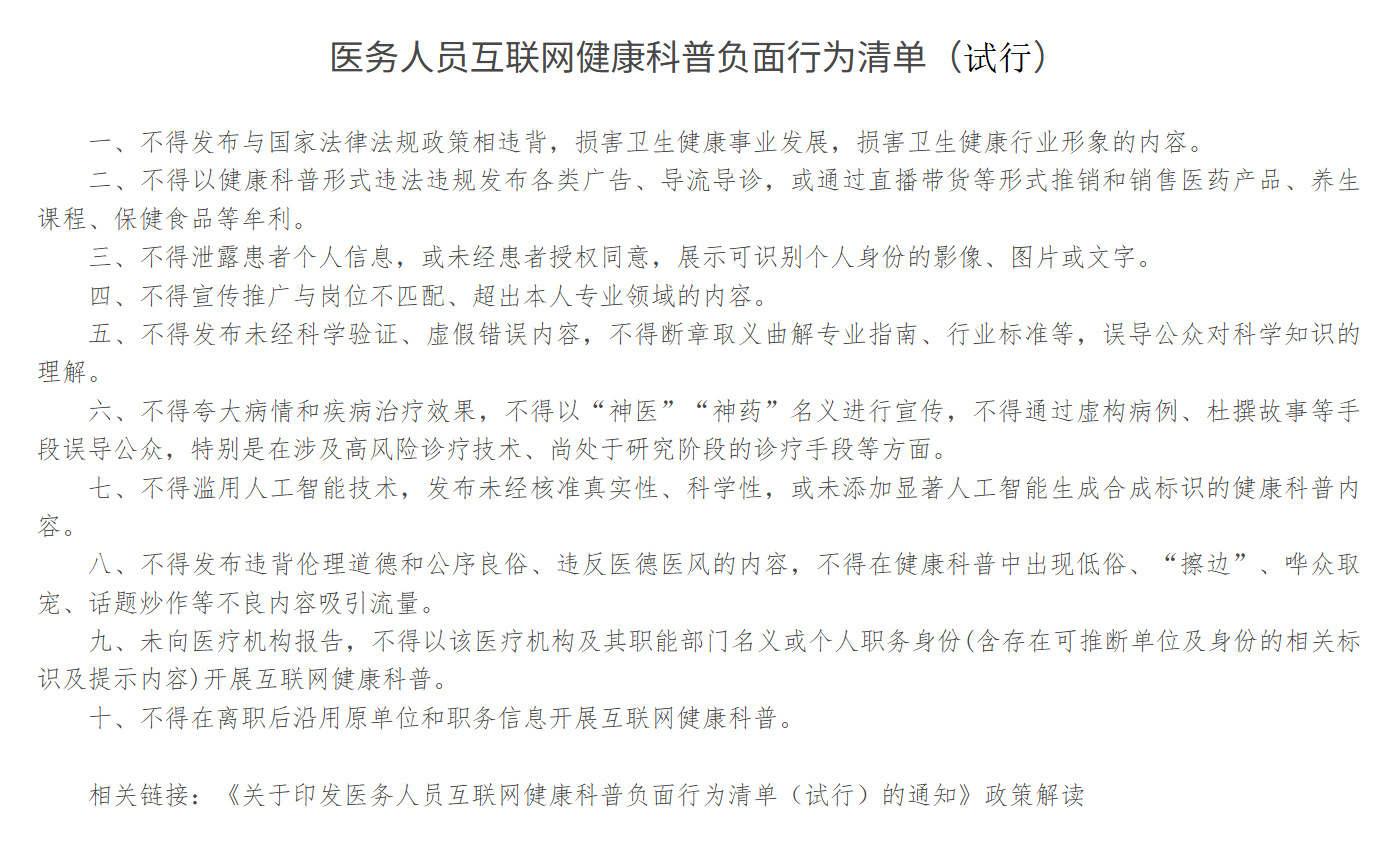
The rumor that ran through Chinese social media this week sounded drastic: medical workers, it said, were being banned from commercial cooperation across the entire industry. A detailed post by a Weibo user who tracks health regulation concluded it was essentially accurate — and walked through the paper trail. There is no single decree, but a stack of national policy documents and platform rules now converge on the same target: the "influencer doctor", a white-coated account that leverages medical credentials to sell medicines, supplements and wellness courses to millions of followers.
The central instrument is the Negative Behavior List for Medical Staff's Internet Health Education, a trial regulation whose ten clauses read as a catalogue of the genre's abuses: no advertising disguised as health education, no livestream selling of drugs, health foods or paid wellness courses, no monetized patient referrals. This year's national work plan on correcting misconduct in medical procurement and services adds language aimed specifically at medical staff posting ads illegally or funneling followers off-platform, and hospital inspection rules now check compliance against advertising law.
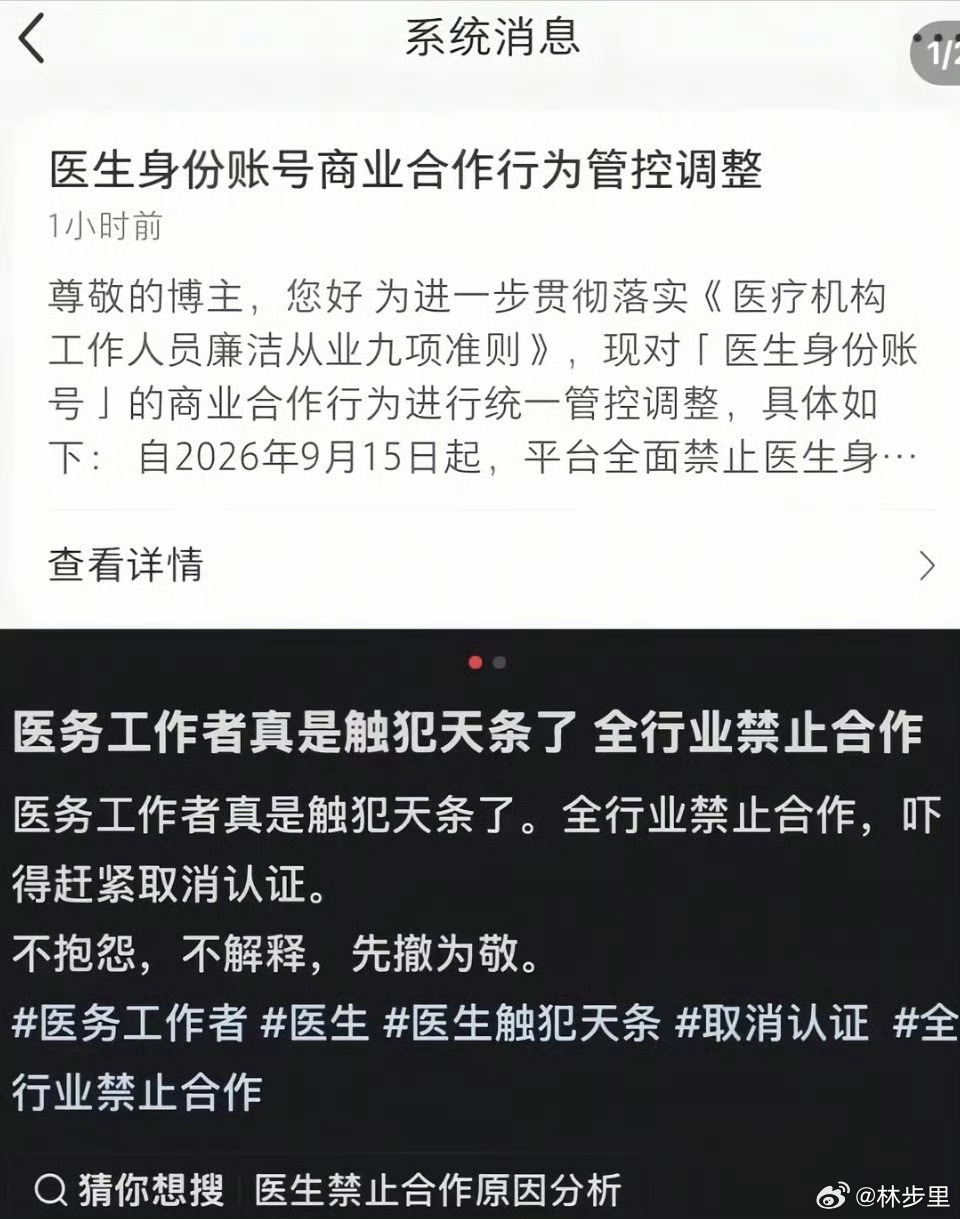
The platforms moved first, and furthest. WeChat's Channels stopped selling traffic to medical accounts as early as 2022; now Weibo has told users that from September 15, accounts certified with doctor identities may no longer take commercial cooperation jobs at all — a notice one user posted alongside the wry observation that the whole profession seemed to be scared into dropping their certifications first and asking questions later. Xiaohongshu and Douyin are tightening along the same lines, restricting both the influencers who take deals and the brands that place them.
The crackdown responds to a genuine trust problem. Search a symptom on a short-video app and the results steer users toward polished accounts whose scripts exaggerate dangers and funnel the frightened toward consultations and purchases. "Misdirection backed by professional credentials is far more powerful than an ordinary blogger's," one commentary on the trend put it. Regulators have made examples before — a case in which a doctor with a million-plus followers was found to have recommended prescription drugs improperly was published as a warning.
What changes now is the economics. Health content itself remains welcome — officials distinguish education from selling — but the business model of the doctor-as-shopkeeper is being dismantled from both ends, by the state's documents and by the platforms' rulebooks. The open question is enforcement: China's health-advertising rules have often been tight on paper and loose in practice, and the genre has survived earlier crackdowns by rebranding. This time the platforms' own commercial machinery is part of the ban, which its architects clearly hope will make the difference.