The Strongest El Niño Ever Recorded Is Forming Off China — After Its Deadliest Heat Year
China's weather bureau confirmed this week that the El Niño forming in the Pacific is already the strongest since monitoring began in 1951 — arriving in the same month a Lancet report put last year's heat-related deaths in China at nearly 20,000. The country is about to learn what its new climate baseline feels like.
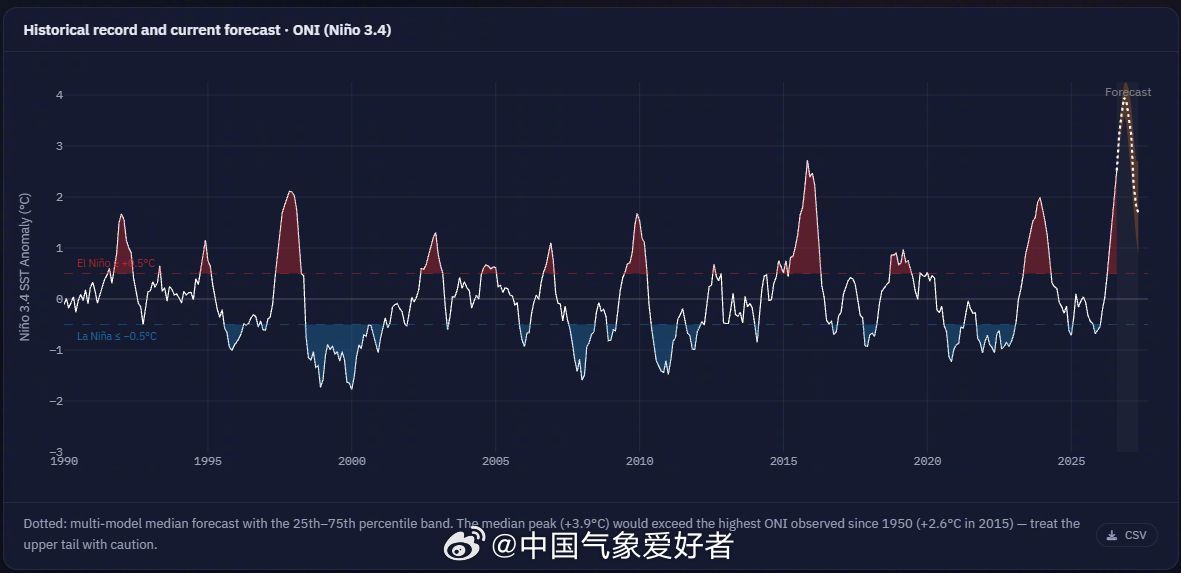
The data point that made meteorologists sit up is a single orange line. On a chart of Pacific sea-surface anomalies tracked by Chinese weather enthusiasts — and shared widely on Weibo — the 2026 El Niño curve now sits above the two benchmark events of modern record, 1997 and 2015, with a model-projected median peak of +3.9°C that would exceed the record +2.6°C set in 2015. On November 3, China's National Climate Center made it official: the event that formed in September is already the strongest since monitoring began in 1951, and it is expected to peak in late autumn or early winter.
What that means for China's winter, per the China Meteorological Administration's first seasonal forecast: temperatures overall warmer than normal, but with more frequent cold snaps — a whipsaw pattern of warm spells punctuated by sharp northern snowstorms and southern freezing rain. The paradox is characteristic of El Niño winters, and it is the forecast's practical warning: variability, not warmth alone, is what strains power grids, transport and hospitals.
The physics of a super El Niño
El Niño is a coupling of ocean and atmosphere: when the eastern equatorial Pacific fails to cool, the warm water shifts the world's rain belts, and the effects propagate for months. The fingerprints are already global — rain and snow fell on Chile's Atacama Desert, the driest place on Earth, with Antofagasta recording six days of rain equal to 4.4 times its annual average. On the other side of the ocean-atmosphere system, San Francisco Fed researchers estimate this event could add a full percentage point to US core inflation next year through food and energy prices — an early illustration of how a Pacific anomaly becomes a grocery bill.
Heat, already the deadliest baseline
The winter forecast lands after the hottest chapters of the year are already written. The Lancet's 2026 China countdown report, published last week, put heat-related deaths in 2025 at 19,338 — 1.7 times the 1986–2005 baseline — and counted 47.7 hours of lost work per worker to extreme heat, with outdoor workers hit 7.3 times harder than indoor ones. The worst-affected cities were not the famous furnaces of the northwest but the humid south: Beihai, Qinzhou, Nanning, on the Gulf of Tonkin coast.
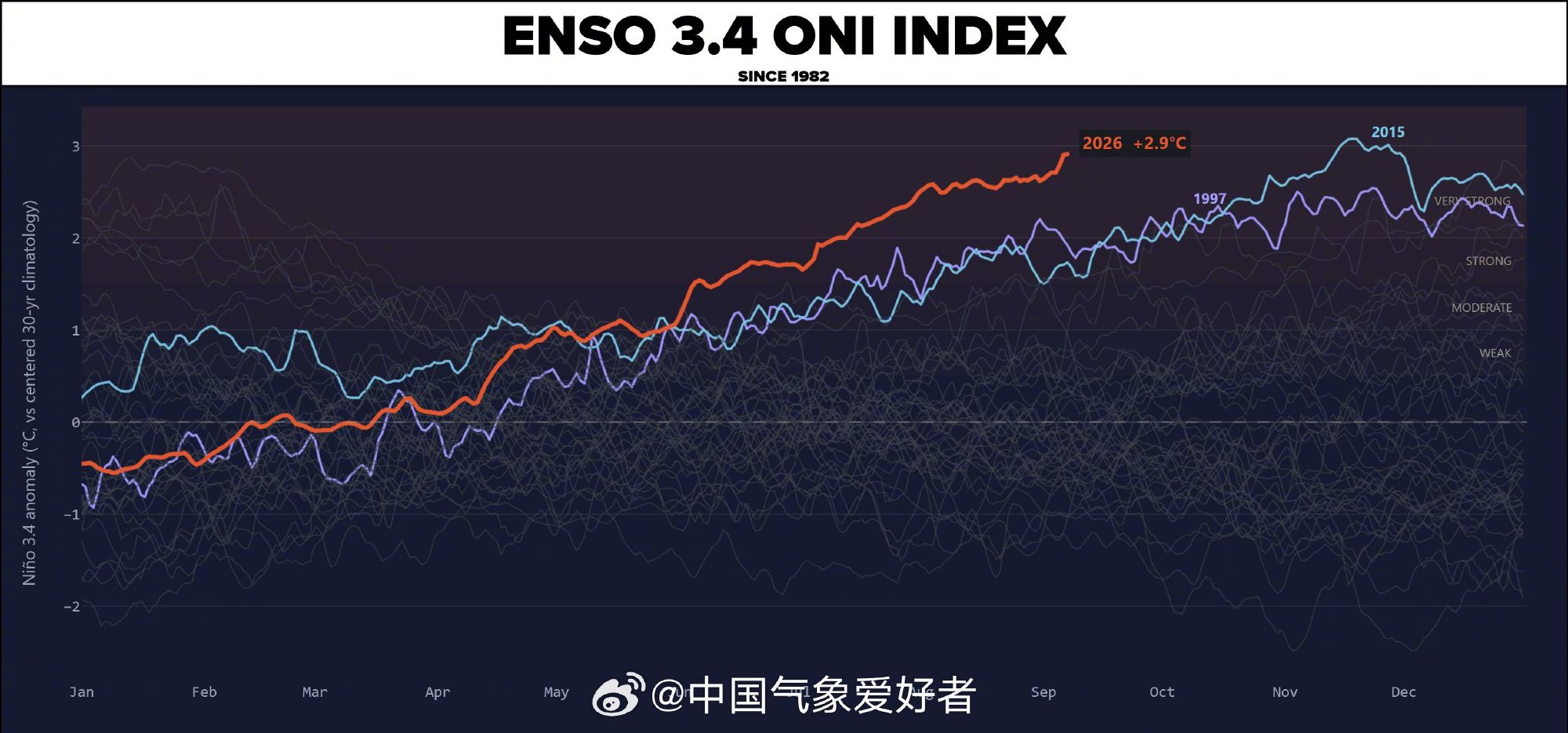
The pairing is the story. A country that just logged nearly 20,000 heat deaths in a single year is heading into an El Niño winter that climatologists expect to be warmer than normal overall, with more volatile swings around that mean — the kind of pattern that stresses everything from heating demand to crop calendars. The 1997–98 and 2015–16 super events each reshaped global harvests and commodity prices; this one is tracking beyond both. The Chinese weather community's own framing — "有完整气象观测百余年来最强" — the strongest in more than a century of complete instrumental observation — is not alarmism. It is arithmetic, and the arithmetic has consequences.