Japan's Teenage World No. 1 Wins the China Smash Men's Title as Wang Manyu Defends Hers
Matsushima Sora, the 19-year-old Japanese world No. 1, outlasted Lin Yun-ju 4-3 in a seven-game final to take the men's title at China's home Grand Smash, while Wang Manyu beat Japan's Sato Hitomi 4-0 to retain the women's crown.
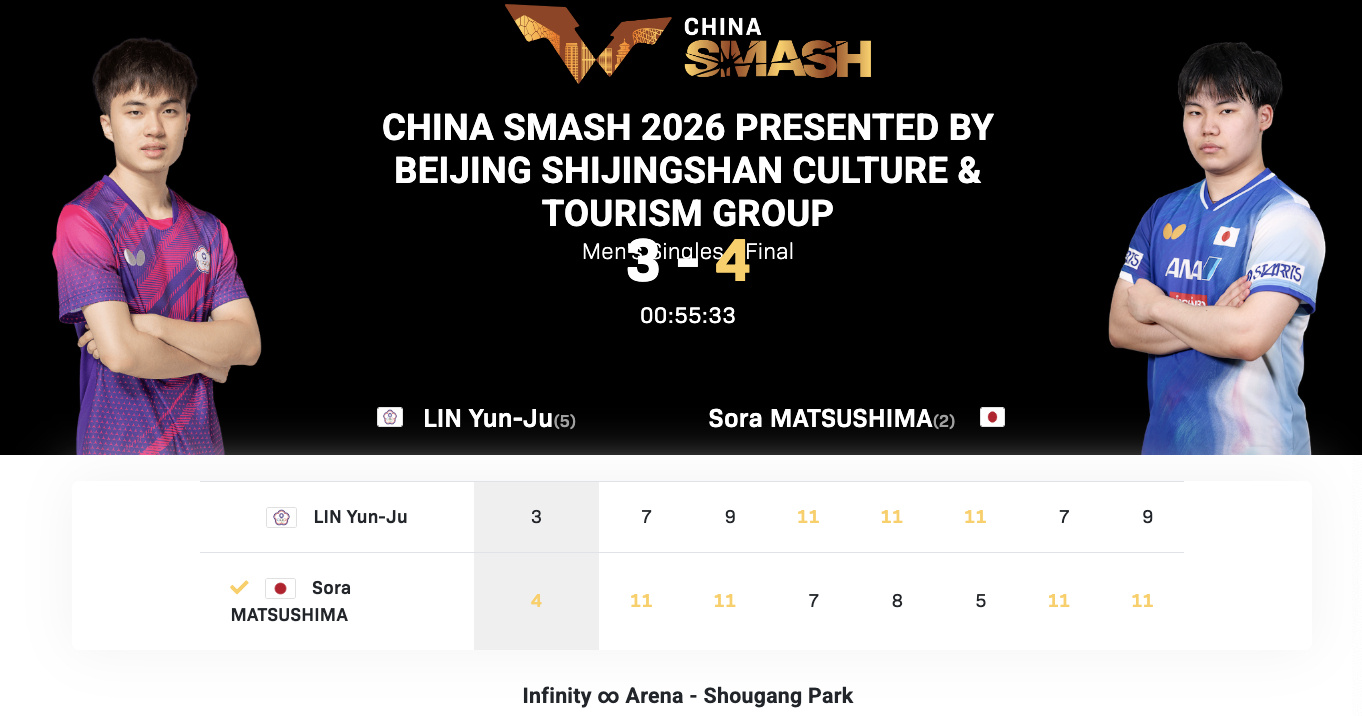
The last men's final at this year's WTT China Smash ran seven games and ended with a Japanese teenager on the podium in Beijing. Matsushima Sora, the 19-year-old world No. 1, beat Lin Yun-ju of Chinese Taipei 4-3 (11-7, 11-9, 7-11, 8-11, 5-11, 11-7, 11-9) on Saturday evening to win the men's singles title at China's home Grand Smash — his second career Grand Slam-series singles title, and his first in Beijing.
The match had a clear shape. As one widely shared commentary post reconstructed it, Matsushima came out fast and led two games to love; the turning point came in the third, when Lin absorbed his hot streak and slowly worked back into the match, taking three straight to lead 3-2. Matsushima steadied, closed the sixth 11-7, and survived the decider 11-9.
For a tournament billed as China's own, the men's final was striking for who wasn't in it: no mainland Chinese player. The doubles exits earlier in the week had already turned the home Grand Smash into an argument about the pipeline beneath Chinese table tennis, and the singles result sharpened it. Matsushima is the same player who became the sport's youngest-ever men's world No. 1 this month — a ranking that arrived with caveats about expiring points, and which his week in Beijing has now backed with a trophy.
The women's final went the home side's way hours earlier. Wang Manyu beat Japan's Sato Hitomi 4-0 to retain the title she won last year, then held up a "1" on each hand — two titles at the event, as the trending summaries counted it.
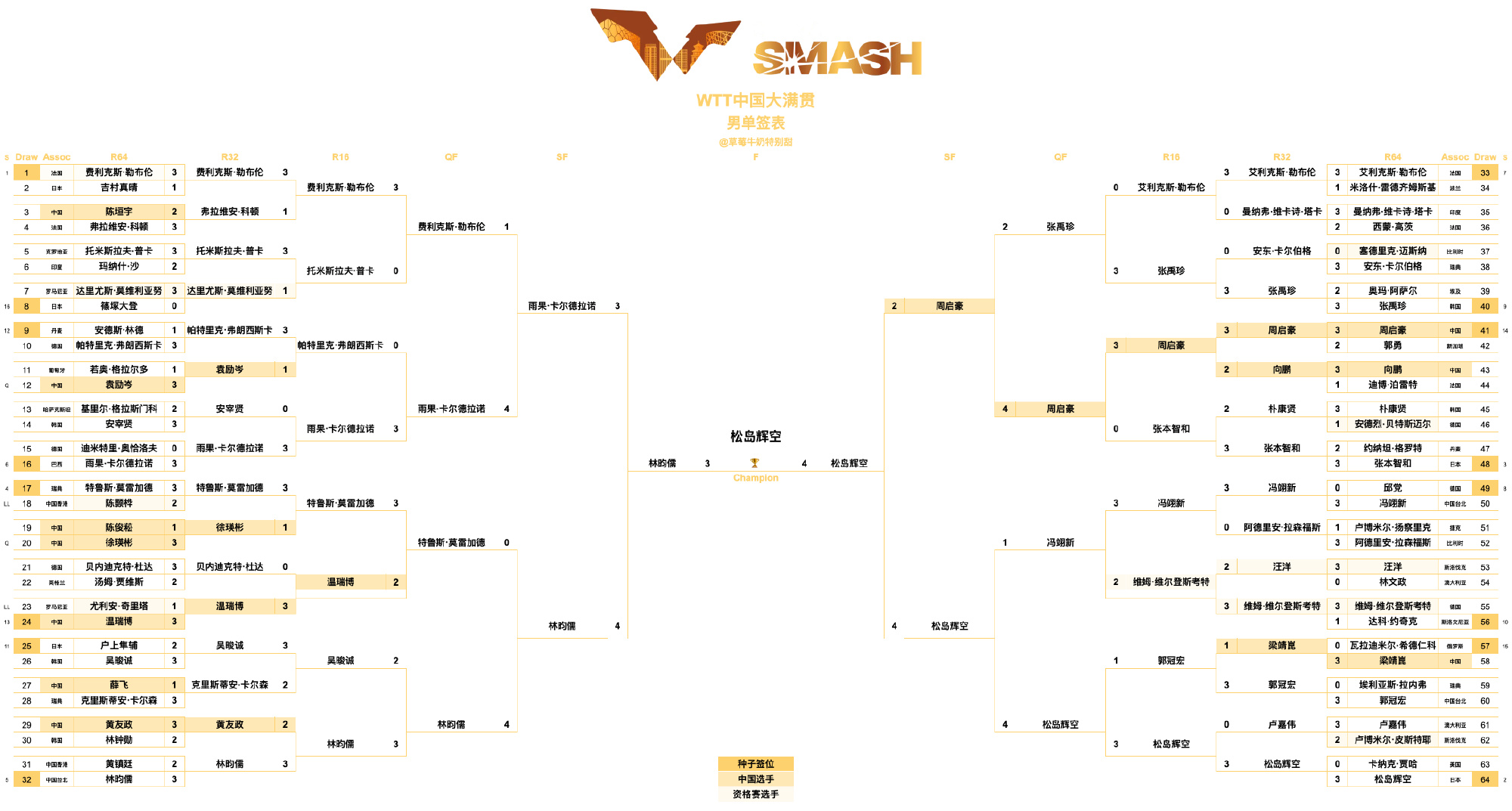
Read together, the two finals are the state of the sport in one evening: China's women remain the standard to beat, while the men's game has company at the top for the first time in a generation — and that company is young, Japanese, and comfortable winning in Beijing. The topic ran hot on Zhihu through the weekend, with the top question asking what Matsushima's rise means rather than whether the loss was an upset.
For the home federation, the assignment is unchanged but more urgent: the pipeline argument that ran all week was about who comes next, and in this tournament's men's draw the answer arrived from Japan. For Matsushima, the Beijing title converts a ranking built partly on arithmetic into the kind of result that needs no footnote.