Mo's Chicken Pot, the Restaurant That Went Viral Against Its Will, Cools Back to Ordinary
Six months after a review video turned a Shunde chicken-pot restaurant into a national pilgrimage site, first-day holiday occupancy is about sixty percent, staff are down from 180 to a little over 30, and the 'boss who least wanted to be famous' says his 1.8-million-yuan debt is cleared and he is happy to be ordinary again.
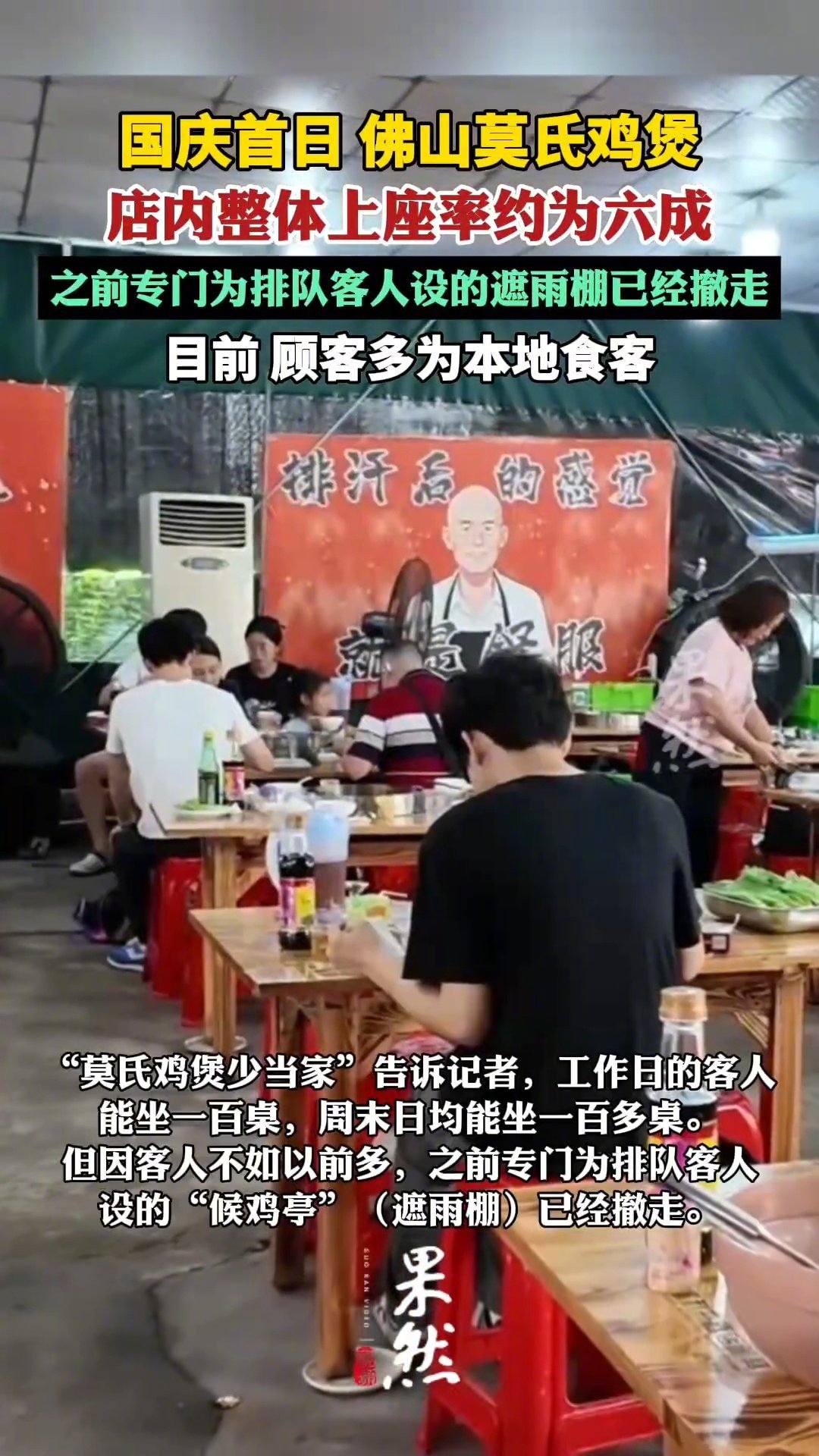
In April this year, a restaurant-review video did to one Shunde eatery what review videos in China occasionally manage: it turned a decades-old neighbourhood restaurant into a national destination. Mo's Chicken Pot in Chencun, Foshan went from a full dining room to a shop drawing some 3,000 visitors a day, with scalpers reportedly selling queue numbers for as much as 300 yuan apiece. Its owner, surnamed Mo, became a celebrity against his will — Chinese media took to calling him "the boss who least wanted to be famous."
The National Day holiday that began on October 1 was meant to be the shop's biggest week of the year. Instead it supplied the clearest evidence that the wave has receded. Reporters from the Qilu Evening News who visited the Chencun main store on the holiday's first day found roughly sixty percent of tables taken — a figure that would count as a solid day for any ordinary restaurant, but reads as thin for a former national sensation. The canopy the shop once rigged up for the people who queued in the rain, nicknamed the "waiting-for-chicken pavilion" (候鸡亭), has been taken down. The shop's young manager said weekday service still fills around a hundred tables, with more on weekends when the weather is kind.
The payroll tells the same story more bluntly: at the peak of the craze the main store employed around 180 people; it now keeps a little over thirty. In remarks carried on Baidu's trending board, Mo also confirmed a piece of housekeeping that went mostly unnoticed while the cameras were there — the more than 1.8 million yuan he owed from a failed investment before the viral moment has been paid off in full.
His own reading of the slowdown is pointedly unbothered. "Take it with a calm mind, keep the expansion under control, and put doing right by the reputation first," he said. "Once the quality is sorted, there is no fear of having no business" (把质量搞好了,不怕没有生意).
Commenters parsing the numbers landed much where he did. "The interesting thing about sixty percent is that it neither panics nor burns hot," one Weibo user wrote after reviewing the shop's past figures: the regulars have stayed, and the crowd that came to prove they had been has moved on. Another pointed to the car park — almost every plate was a local one; the customers filling the remaining tables are neighbours on a chicken-pot run, not pilgrims from the algorithm.
The arc traces the half-life of China's "check-in economy," in which a business's fame and its customer base briefly decouple, and every viral shop eventually finds out what it is worth once the feed moves on. The site has followed the dynamic from the other end — an innocent pastry shop swept up in a celebrity's mooncake row — but Mo's is the rarer second act: what a business looks like after the traffic leaves. For a shop that has sold chicken pot in the same district for decades, the manager expects evening sittings to keep outpacing lunch, and the debt, at least, is settled. What remains is the part the internet never queued for: the food.