Coral Fleece and 'Milk Cotton': Why Chinese Shoppers Are Learning to Read Fabric Labels
A doctor's guide to what marketing names like 'coral fleece' and 'milk cotton' actually mean has gone viral in China, as winter shoppers learn that many of the coziest-sounding fabrics are just polyester.
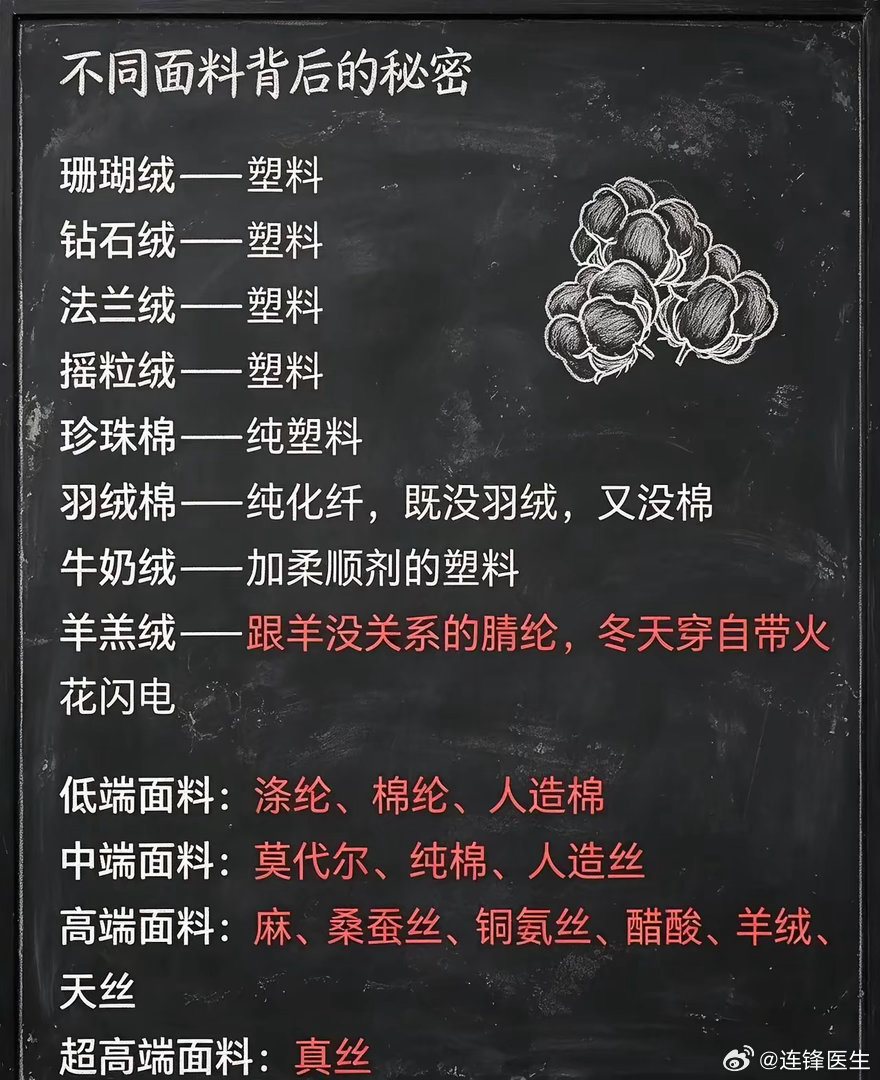
A Chinese doctor's Weibo post has become the season's shopping guide — and it amounts to a consumer-rights lesson in how marketing names work. The post, by a doctor writing under the name 连锋医生, lays out what the names actually mean: coral fleece, diamond fleece, and flannel are, in the post's blunt phrasing, "plastic" — polyester; "milk cotton" is plastic plus fabric softener; "lamb fleece" is acrylic, with no wool in it at all. The post has been reposted more than 900 times.
The post rides a wave of consumer literacy that has been building all winter. The site has covered the down-jacket quality line — the industry's warning that a 500-yuan jacket is not really down — and a Zhihu debate on Sam's Club's 399-yuan down jacket, which argued that a large fill at that price is a market signal, not a bargain. The fabric-name guide is the same argument in a different register: the marketing name is a product, and the product is not the fabric.
The post's own framing is the argument: "Stop being fooled by the names. Coral fleece and lamb fleece are mostly chemical fiber — plastic." The post is a chart: a chalkboard-style graphic that pairs fabric names with their real composition, from polyester (the bottom tier) through modal and cotton up to ramie, mulberry silk, and cashmere. The tiered list is one user's summary of the rules: ignore the marketing names, read the wash label's fiber content, and distrust anything that gives a name but no fiber percentage. The post's own advice is a checklist: "pure cotton" and "all cotton" must be labeled 100% cotton; "skin-friendly cotton," "cloud cotton," and "milk cotton" are all adjectives and often just polyester; Tencel is not silk — it is lyocell, and modal and rayon are regenerated fibers, not silk; "satin" and "ice silk" are finishes, not fibers; "wool texture" and "imitation cashmere" are basically acrylic.
The post's cultural context is the point. Chinese e-commerce has an old habit of naming fabrics for the thing they imitate — "milk cotton," "cloud cotton," "ice silk" — and the names are legal, because the fabric name is a product name, not a fiber claim. The result is a market where a consumer who wants real wool or real silk has to read the wash label, because the name is a poem. The chart's own bottom tier is the argument's own point: the names are a product, and the product is not the fabric.