The Novoland Feud Returns: Why Two of China's Most Famous Fantasy Authors Still Can't Speak to Each Other
A fan fiction post about two of China's most famous fantasy authors has reignited a feud that has run for nearly two decades — and the internet is watching, one Weibo signature at a time.
Jin Hezai wrote the novel that Chinese internet literature is measured against: Wukong Zhuan, the 2000 retelling of the Monkey King legend that generations of readers still quote from memory. Jiang Nan wrote Dragon Raja and Novoland: Eagle Flag, and became one of China's richest authors on the strength of them. In 2005 they co-founded the Novoland (九州) shared fantasy universe — China's most famous attempt at a world built by many hands — and in 2009 they fell out so badly that the Novoland magazine collapsed. Each has spent the years since blaming the other for the wreckage. They have not reconciled.
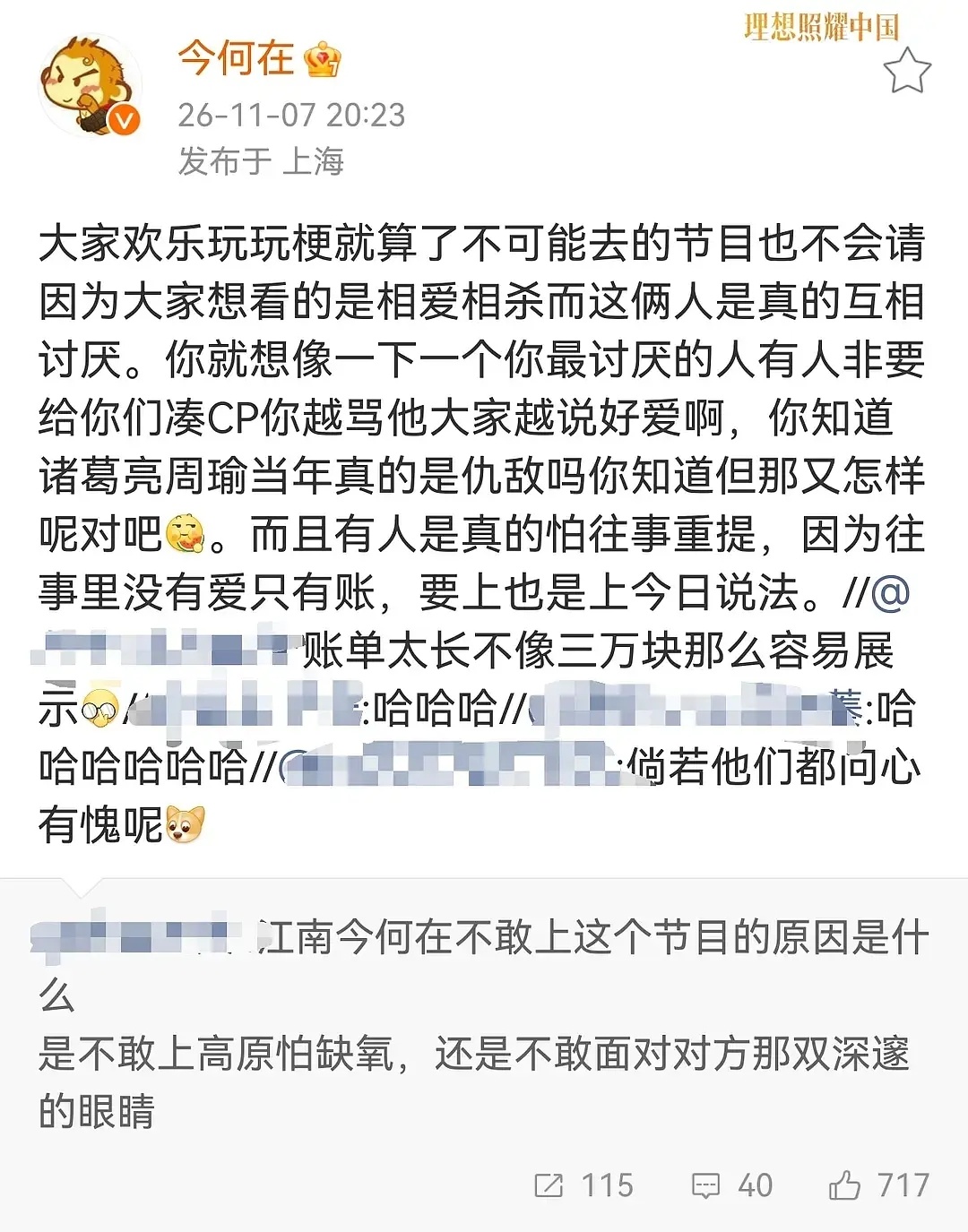
The two have not even been speaking to each other, so this week's flare-up was between them and their fans. A Weibo fan-fiction bot — one of the accounts that posts invented "material" about celebrities, here named 五黑框假料bot — carried a short story that used the two authors as characters, and the author framed it as "a fan work based on real events." Jin Hezai, who goes by the nickname "Uncle Zeng" among fans, was not amused. In a post he published on 7 November, he let fans know that joking about the two of them as a pairing is fine because the two men genuinely dislike each other — name-checking Zhuge Liang and Zhou Yu, the two Three Kingdoms strategists locked in eternal rivalry — and that a real joint appearance would belong on Today's Statement, the legal-affairs programme.
The fan fiction author's apology was the moment the internet started screenshotting: an apologizing post that asks him to breathe deeply, exhale slowly, and sip some water. "Uncle Zeng, hello. That piece I first posted on the fake-material bot was a fan work based on real events. It doesn't mean I really think Jiang Nan's affection runs deep. Don't get agitated, don't be angry, breathe deeply, slowly exhale, sip some water." The apology has drawn more than 4,000 likes, and the author's follow-up — that they "still haven't received the real big result" — has drawn more than 2,000 more.
Jiang Nan's own response was the quietest and the most commented-on. He changed his Weibo signature at midnight, as one fan noted: "Jiang Nan was not without a response. He changed his Weibo signature in the middle of the night to 'don't quarrel with people who don't matter,' and then changed it again to 'the sunken boat doesn't ferry old friends.' A grown man still fiddling with his signature." The signature, an old classical line, read as both a rebuke and a confession, and the internet read it exactly that way. Another fan wrote that Jin Hezai is "a very pure person — he can't tolerate even a single grain of sand in love or hate. What he denies is not that he loved Jiang Nan, but that Jiang Nan loved him. If the love Jiang Nan gave him held betrayal, pain, despair, then he refuses to call that love."
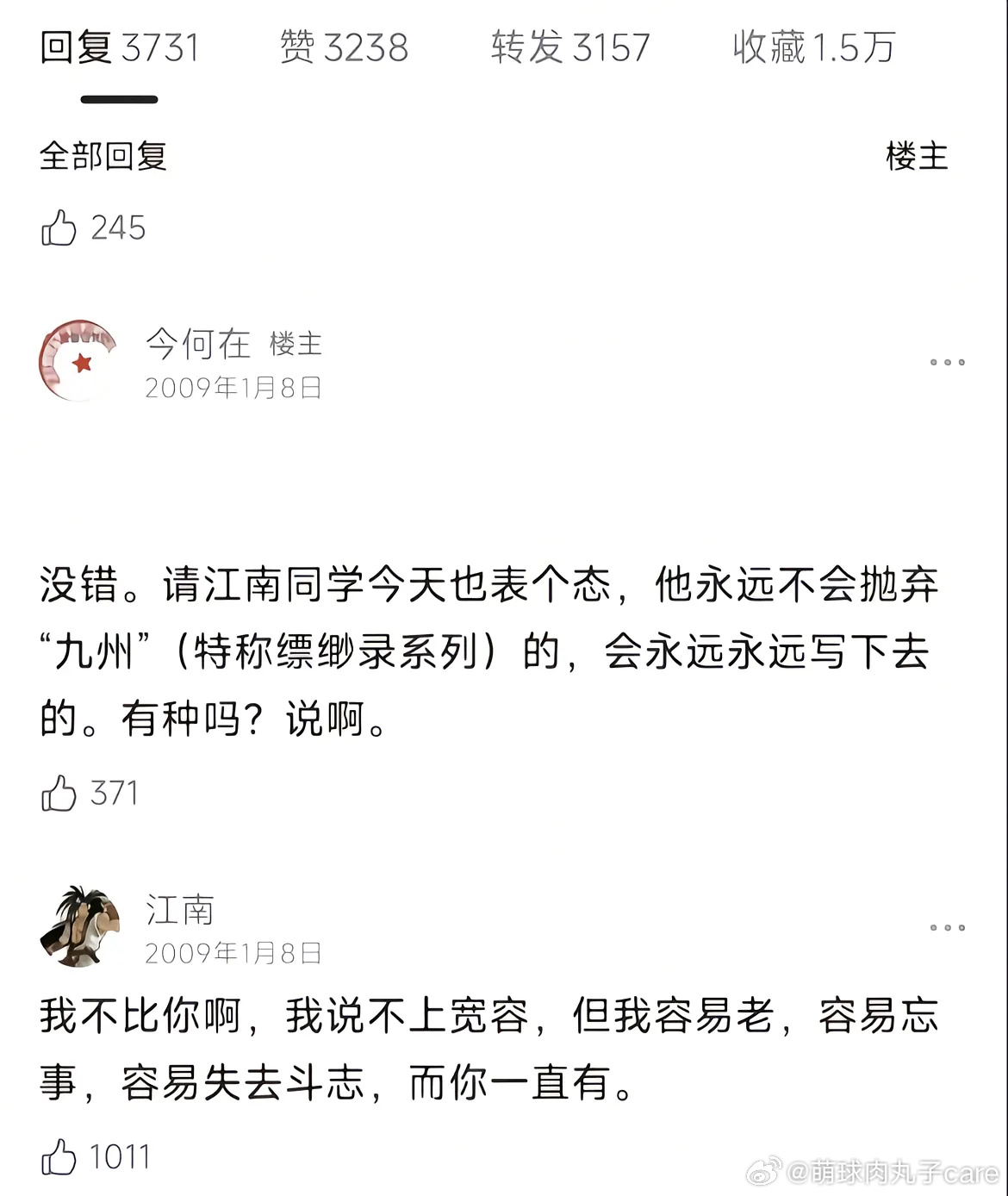
The archive is the part of the story that makes the feud legible. A screenshot circulated on Weibo of a forum thread dated January 2009, in which Jin Hezai asks Jiang Nan to promise never to abandon the Novoland series — and Jiang Nan's reply is a masterpiece of the non-apology: "I'm not like you, I can't say I'm tolerant, but I get old easily, forget things easily, lose my fighting spirit easily, while you always have it."
The feud has become a fixture of Chinese internet culture — the site has covered the Lhasa guestbook hunt built around a different famous line, but this one runs on its own fuel: two men in their forties who built a shared universe and then broke it, and a fandom that has been watching them not speak to each other ever since. The signature changes, the apology, the archive — the whole thing unfolds in public, in real time, and the internet is taking notes.