Why a Third Grader's 'Packing Leftovers Is Shameful' Answer Was Marked Wrong
A Hangzhou third grader answered a Chinese-language question about leftover food by writing that his family is 'not short of a few yuan' and packing would be embarrassing to be seen. The teacher marked it wrong, deducting four points, and a parent-group screenshot has turned the question into a national argument about face, frugality and what exams are for.
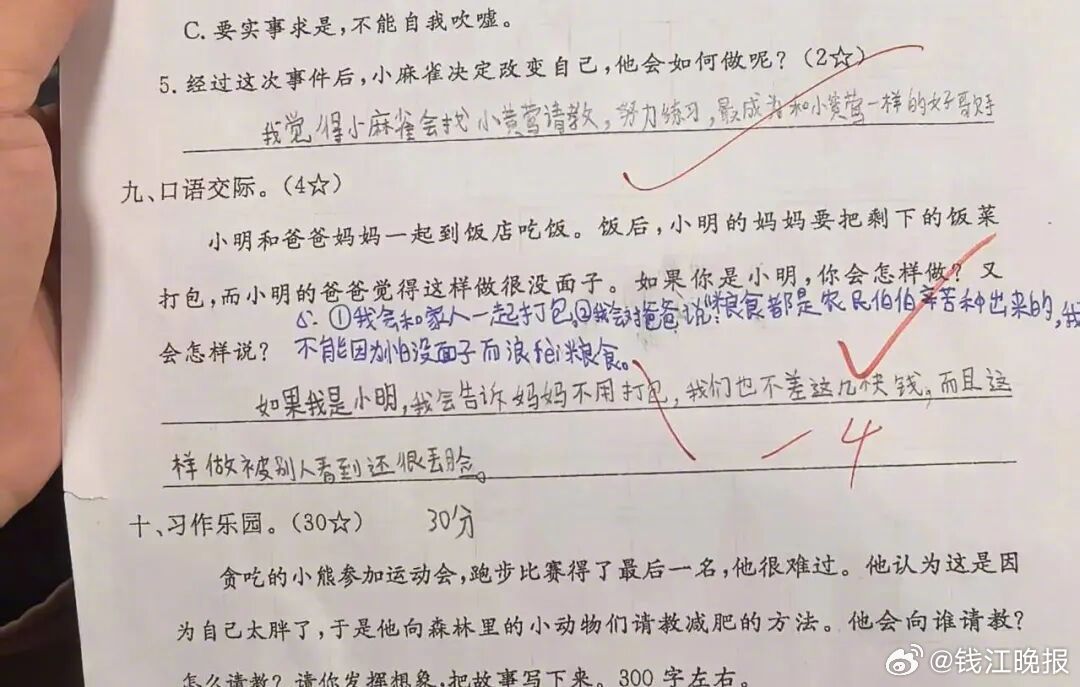
The question on the third-grade Chinese exam was an ordinary one of the "what would you say?" genre: Xiao Ming's family eats out, his mother wants to pack the leftovers, his father says doing so looks bad — what should Xiao Ming tell them? A nine-year-old in Hangzhou wrote, in effect, that he would back his father: tell mum not to bother, "we're not short of this little bit of money, and if other people see it, it's embarrassing." The teacher gave it a red cross and docked four points. The boy's defence, his father later reported to the parent group, was disarming: I just said what I actually think — why is honesty wrong?
When the Qianjiang Evening News published the story on November 14, the debate it set off was less about the four points than about who had failed whom. The teacher's corner of the argument holds that oral-communication questions allow many phrasings but not every direction: the exercise exists to steer children toward thrift — the same instinct behind China's "clean plate" campaigns against food waste — and one commenter warned bluntly that answers which "deviate from values" would fare worse than a red cross later, at the gaokao essay. Another allowed that the material suits a morals class better than a language paper.
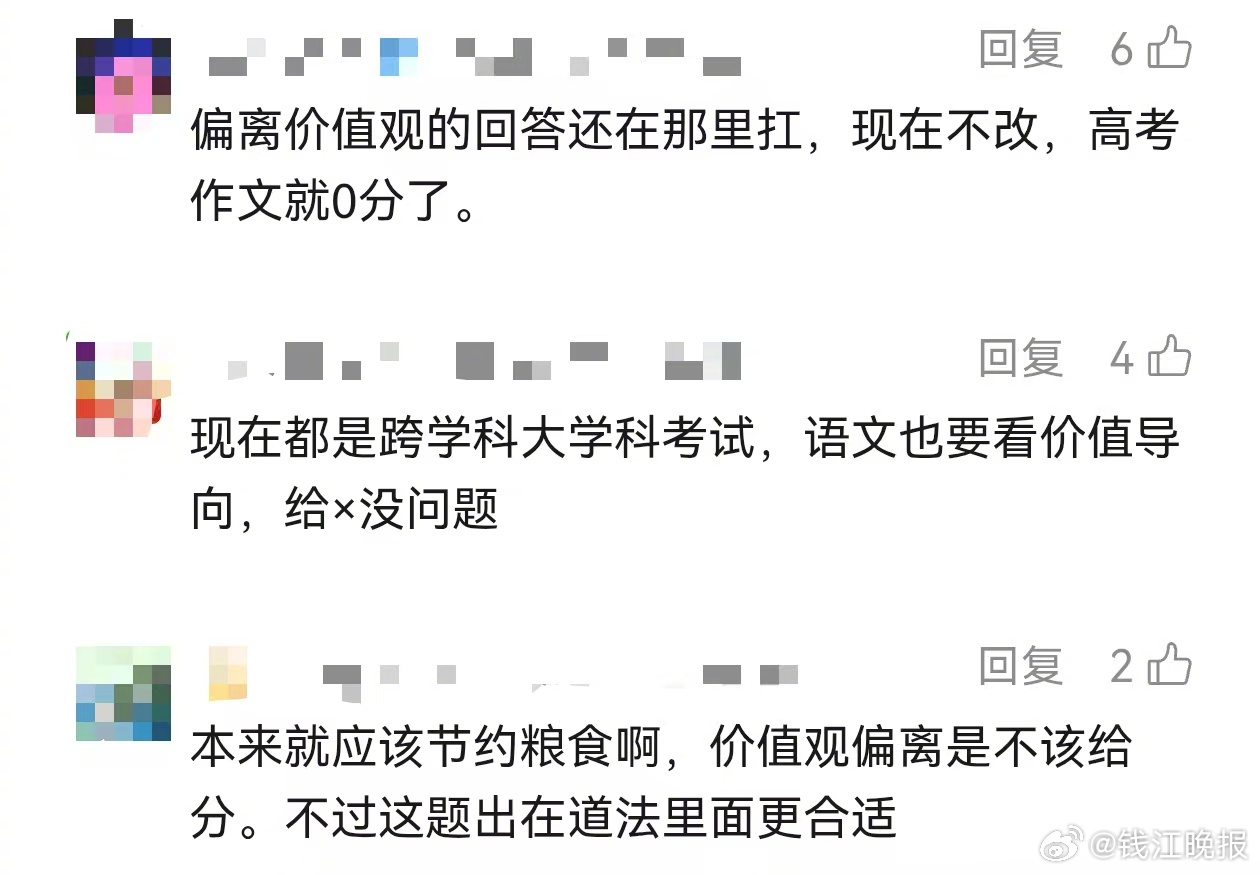
The other side went after the premise. "No one is born thinking packing leftovers is shameful," as one widely shared comment put it — the feeling is picked up from the glances of others, and a red cross does not remove it. The most practical rebuttal was also the funniest: a third grader would do better to ask mum who exactly is going to finish leftovers two days later, "and it wastes a takeaway box" — thrift, evidently, cuts both ways.
What the question accidentally exposed is the collision between two things Chinese schools are asked to do at once. Exams — even in third grade — are expected to carry values instruction, in this case the official line that waste is shameful and frugality a virtue; but the same exams claim to reward sincerity, and this child's sincere answer reflected the face-consciousness the instruction is aimed at. The teacher's mark says the second goal loses; the boy's puzzlement says nobody told him.
There is also a generational reading that commenters reached for: the parents debating in the group are the cohort that grew up when packing leftovers became normal, even admired; their children, raised in abundance, have to be taught what their parents absorbed from scarcity. The exam question, meanwhile, will keep appearing in workbooks either way. What changed after last week is only that its answers get read more carefully — by parents, and by the children who notice the difference between what the questions say and what the marks mean.