Chongqing Restaurant Owner's Viral 'Kindness' Video Was Staged, Officials Say
A viral video of a restaurant owner quietly slipping cash to a mother and daughter who ordered only a six-yuan bean-sprout dish was staged by the video's producer to farm traffic, a Chongqing district investigation team announced on November 12. The case is the latest in China's crackdown on fabricated 'positive-energy' content.
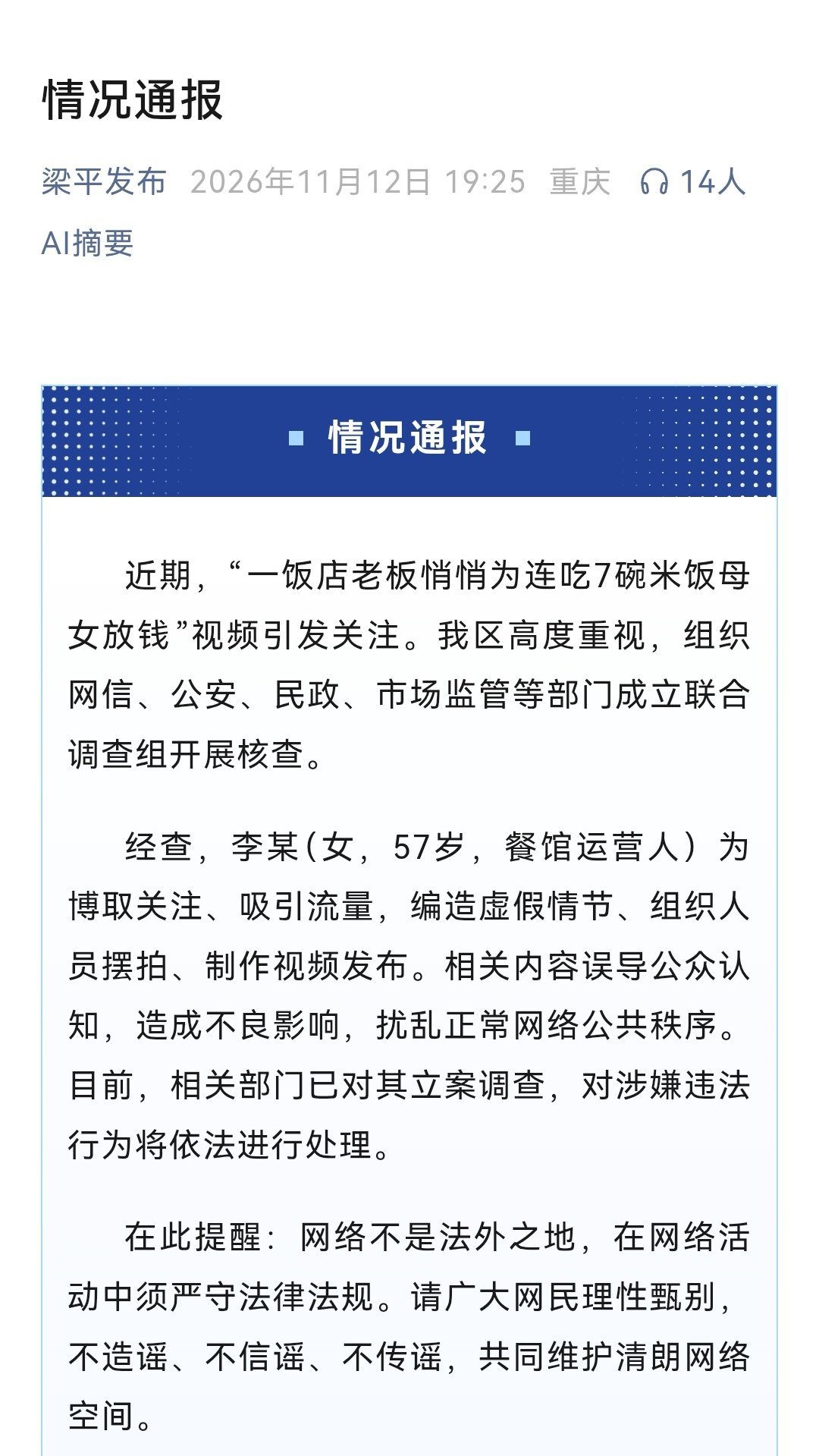
The video that spread across Chinese social media this week told a simple story: a mother and her daughter in a small restaurant in Liangping, a district of Chongqing, ordering only one dish — stir-fried bean sprouts, six yuan — with the mother eating seven bowls of rice. The owner, moved by the sight, quietly slipped the family a few hundred yuan in cash when they left. The clip was shared as an act of everyday kindness.
On November 12, the district's joint investigation team published a notice that undid it: the whole scene was staged. The operator, a 57-year-old woman surnamed Li, had fabricated the story, organized the people in it, and produced the video to attract traffic online, the notice said. Authorities have opened a case and will handle the suspected violations under the law.
The announcement was the latest in a series of official investigations into "staged positive-energy" videos — manufactured scenes of kindness, poverty, or generosity, produced for traffic and monetized on short-video platforms. The genre has become a known problem: viral clips of strangers paying strangers' bills, of restaurant owners feeding the hungry, of farmers donating harvests, have repeatedly been exposed as scripted, with actors hired for the roles. The Southern Daily's post on the notice put it plainly: staged content that consumes goodwill will eventually backfire.
The economics explain why the genre keeps coming back. A heartwarming video can draw millions of views; views convert to advertising revenue and platform bonuses. The scripts are cheap to make, and the punishment has historically been thin — a platform takedown, a deleted account. The Liangping case is notable for the state response: a joint investigation team spanning cyberspace, public-security, and market-regulation authorities, and a formal case filed against the producer.
The notice's language is a window into how the state frames the problem: the video "misled the public" and "disrupted the normal online information order" — terms that appear in recent regulations on fabricated content. The crackdown on staged kindness sits alongside the campaign against fake news, and both are aimed at the same target: the traffic economy that rewards fabrication over truth.
What made the video plausible — and popular — is the hunger it fed. A story about a mother and daughter eating seven bowls of rice over a six-yuan dish, and a restaurant owner who notices, is a story people want to be true. The official answer this week was that it wasn't.