Tencent Denies That It Is Cutting Half Its Workforce
A screenshot of a management livestream was read as a 50% layoff memo; the company's denial said the split was about the AI era, not headcount.
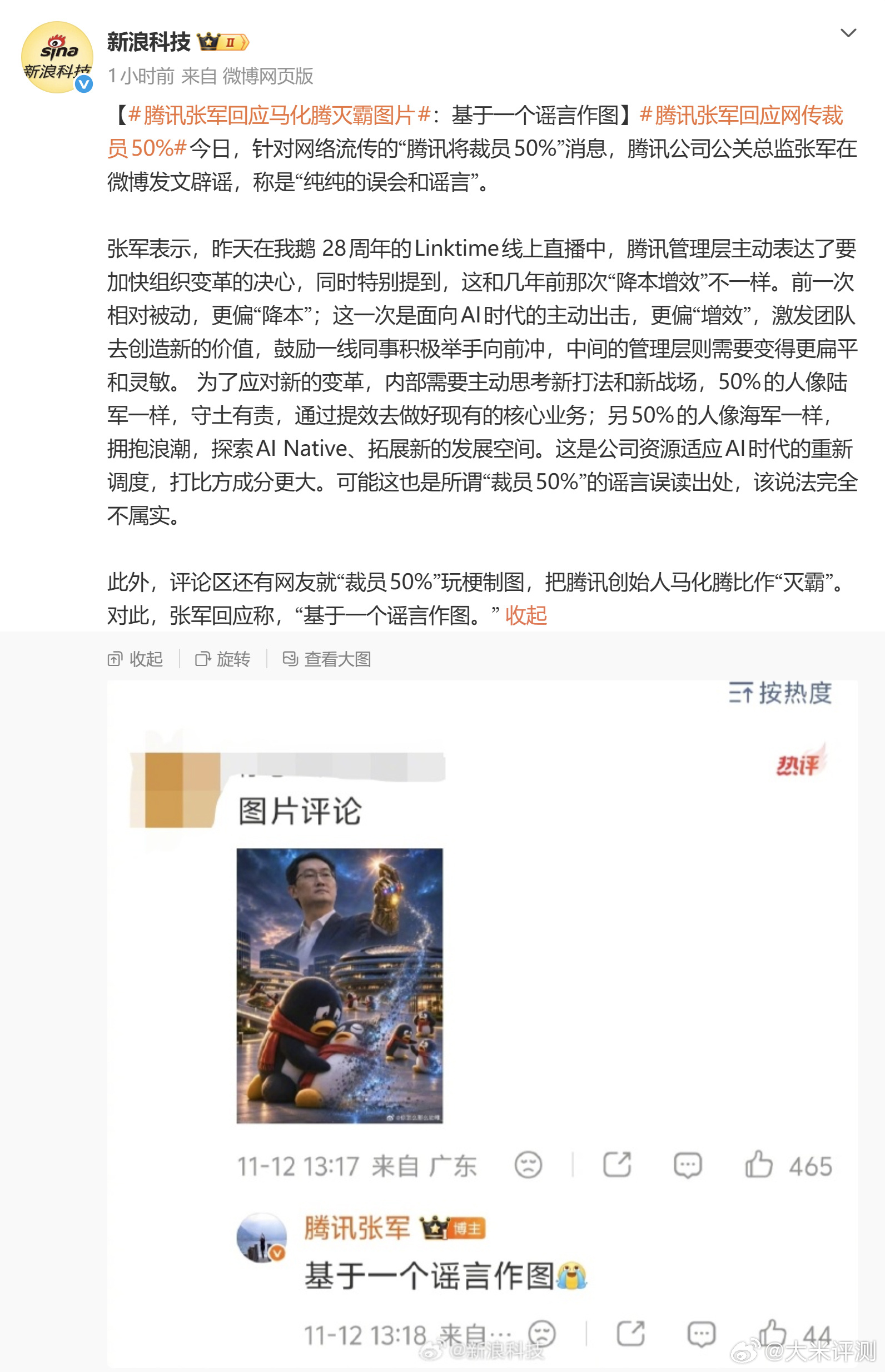
China's Tencent spent Wednesday denying that it is about to fire half its workforce. The rumour began with screenshots circulating on Weibo and on Maimai, a workplace social platform, claiming that the company would cut up to 50% of its staff — and by midday a question asking what was actually going on had become one of the day's most-read discussions on Zhihu.
The kernel of the story was an internal broadcast. At a livestream marking Tencent's 28th anniversary, management laid out how the company intends to organise itself for the AI era: roughly half of the company would keep running the core business, and the other half would explore what the company calls "AI-native" products — software built from scratch around large language models. Management used a military metaphor to describe it: half the workforce would be the "army," holding the existing business, and half the "navy," going out to find new ground.
The screenshot that fuelled the rumour was read as a layoff memo. The percentages matched the "50%" figure everyone was primed to expect, and on Chinese social media the idea that a major tech company is cutting half its staff is plausible enough to travel fast — this is an industry that has been through several years of consolidation and job cuts.
The company's response was pointed. Zhang Jun, a Tencent communications executive, rejected the "50% layoffs" framing as a "pure misunderstanding and rumour" on his own Weibo account, and said the internal plan was a resource split, not a headcount cut. The Paper's report, citing a person close to the company, relayed the same framing: the reform is "proactive" for the AI era, "more about efficiency" than the cost-cutting drive of a few years ago.
Reactions to the denial suggest the company's explanation is being heard but not fully believed. One widely shared post noted that the company had gone out of its way to explain the split rather than dismiss it, and that the arithmetic is real: with Tencent's average annual pay, cutting half the workforce would save a very large sum of money. The reply, in effect, was: "we will watch what you do next."
The episode is a small window into the anxiety surrounding AI in China's technology sector. The phrase "AI-native" — an organisation rebuilt around large language models — is now common enough in Chinese tech companies' internal language that it has escaped into the outside world, where it is heard as a warning about jobs. The rumour found a willing audience because the real question is not whether Tencent is cutting half its staff, but what the AI-native half of the company will look like, and who will be in it.