China's First Million-Yuan Cancer Therapy Enters the National Insurance List
A CAR-T cell therapy for blood cancer — priced at 1.29 million yuan, roughly $180,000, a shot — has become the first of its kind added to China's national basic medical insurance drug list, after negotiators cut its price to under 300,000 yuan. For a patient, the out-of-pocket cost of a single personalised dose falls below 100,000 yuan.
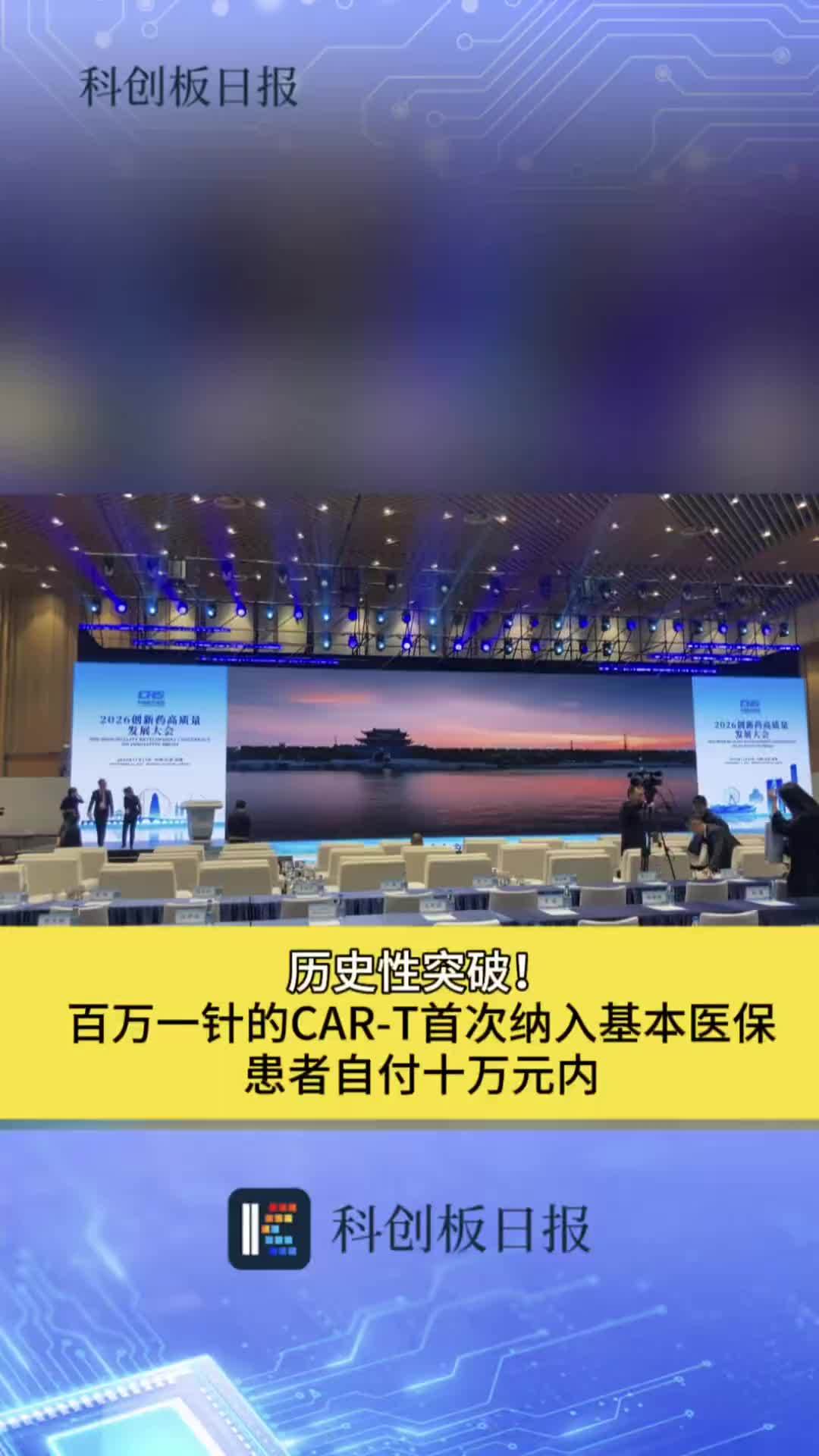
China's annual insurance-negotiation ritual produced its most dramatic result yet on November 14, when the National Healthcare Security Administration published the 2026 national basic medical insurance drug list and, on it, a CAR-T therapy: relmacabtagene autoleucel, developed by Shanghai- and Suzhou-based JW Therapeutics. Cell therapy has never been on the list before. The treatment, a one-time infusion for relapsed or refractory lymphoma — large B-cell, follicular and mantle cell — had carried a list price of 1.29 million yuan per dose, and it now costs "under 300,000 yuan," according to the insurer's announcement and Baidu's summary of the coverage.
The price is not a sticker reduction but the result of the negotiation itself. Ma Jun, director of the Harbin Institute of Hematology & Oncology who took part in the therapy's review, told the Economic Observer that JW Therapeutics had gone into the talks with an all-or-nothing bid — his word was "孤注一掷", staking everything on one throw. CAR-T is not a pill that scales: each dose is manufactured from the individual patient's own T cells, extracted, engineered to recognise the tumour, grown in a lab and reinfused. That per-patient production is why the price ran to seven figures, and why the therapy is approved only for blood cancers whose other lines of treatment have failed.
For a patient with insurance, the arithmetic changes from impossible to heavy but survivable: a composite graphic circulating on Weibo put the out-of-pocket cost below 100,000 yuan — under about $14,000 — for a treatment that a year ago consumed a family's flat deposit and then some.
The rest of the list announcement is considerable in its own right: 107 newly covered drugs, 51 of them first-class new medicines, bringing the list to 3,331 entries from January 1, 2027. Alongside the basic list, the separate commercial health-insurance innovative drug directory added 12 products from 11 companies — including what The Paper's report calls the world's first solid-tumour CAR-T, a sign that the two-tier arrangement is being positioned as the landing zone for therapies too expensive, for now, for the basic list.
The Weibo conversation around the announcement quickly found its most quotable datapoint. A widely shared post observed that Australians are beginning to fly to China for cancer care, profiling an Australian doctor and mother of two whose research into her own blood cancer settled on CAR-T — a post that drew hundreds of reposts with the line "whatever you do, never let your basic national insurance lapse." The medical travel story predates Saturday's list, but it lands differently now: the therapy that draws foreign patients is the one Chinese patients just got priced into coverage.
What happens next is the part nobody can negotiate in advance. CAR-T manufacturers live or die on how many eligible lymphoma patients actually reach infusion, and a price under 300,000 yuan converts far more of them from hopeless cases into billable ones — the bet Ma Jun described. Whether that volume justifies the discount, and whether the next generation of CAR-Ts for solid tumours can follow it onto the list, will show up in next year's figures.