China Has Done Three-Quarters of the World's 10 Million Laser Eye Surgeries. Now It's Building Its Own Laser.
China's first domestically developed femtosecond laser has entered clinical trials, breaking a foreign monopoly on the equipment behind the country's most popular elective surgery — and promising to bring prices down.
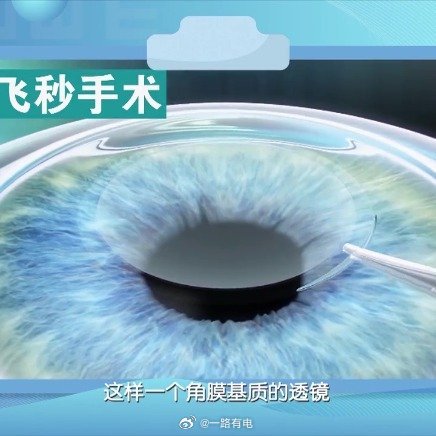
More than 10 million full-femtosecond surgeries have been performed worldwide, and about 7.5 million of them are in China. The machines that do the work have been largely imported, and the price of the surgery reflects that: patients pay a "machine startup fee" on top of the surgeon's fee, because the equipment is imported and the country's 600 million myopia patients have no alternative.
That is about to change. China's first domestically developed femtosecond laser has entered clinical trials at the Eye, Ear, Nose and Throat Hospital of Fudan University, where the first participants — a 31-year-old woman who had been short-sighted for two decades — walked out of the operating room the next morning able to read the letters on a distant building. The machine's laser scan takes about nine seconds, and the device's lead engineer says the hard part is not the speed: once a cornea is cut, it cannot be restored, so the laser's landing points, cutting depth and the thickness of the lens-shaped tissue it removes must all be exact.
The announcement has been welcomed by a public that has been waiting for it. State media framed the news as a step toward "more affordable" surgery, and the frame has struck a nerve — the posts drew more than 4,000 likes within hours.
The caution is coming from the people who have already had the surgery. One technology commentator, who has had the full-femtosecond procedure himself and studied the imported Zeiss laser it was performed with, wrote that the most expensive part of the surgery is not the fee — it is the part of the cornea that is removed and never grows back. "You're machining your own natural optical tissue into a lens," he wrote. Seeing 1.2 on the eye chart after surgery, he added, is not the same as seeing well: night glare, halos and contrast sensitivity are the things patients only discover afterwards.
Another commenter made the same point from the other side of the price cut: a cheaper device does not make the surgery right for you, because the procedure that suits your cornea depends on its thickness and your degree of myopia — the full-femtosecond method is suitable up to 800 degrees, the half-femtosecond method up to 1,200, and the twenty-odd pre-surgical checks exist to sort out which. "A price drop is a good thing," he wrote, "but it is not a reason for impulse consumption."
For an outsider, the argument is a window on how elective medicine works in China: the surgery is popular enough that the country performs three-quarters of the world's cases, and the arrival of a domestic machine is being discussed less as a scientific breakthrough than as an ordinary consumer-goods price war — with the usual consumer warnings attached.