Gold Jewellery Falls Below 1,200 Yuan a Gram in China, and This Time the Shoppers Are Hesitating
Spot gold broke under $3,900 an ounce and Chinese jewellers cut prices below 1,200 yuan a gram on November 12 — but the buy-the-dip reflex that has defined Chinese gold buying for a decade is failing, and the experts are telling people not to catch the falling knife.
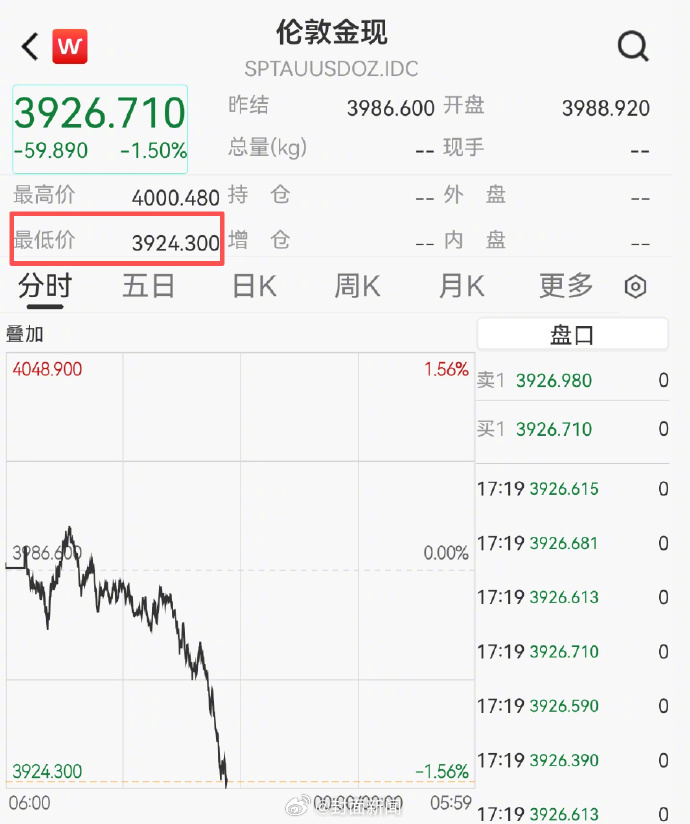
Chinese gold jewellery has fallen below 1,200 yuan a gram for the first time this year, and spot gold has broken under $3,900 an ounce — and the interesting part is what Chinese shoppers are not doing: rushing in. A question trending on Weibo this week — "are the people who bought gold jewellery at the start of the year okay?" (年初买金饰的人还好吗) — gets the answer: not okay, and the debate is no longer whether to buy the dip, but whether this dip deserves anyone's money.
Jewellers cut prices again on November 12, and the day's moves were the sharpest yet: Chow Tai Fook listed 24-karat gold jewellery at 1,199 yuan a gram, Luk Fook and Gold Supreme at 1,197 yuan, and Laomiao Gold at 1,196 yuan — a single-day cut of 11 to 16 yuan a gram. Over the year, the retail price of a gram of gold jewellery in China has fallen by more than 500 yuan. On the international market, The Paper reports that Comex gold futures broke below $3,900 an ounce on November 12, with intraday losses of over 3.5 percent, while silver slid under $50 an ounce. The driver is the one China's investors have been dreading: hotter-than-expected US inflation data, which has traders expecting the Federal Reserve to keep tightening, sending the dollar and Treasury yields up and pushing everything priced in gold down.
[
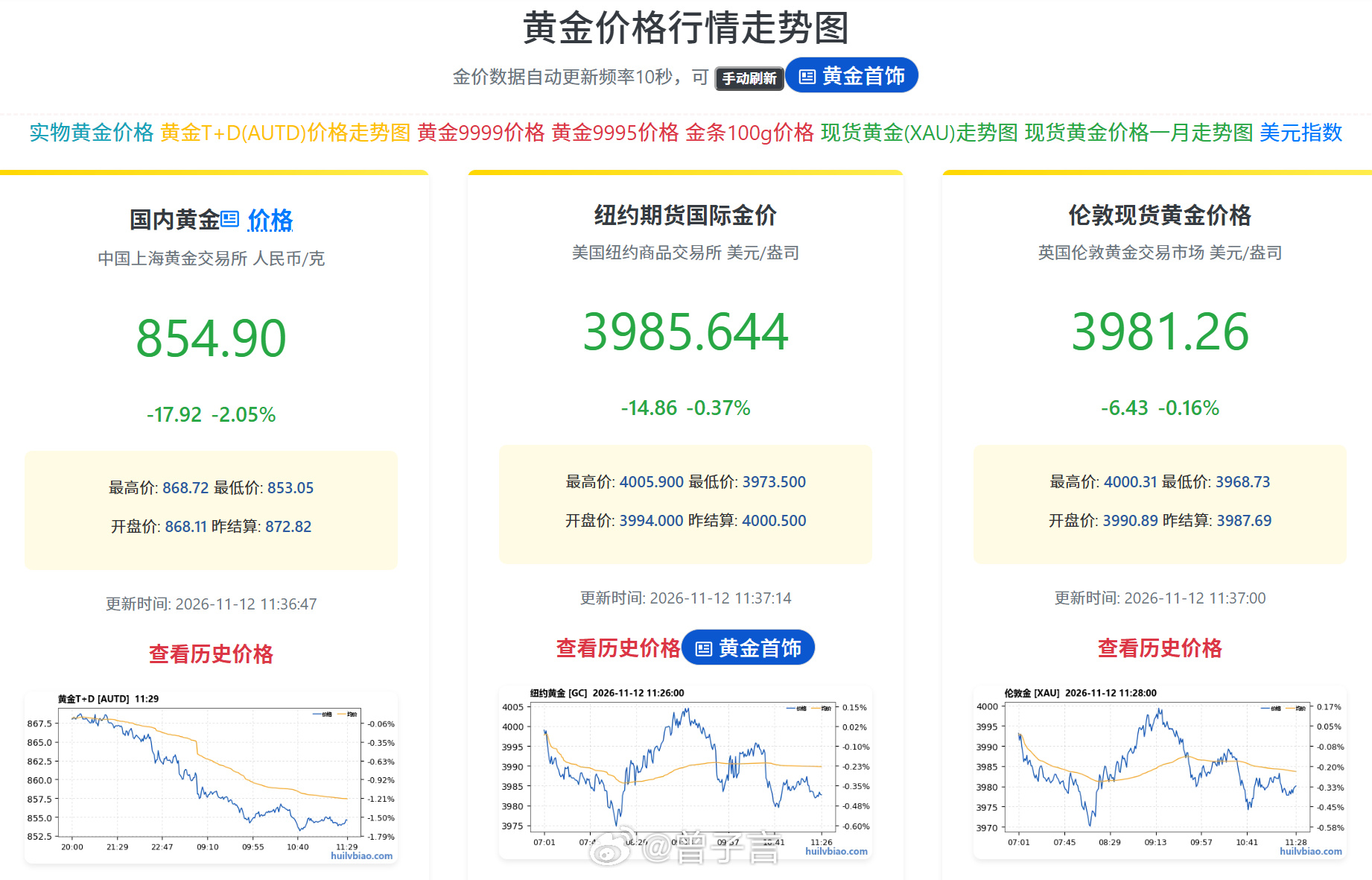
The site's October coverage of the slide — gold dipping below $4,000 as jewellers cut prices overnight — described a country split into two camps: those who bought at the peak and were regretting it, and those who saw a discount. Three weeks later, the split has hardened into a more wary calculus. One of the posts driving the discussion shows a domestic gold price of 854.90 yuan a gram on the Shanghai Gold Exchange, down 2.05 percent on the day, and warns that "the core support level has broken" — quant-driven stop-loss selling is amplifying the fall.
[
The psychology is the story. During the run-up years, when gold climbed to a peak above 1,700 yuan a gram for jewellery, Chinese shoppers — and the young people who turned gold jewellery from a wedding gift into a fashion purchase — bought the dip almost reflexively, and it worked every time. This year, buyers are waiting for a lower point, calculating the gap between investment gold bars and branded jewellery, and buying wedding-season gold only when the calendar forces it. Zhu Zhigang, chief analyst at the Guangdong Gold Association, told Cover News: "If you trade gold specifically, you'll lose money eight or nine times out of ten" (如果专门炒黄金,十有八九会亏).
That is a remarkable reversal of what the market has believed for most of the past decade. The standard argument for gold is that it is the shelter when the world is dangerous — but the logic that has played out over the past week, as one Weibo post put it, runs backwards: rising oil prices worsen inflation, which forces the Fed toward higher rates, which makes the dollar and Treasury yields climb — and that is the "danger" that makes gold fall, not rise. In this cycle, gold has stopped being the shelter and become the storm.
China's gold shoppers bought the dip in October, when prices slid toward 800 yuan a gram. November's question is whether the next wave of buyers is waiting for a bottom that keeps moving. The analysts' answer is to wait: the 10-year Treasury yield is near 5 percent, the dollar index at a 19-month high, and the Fed's next move — not the jewellers' price tags — will decide whether the plunge is a floor or a pause.