One Week Before Shenzhen's APEC Summit, China Counts Its Asia-Pacific Trade
New figures show six of every ten yuan China trades now moving with APEC economies, while the diplomatic choreography — a Wang Yi–Rubio call, a possible US–China–Russia meeting — is being worked out by phone.
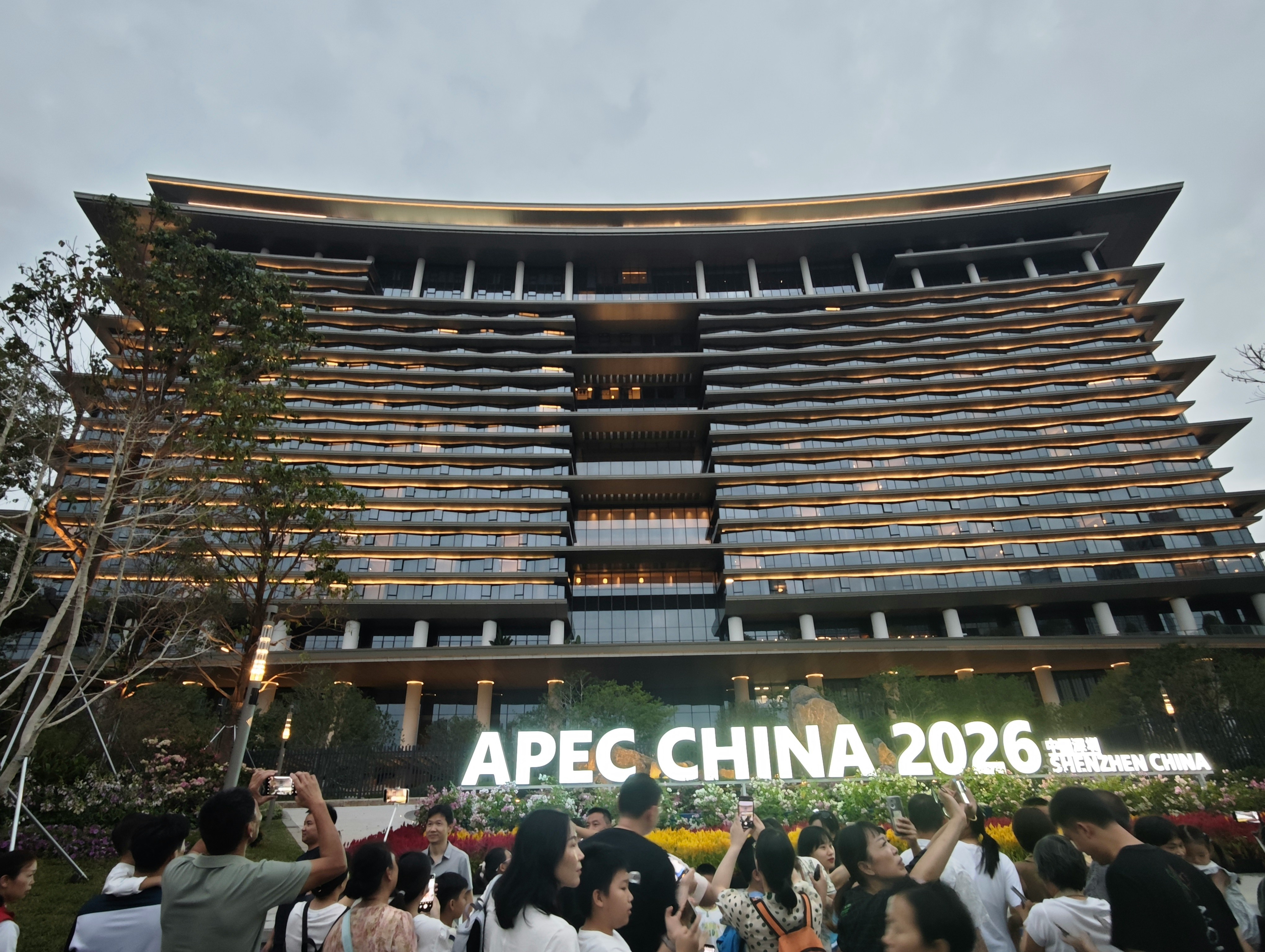
When the Asia-Pacific Economic Cooperation forum opens in Shenzhen on November 18 and 19, it will be the third time China has played host, after Shanghai in 2001 and Beijing in 2014. The choice of the country's most successful special economic zone is deliberate — as we noted when the import expo in Shanghai closed and China's open-door season rolled straight on, the fortnight that said goodbye to exhibitors there is now rolling out APEC branding along Shenzhen's streets, where the summit's media centre has opened and delegations have begun moving in. Crowds have spent the week photographing the flower beds and the new signs.
The run-up has also brought a set of trade figures worth reading alongside the summit schedule. In the first three quarters, China's imports and exports with the other APEC economies came to 24.07 trillion yuan, up 23.9 percent from a year earlier, according to the summary trending at the top of Baidu's board. State television's arithmetic made the proportion plainer: of every 100 yuan China traded with the world, 60.3 yuan involved an APEC economy, against 57.8 yuan a year ago. High-technology goods did much of the lifting — trade in them with APEC partners grew 50.3 percent and accounted for nearly half of the total increase.
CCTV's second contribution was a portrait of a single crossing point. Mohan, in Yunnan on the Laos border — its name means "rich salt well" in the Dai language — was a tea-horse-road town before the China–Laos Railway came through. The railway has now carried more than 100 billion yuan in trade, spreading some 3,900 kinds of goods across 19 countries from Laos to Malaysia.
The diplomacy runs on a parallel track. On November 11 Foreign Minister Wang Yi called US Secretary of State Marco Rubio; both sides called the conversation positive and constructive, and Wang said the two countries should support each other in hosting the APEC and G20 summits well (Caixin; HK01). Russia's foreign ministry praised China's hosting work and said it expected the summit to open new opportunities for cooperation with the region (Yicai).
The harder question is what happens on the leaders' day itself. Citing people familiar with the planning, the Wall Street Journal reports that Beijing has favoured a tightly scripted three-way meeting with the US and Russia — each side delivering prepared remarks — while Washington wants a looser format and wants to raise nuclear arms control (HK01). Beijing, the report says, would rather meet the two separately than accept an unscripted session.
The trending summary of the state coverage framed the stakes with a line of Xi Jinping's: as long as openness and connectivity are practised, the Pacific can become a thoroughfare for prosperity. Whether the three leaders share a stage at all is one of the format questions the phone calls have yet to settle.