Her 200 Yuan of Books Didn't Buy a Seat at Sisyphe's Café
A customer bought nearly 200 yuan of books at Sisyphe, sat down in the chain's in-store café, and was told the seats are for coffee customers only — splitting Chinese readers over what a bookstore owes the person who just paid at the till.
The books were paid for; the chair, it turned out, was not included. On the evening of November 6, a customer who gives her surname as Zhou bought close to 200 yuan of books at a Sisyphe bookstore, then carried them next door — to Vector Coffee, the café the chain runs within the same floor plan — and sat down to read while waiting for someone. About twenty minutes later, a staff member arrived with a drinks menu and explained that the café's seats are for café customers: buying books next door does not count.
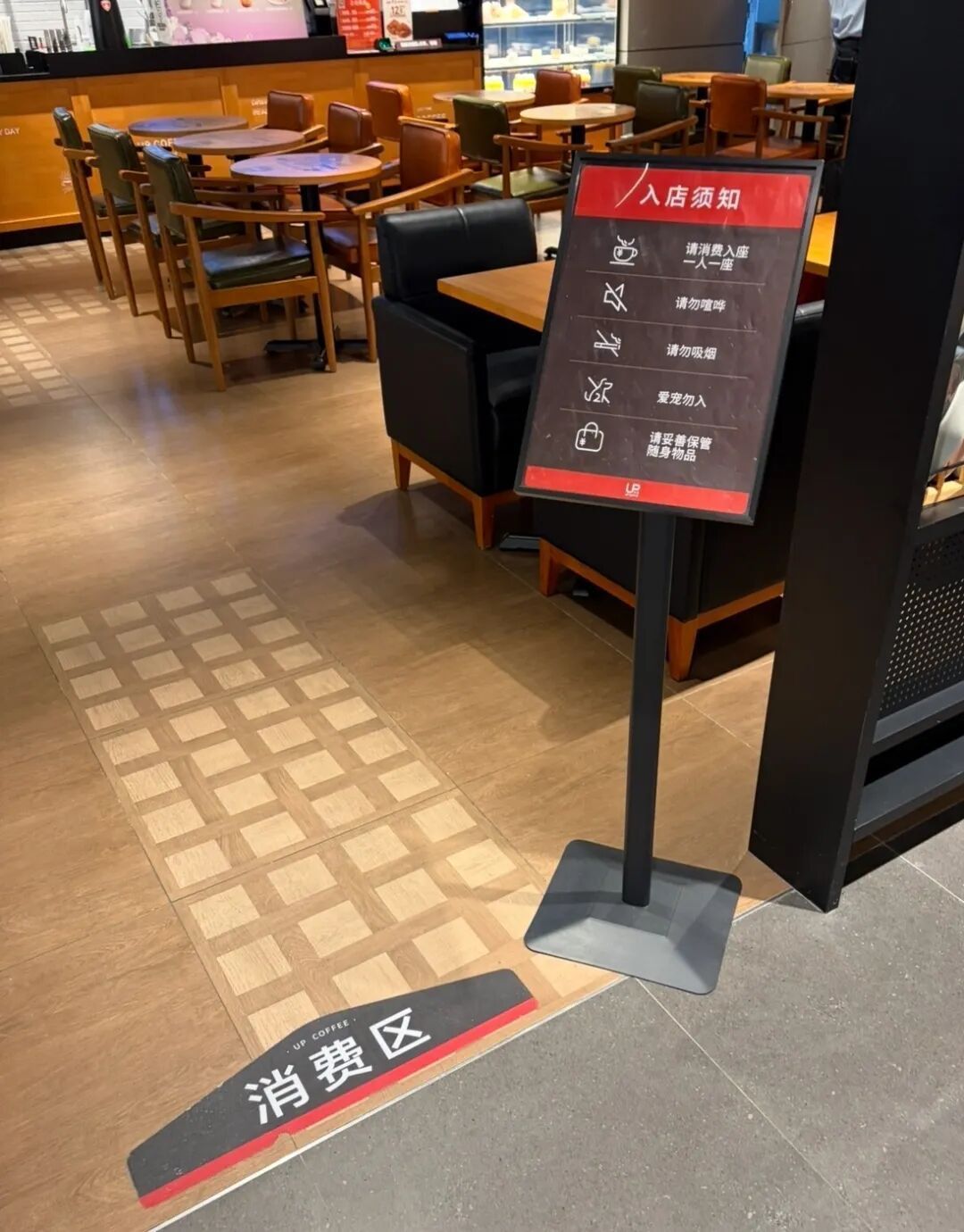
Her post about the exchange turned into one of the week's livelier consumer debates, and the store's reply became the story's second act. Sisyphe told Jimu News that the bookshop and the café run as separate units with separately accounted revenue — the seats, cleaning, utilities and service in the coffee zone are costs the book side does not carry. The rules are also posted in the room: a sign photographed by a Weibo user this week reads, in red and white, "Please make a purchase to sit; one person per seat," beside a floor decal marking the zone as a paid-seating area.
Plenty of commenters took the store's side. Sisyphe's format is the bookshop-anchored café — shelves leading to a coffee counter under slogans promising to "read the city" — and one defender laid out the arithmetic: seats are finite, coffee customers have paid for them, and a reader who occupies one for an afternoon on the strength of a book purchase crowds out exactly the customers whose orders keep the lights on.
Others were startled to learn the rule existed at all. "This is the first time I've found out the coffee and the bookshop are separate — I've been there so many times and always assumed buying books meant I could sit in the coffee area," one regular wrote, before adding that the charge is per head: a parent bringing a child is expected to order a drink for the child too.
Zhou's own ask was narrower than the argument around it. She told the reporter she has no quarrel with a consumption rule as such — she wants it disclosed before someone sits down, not raised twenty minutes in, menu in hand.
The dispute lands on ground Chinese retail has been arguing over all autumn. Earlier this month a high-schooler who sat in a craft shop without buying anything left an apology note that charmed the country, and a Ph.D. who opened a near-cost bookstore in a Shenzhen urban village showed how thin book margins run. Between a note-leaving teenager and a separately-accounted espresso machine sits the same question: what does a store owe the person who walks in and doesn't order? Sisyphe's answer is on the wall — a sign that, by its own customers' account, most people never notice.