Lin Shengbin, the 'Grieving Husband' of China's 2017 Fire, Is Trending Again From a Sydney Suburb
Lin Shengbin became China's most sympathized man after his wife and children died in a fire in 2017. This week he is trending again, accused of having built a business empire on the sympathy and remarried with a new family in Sydney.
Nine years ago, Lin Shengbin was the most sympathized man in China. In June 2017, a fire in his Hangzhou apartment tower — set by a nanny — killed his wife Zhu Xiaozhen and their three children. The nanny was executed two years later. Lin, a businessman who was out of the house that morning, built a public identity around the loss: a widowed father who posted about his grief, and whose children's clothing brand, Tongzhen Yisheng, was bought by people who felt they were helping a grieving husband rebuild.
The persona collapsed in 2021, when it emerged that Lin had quietly remarried and had a child with a woman who had worked at his company. The brand collapsed with it, and the anger never fully went away. This week it is back on the trending list, and the anger has a new layer: a viral claim that Lin now lives in Mosman, one of Sydney's wealthiest districts, with his current wife and their two children, who are enrolled in local private schools. A post repeating the claim drew more than 49,000 likes, and one reply added a detail that stung: that Lin, by the poster's account, has given nothing to his deceased wife's parents.
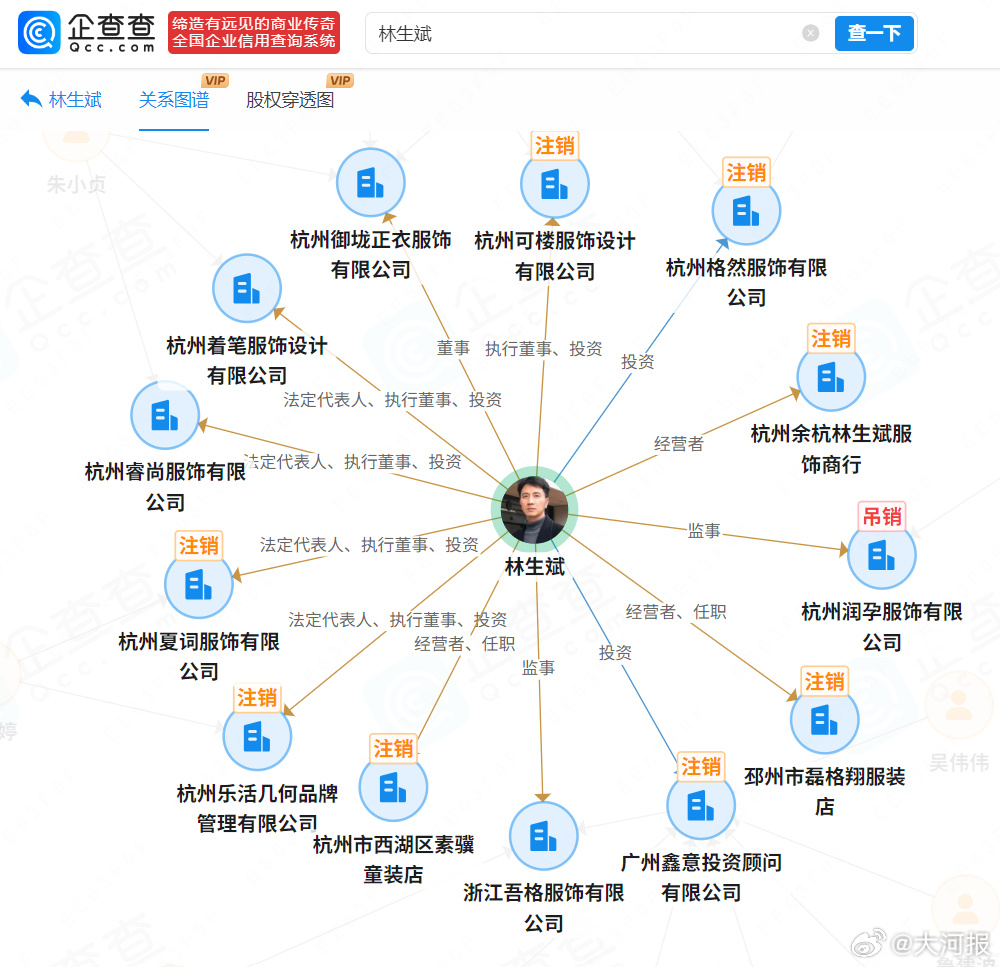
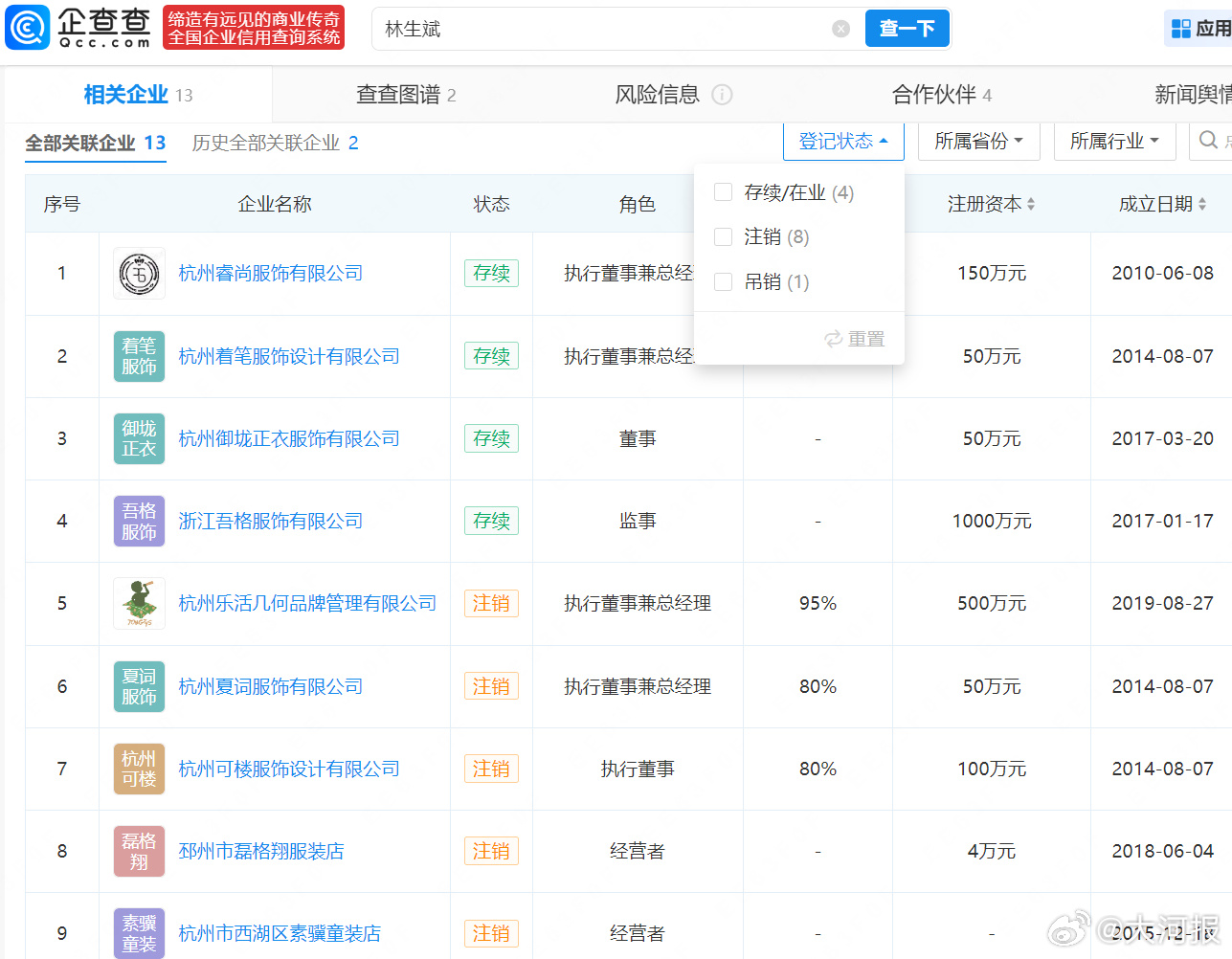
The harder evidence came from a registry check. Henan's Dahe Daily, a local paper, pulled the corporate records and found that Lin is associated with 13 companies, four of which are still active. Three of the four — Hangzhou Ruis, Hangzhou Zhebi Clothing Design, and Hangzhou Yulongzheng Clothing — were founded with his late wife, and Lin remains their executive director and general manager. Several of the 13 carry marks for operating irregularities.
The registry screenshots have been circulating all day, and the reaction is not about the businesses themselves — it is about what the businesses imply. The three companies he co-founded with Zhu Xiaozhen are, in effect, joint ventures with a dead woman, still operating under her name. One commenter put it plainly: public sympathy should not be a bargaining chip for making money. Another wrote that it is understandable to rebuild a life after tragedy, but that one should not consume past pain and public goodwill for traffic.
The Sydney claim itself is just that, a claim — no outlet has verified the Mosman address, and Lin has not responded to any of it. What the story does document is the machinery of a grief economy that has outlasted its own collapse: sympathy that turned into a clothing brand, a brand that survived its own scandal as a set of active companies, and a public that has spent nine years watching the receipts. The remaining question is the simplest one, and it is the one the in-laws' post raises: where did the money go, and who did it go to?