China Approves Its First Oral GLP-1 Weight-Loss Drug, and It Doesn't Need a Fridge
Eli Lilly's orforglipron, a pill that cuts average body weight by up to 12 percent in trials, has been cleared for weight management in China — the first oral GLP-1 in the country, and a challenge to injectable drugs that need cold chains.
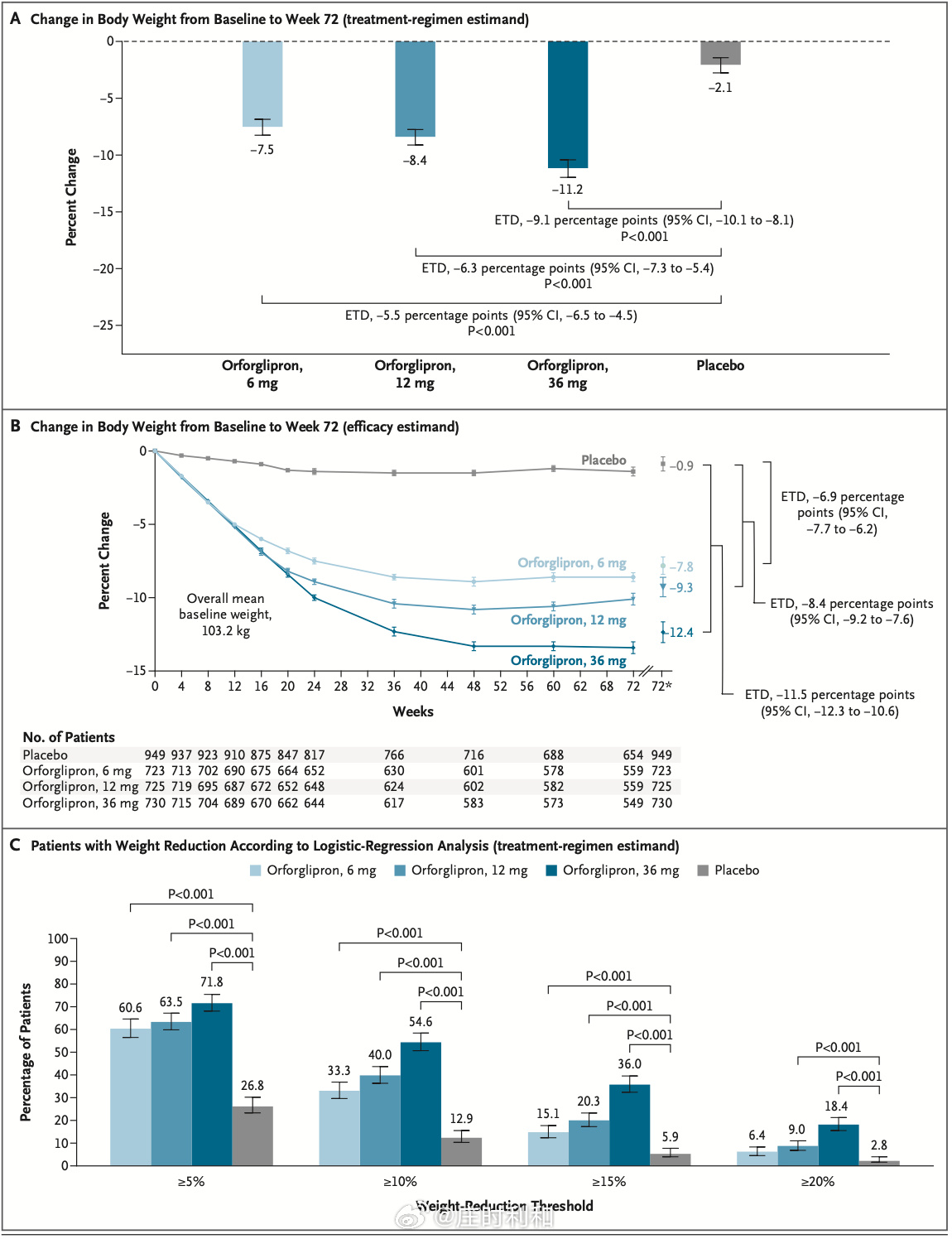
The pill is a small molecule, not a peptide, and that is the entire story. Orforglipron, Eli Lilly's oral GLP-1 drug, has been approved in China for weight management — the first drug of its kind in the country, according to a widely read post by science writer Zhuang Shilihe, and the second major milestone in a week for a pharmaceutical industry that has been watching China's obesity market with open fascination.
The injectable GLP-1 drugs that dominate the market — semaglutide, tirzepatide — are peptides: chains of amino acids too large to survive the stomach and cross the intestinal wall intact, which is why they have to be injected. The trick behind them, the SNAC absorption enhancer, is why Novo Nordisk's oral semaglutide must be taken first thing in the morning on an empty stomach with less than 120 milliliters of water and a 30-minute wait before food or drink. Orforglipron sidesteps all of that: it's a small molecule that works as a pill, once a day, with no food or water restrictions, and no refrigeration. That last point matters more than it sounds — in a country with cold-chain gaps between the coastal cities and the interior, a weight-loss drug that ships like a bottle of aspirin is a different kind of drug.
The trial data explain why the approval is a big deal. The phase 3 study enrolled 3,127 adults across nine countries — average age 45, average weight 103 kilograms, average BMI 37, with 36 percent already prediabetic, the population these drugs are actually for. Over 72 weeks, the placebo group lost 2.1 percent of body weight; the drug groups lost 7.5, 8.4, and 11.2 percent at the 6, 12, and 36 milligram doses. At the highest dose, more than half of participants lost 10 percent of body weight and 18 percent lost 20 percent. Blood pressure, triglycerides, and waist circumference all improved; among patients with prediabetes, 74.6 to 83.7 percent returned to normal blood glucose, against 44.6 percent on placebo. The most common side effects are gastrointestinal — nausea, constipation, diarrhea — and 10.3 percent of the highest-dose group dropped out over them.
The numbers come with a caution that the Chinese science writers covering the approval have been unusually insistent on. Zhuang Shilihe's post, the most-read account of the drug's approval, spends as much time on who the drug is not for as on what it does: the trial subjects had a pathological BMI, he notes, and the drug is a prescription medicine for obesity, not a shortcut for people who want to lose a few kilograms. The dietitian Gu Zhongyi, who covered the same drug at the Shanghai import expo, put it bluntly in a card that went viral: it's a real breakthrough, but don't rush to find a daigou. He also warned that the oral semaglutide already sold in China is approved for diabetes, not weight loss, and that the counterfeits circulating through overseas purchasing agents are the real risk.
This all matters because the shot came first and the caution came later. The FDA warning about semaglutide's possible link to permanent blindness landed on Chinese platforms, and the same platforms still sell them at a low threshold — our coverage of that warning noted that the pharmacy-counter threshold for GLP-1s in China is far below what the prescription labels suggest. An oral pill that doesn't need refrigeration will make that threshold easier, not harder.
For now, the drug arrives in a market that is learning to talk about weight loss as a medical question rather than a moral one. The instructions on the trial were the same for every group: diet and exercise counseling, at least 150 minutes a week of physical activity. The placebo group lost 2.1 percent, and 2.8 percent of them lost more than 20 percent — the same lifestyle change the drug is supposed to supplement.