For Five Years, a Shopkeeper Pretended to Scan Her Groceries. He Never Charged Her a Cent.
In Pingxiang, Jiangxi, a supermarket owner kept up a five-year performance of ringing up a stranger's bread and milk — 500 times, roughly 10,000 yuan of goods — because she had mental illness and he didn't want her to feel like a charity case.

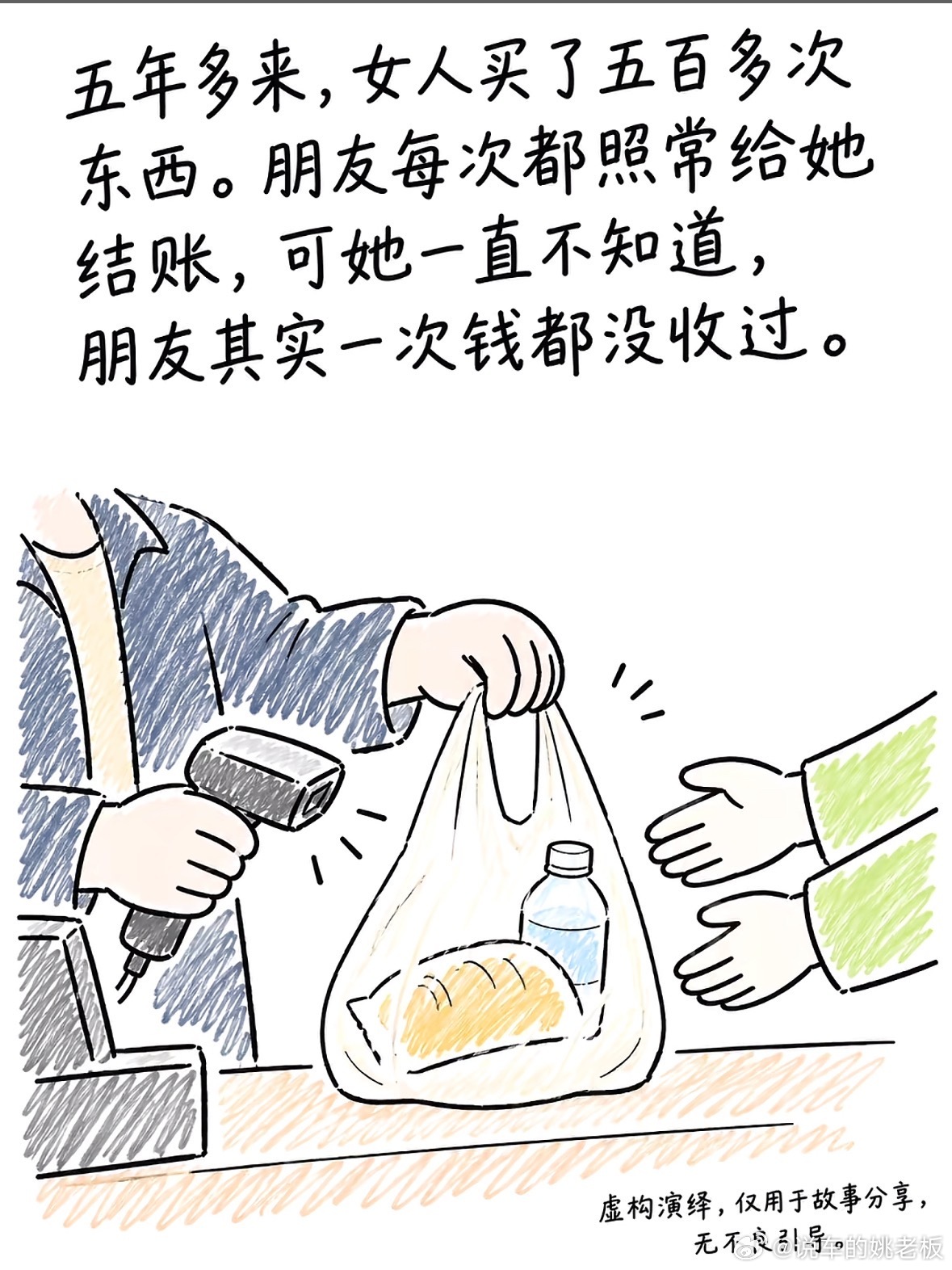
The beep always sounded. The scanner gun flashed over the barcode on the bread, the bottle of milk, the can of cola — "滴" — and the bag was handed over with a receipt's worth of ceremony. What the beep never did was deduct anything. The till recorded nothing, because the transaction did not exist, and no payment was ever taken. The man behind the counter, Chen Hui, has repeated this performance more than 500 times over five years at his small supermarket in Pingxiang, Jiangxi, and the customer he does it for has no idea.
Her story begins in August 2021, when a woman in her fifties walked into the shop in the middle of a heat wave wearing a padded winter coat and a wool hat. She paid for her first few purchases normally. Then one day she stood at the counter and asked quietly: could she take the goods now and pay when she had money? A neighbor later told Chen what he had not been able to see: the woman had experienced a mental breakdown after a major upheaval in her life, lived alone on subsistence support in the nearby community, and spent her days wandering the streets.
Chen could have said "no charge" — one sentence, one second. Instead, he chose the harder path, which was to keep charging her. He passes a scanner over nothing, bag included, and she walks out a customer. He told the account that published the story this week that treating her "like a normal customer" was the point: she should not feel like someone being helped. He doesn't keep a ledger, and he doesn't expect repayment. He estimates the goods and small cash he has passed her over five years add up to nearly 10,000 yuan, mostly a drink and a loaf of bread at a time, usually eight to twelve yuan, once twenty-one.
The story found a second life in December 2021, when a stranger filmed the woman leaning against a wall downtown and posted it with mocking captions. Chen was furious — she had done nothing to anyone, he said, and had already suffered enough. He cut his own footage of her shopping quietly and posted it with a plain request: "I don't know what you've been through, but it must have been unimaginable. If you meet her, please be kind." The video drew 220,000 likes and 20,000 comments; strangers sent packages, winter clothes, and offers of money, most of which he declined, converting the roughly 2,000 yuan he accepted into supplies and 410 yuan in cash for warm clothes as the weather turned.
One detail has been passed around Weibo more than any other. Someone gave her a bowl of hot wontons on the street; she accepted it and pressed her cherished few candies into their hand. She knows she owes. The exchanges the story has generated are about the shape of the kindness, not the amount: the shopkeeper's performance was not about secrecy, it was about dignity — his refusal to make her a recipient of charity, and the risk that she would have had to feel like one.
Chinese readers have learned to be warier of kindness stories than they once were — a restaurant owner's viral "kindness" video in Chongqing was found to be staged, and officials said so. This week's tale has had its share of skeptics. But the account carries the details that make it feel lived: the woman still comes by, a few times a month, and the videos are rare. Chen, who spent years in Nigeria helping organize a Chinese merchants' association, has been named a "good person" by his district. The final gesture of the story is his: he doesn't plan to film her again. "The heat will fade," he said. "The respect and companionship are what last.