Fifteen Held as Shanghai Police Trace a '510,000-Yuan' Restaurant Bill to an AI Forgery
A receipt apparently showing a 517,127.60-yuan dinner at Shanghai's storied Peace Hotel — two bottles of 1997 Romanée-Conti included — went viral before netizens picked it apart. Police now say an online liquor seller used AI software to doctor a real bill, then bought its forgery an audience: 15 people have been caught, four facing criminal measures.
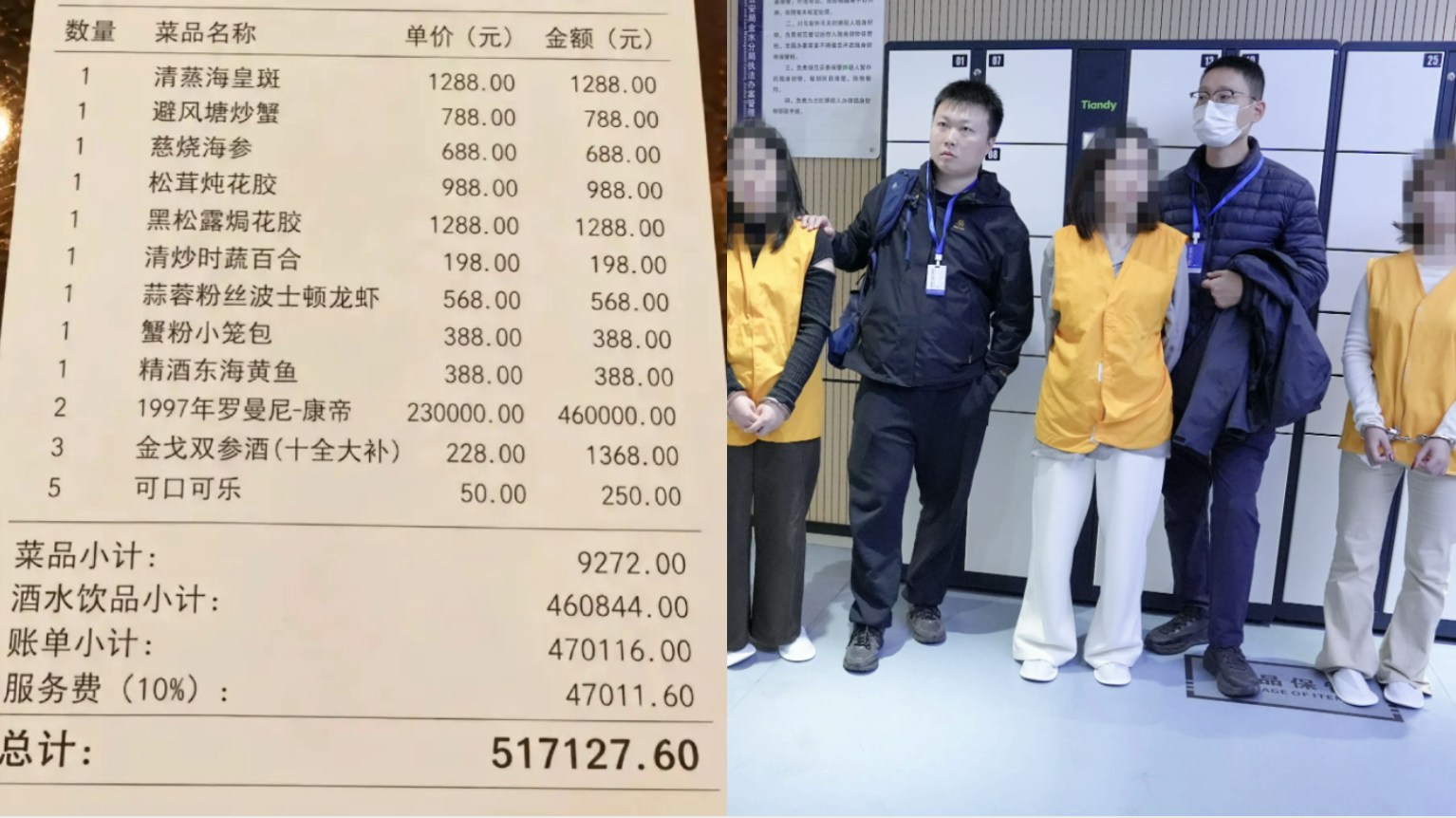
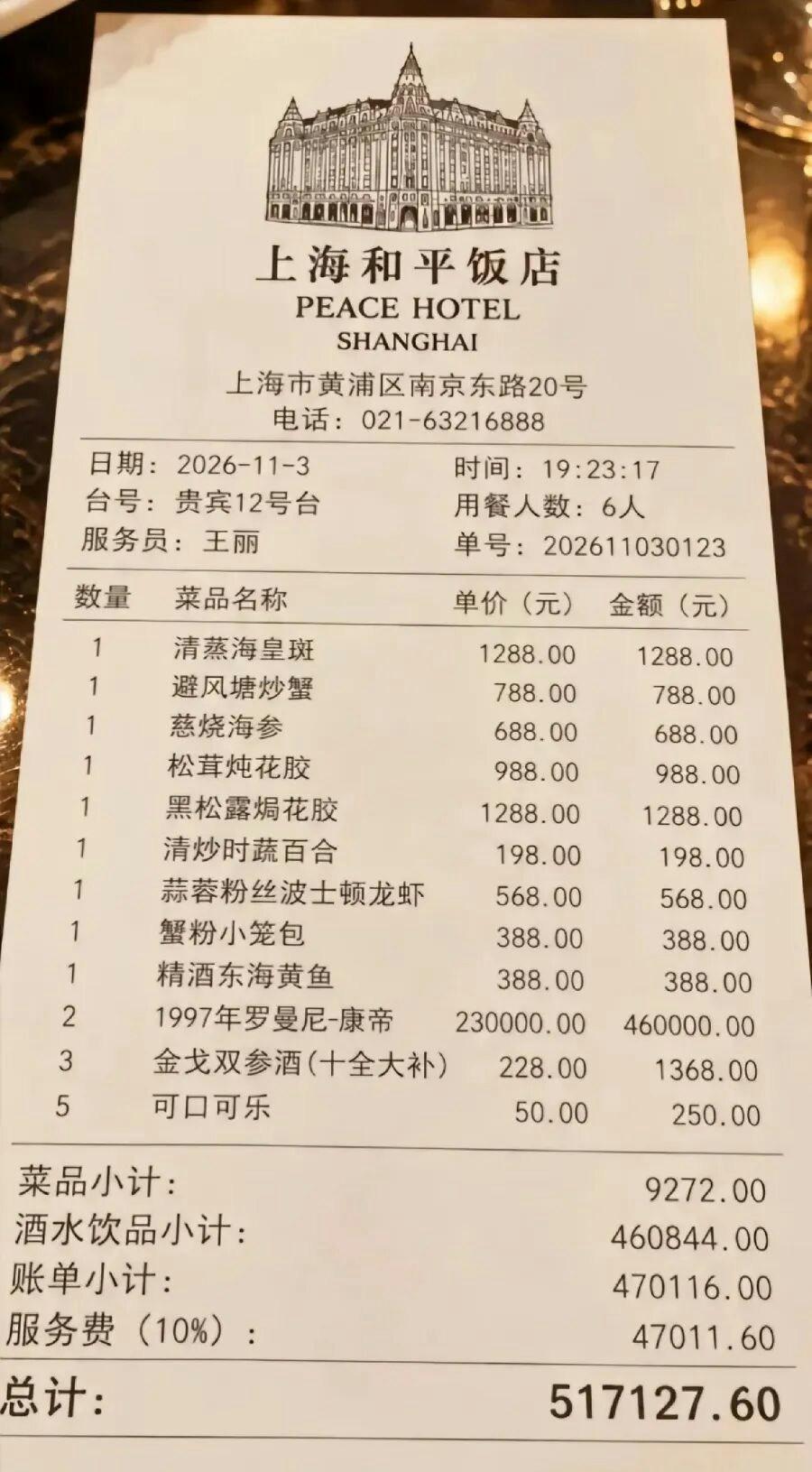
The receipt looked exactly like the China the internet loves to argue about: a dinner for six at the Peace Hotel on the Bund, VIP Table 12, nine dishes, and two bottles of 1997 Romanée-Conti at 230,000 yuan apiece — a grand total, service included, of 517,127.60 yuan. After it began circulating on November 8, the sum did its work, feeding the familiar genre of posts about ruinous luxury dining at one of Shanghai's most famous addresses.
It came apart the way such fabrications usually do: not through outrage but through bookkeeping. Sharp-eyed readers noticed the receipt's own details didn't reconcile — mismatched English names, a service charge that didn't behave like the hotel's — and, per the police account, the giveaway was the wine list itself. The bottles on the forged bill were not the Peace Hotel's; they were products sold by an online liquor company.
On November 13, Shanghai's Huangpu district police published a notice that CCTV and Jiupai News relayed: an investigation had found that a liquor-sales company boss surnamed Zhao, from outside Shanghai, had organised employees to use AI software to alter the amounts on a genuine Peace Hotel bill and substitute his own company's wines, then produced a staged video around it. To give the forgery reach, the notice said, the group controlled batches of accounts and paid for bulk reposting — the standard machinery for manufacturing a viral moment, pointed at a single receipt.
The enforcement was brisk. Working with police in the suspects' home province, Shanghai officers caught 15 people. Zhao and three colleagues — surnamed Wang and Dong, two of them — face criminal compulsory measures for fabricating false information about a business; the other 11 received administrative punishments. The hotel, which had faced a week of being the punchline for a dinner that never happened, gets its name cleared in the same notice.
The case is a compact study in how fabricated virality now gets made and policed in China. The tool was generative — an AI edit of a real document, plausible enough to fool a first scroll. The motive was commerce, not ideology: attention converted into liquor sales. And the counter-measure that mattered came before the police, from anonymous readers who audited a screenshot's typography and arithmetic. That combination — a forgery cheap enough for a liquor vendor to commission, an audience large enough to be worth buying, and a police notice that names the software rather than just the scam — is the part worth filing away. The receipt's 517,127.60 yuan was never real; the four criminal measures are.