Cigarettes and the Means Test: Why Sichuan University Cancels Tuition Waivers for Students Who Smoke
Sichuan University's aid rules disqualify students who smoke, drink heavily or game obsessively from tuition waivers — a clause that has existed since 2016 and went viral again this week. The argument it reopened is an old one: whether aid for the poor should also police how the poor spend their money.
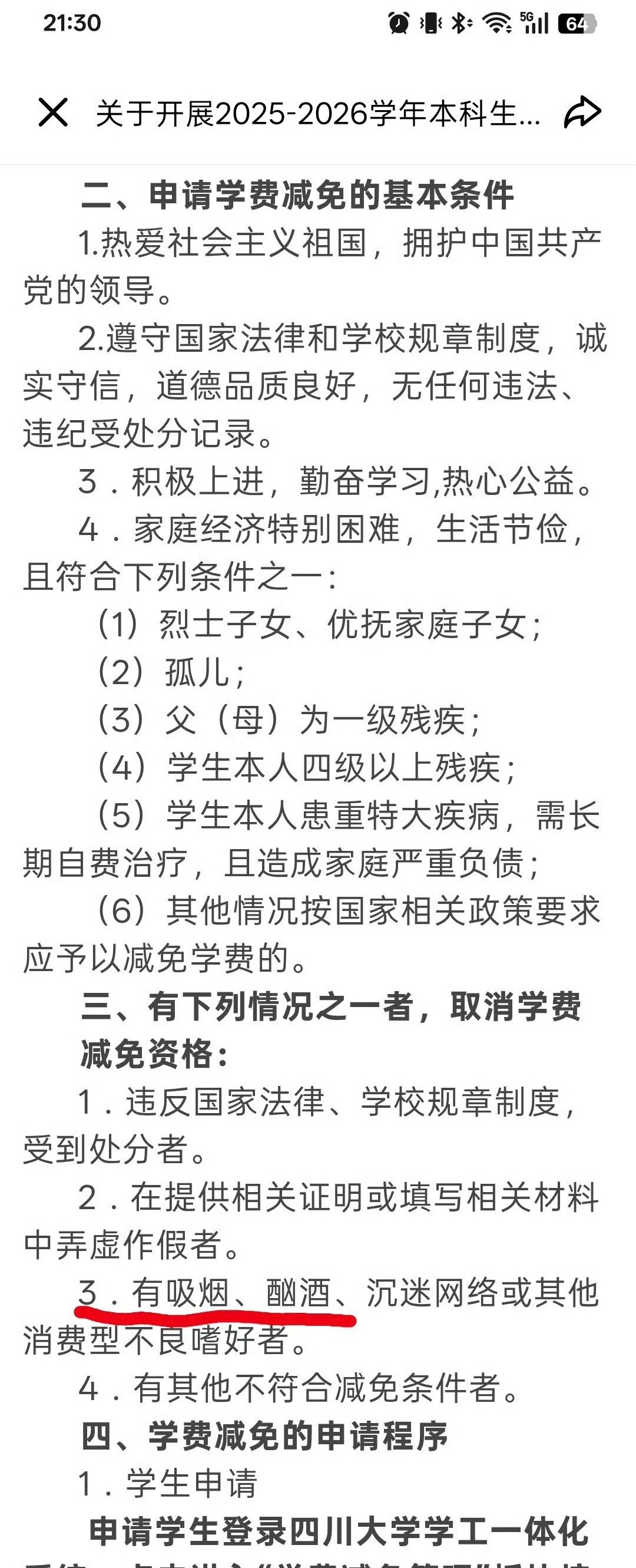
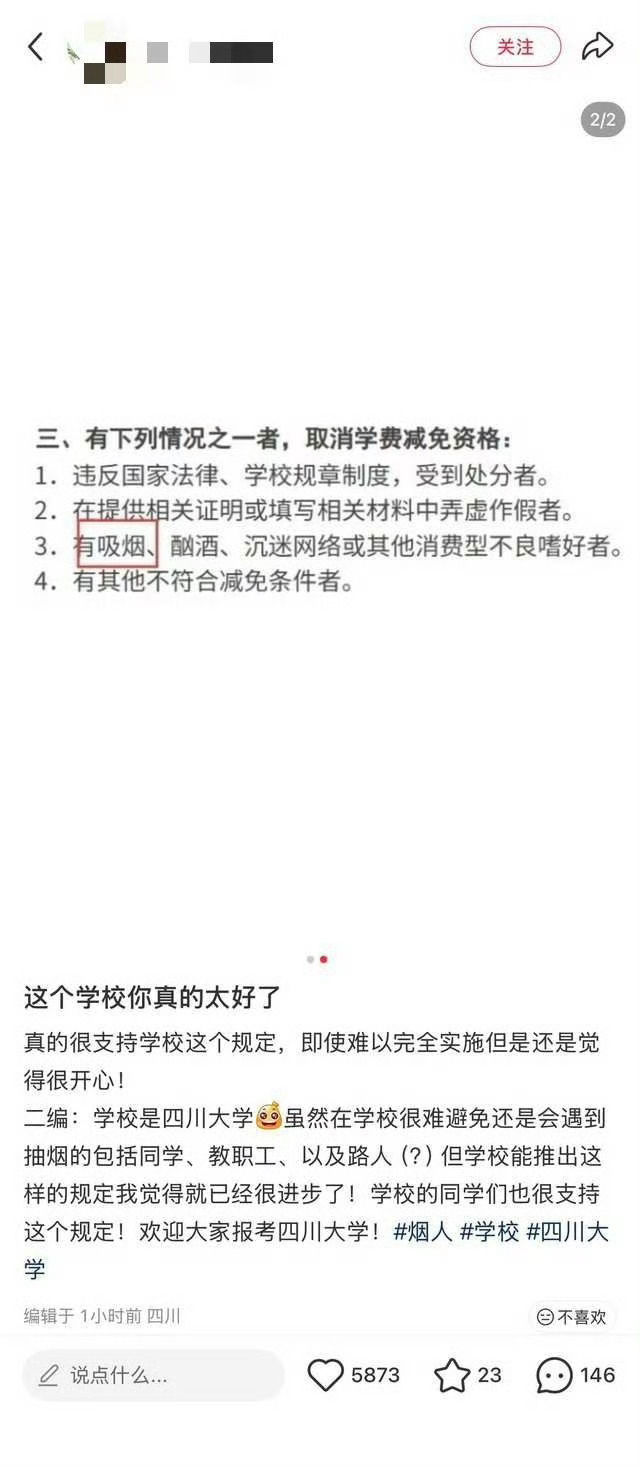
A single phrase, boxed in red in a screenshot of Sichuan University's aid policy, sent the topic up the boards on September 21: students who smoke can lose their tuition waiver. The university's current notice on fee reductions for undergraduates lists the grounds for revocation in order — breaking school rules, falsifying hardship paperwork, and then, at item three: "smoking, binge drinking, internet addiction, or other consumption-type bad habits" (吸烟、酗酒、沉迷网络或其他消费型不良嗜好). In China's public universities, where a tuition waiver is needs-based aid worth thousands of yuan a year, that third clause reads as a moral test bolted onto a financial one.
What the day's outrage and approval both missed, according to the Baidu hot-board entry that carried the topic, is that the clause is not new: Sichuan University has applied it since 2016, and Northwest A&F University and other institutions carry similar language in their aid rules. It resurfaced because a new academic year's notice was republished and screenshotted, and because the clause is startling enough to read as a fresh escalation every September.
The most-liked post in the discussion — liked more than 7,000 times — argued the rule is simply arithmetic. Tuition waivers exist, the science-account poster wrote, to help students whose families are poor, disabled or otherwise straitened; a student who can afford a cigarette habit has told you something about his finances, and the aid should move to someone who needs it. A widely reshared comment from a Xiaohongshu-style screenshot cheered it further: "This school is really too good… I really support this regulation… Welcome everyone to apply to Sichuan University."
The counterargument came from a post reshared nearly 600 times, which defended the rule's goal but flagged its edge cases: aid is public assistance, not a student benefit, and steering it toward students who are "genuinely poor and self-disciplined" is fair in principle — but the enforcement has to be objective, and the clause slides from assessing need into policing lifestyle. Its author ranked the rule "more good than harm" overall; the qualifier did the work. A smoker's habit, after all, may postdate the hardship; an "internet addiction" is diagnosed by whom; and the clause puts students applying for aid in the position of proving not just that their families lack money, but that they deserve it.
That is the tension the debate keeps circling. China's university aid system runs on hardship certification — a family-income stamp, sometimes a home-visit — and every tightening of the criteria is popular precisely because everyone has heard of a case of the undeserved taking the slot. The smoking clause is that instinct carried to its logical end: if the money is short, the reasoning goes, the cigarettes are evidence. The universities, for their part, have kept the rule quiet for a decade and let the argument relight itself every time the notice is reposted.