Seven Golds at Nineteen: Zhang Zhanshuo Closes Out the Best Asian Games in Chinese Swimming History
Nineteen-year-old Zhang Zhanshuo became the first swimmer in Asian Games history to win seven gold medals at a single edition, capping a Nagoya meet in which China's swim team took 30 golds — its best Asian Games result ever.
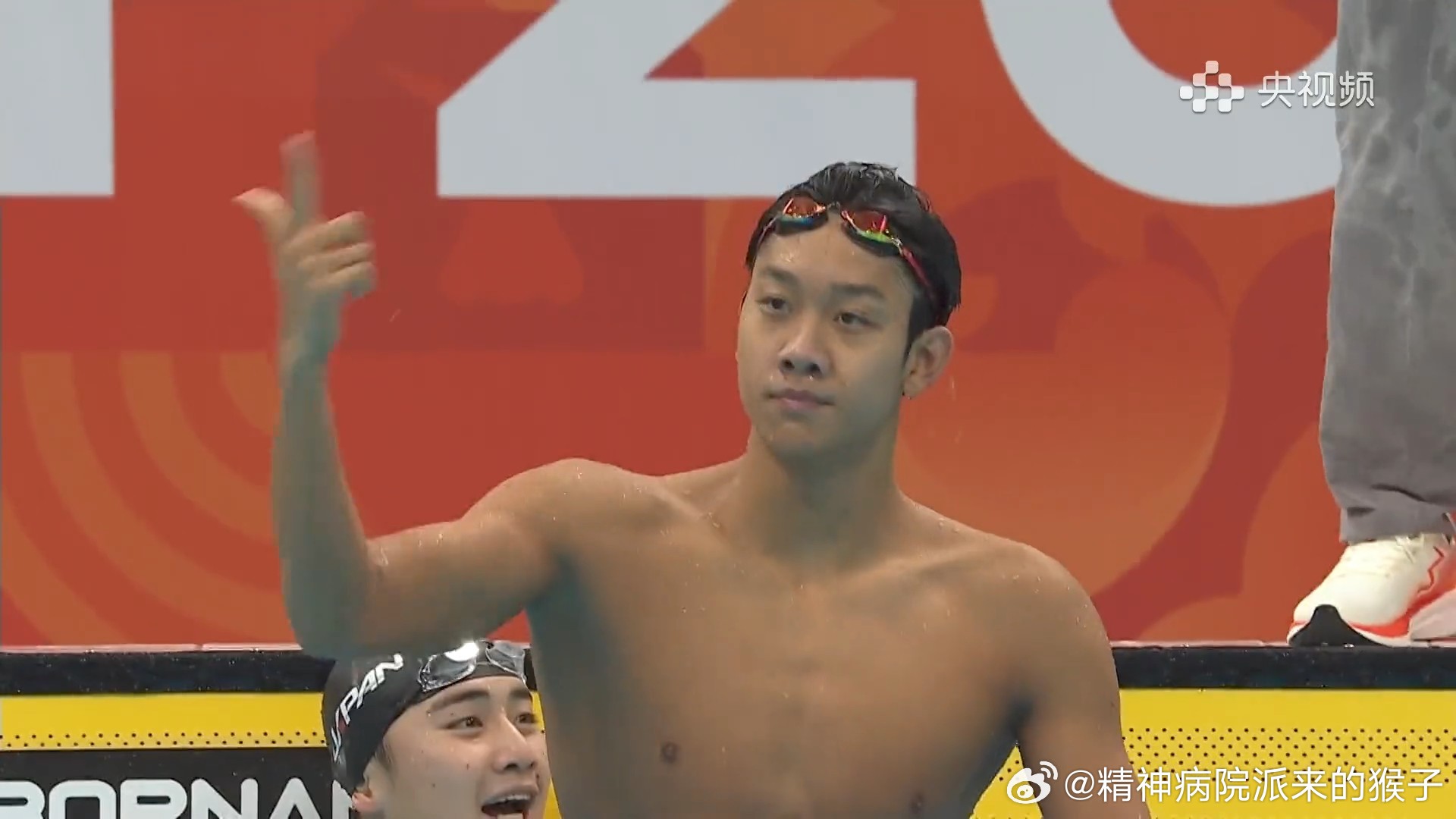
On the final evening of swimming at the Nagoya Asian Games, Zhang Zhanshuo swam the men's 400-metre freestyle in 3 minutes 41.28 seconds, breaking the Games record and collecting his seventh gold medal of the meet. No swimmer in the Asian Games' history — in swimming, at least — had won seven titles at a single edition before. He is nineteen.
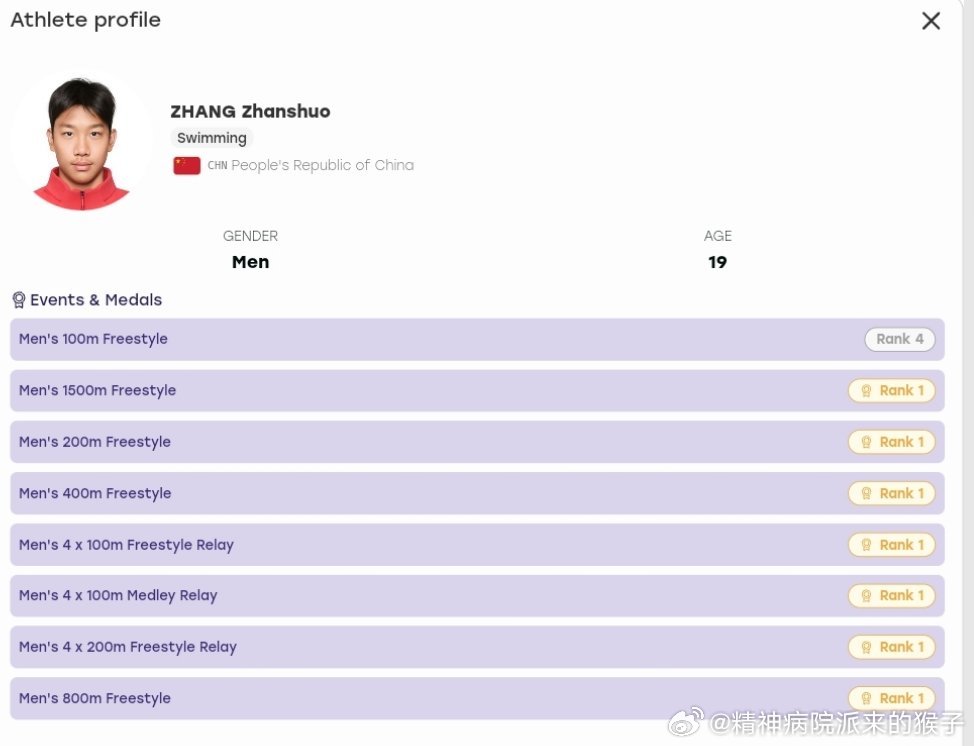
The tally, laid out by fans on Weibo with the glee of people counting someone else's money, reads like a meet programme: 200 m and 400 m freestyle, 800 m and 1,500 m freestyle — the last two in Games-record times — plus three relays, two of which also set Asian records. His only blemish was a fourth place in the 100 m freestyle, a sprint that sits outside his distance-training comfort zone. A screenshot of the results database circulated widely, showing six firsts and one fourth against his name.
Zhang is the most conspicuous product of a broader Chinese depth. The swim team closed the pool programme with 30 golds, 13 silvers and 11 bronzes — its best Asian Games result ever, as state media noted, and confirmation of the generational turnover that began when the post-Tokyo veterans gave way to teenagers. The Paper put the two faces of that turnover side by side: 13-year-old Yu Zidi and 19-year-old Zhang "going on a killing spree" in the pool, the kind of phrasing Chinese sports media now reach for routinely. Li Bingjie successfully defended her 800 m title with a fifth gold of her own, Zhang Yufei anchored the women's 4x100 medley relay past Japan — out-duelling Rikako Ikee in the butterfly leg — and Qin Haiyang defended his 50 m breaststroke crown.
What made Zhang's hometown coverage different from the usual medal count was his parents. A Qingdao newspaper interview resurfaced and spread widely after the 400 m final, in which his mother and father described a deliberately low-pressure path: they introduced him to ball sports and swimming early, never forced training, and let him choose between school and the pool at the crossroads — on the condition that "if you do it, do it all the way." For Chinese parents who have spent the past decade debating whether youth sport and schoolwork must be enemies, that story — a Games-record-setter raised on "guidance, not pressure" — became its own viral object, and the family-interview clip drew millions of views.
Zhang himself declined to linger on the record. Asked what came next, he said the Asian Games was a way station: "My ultimate goal is the Olympics." Los Angeles is two summers away, and China now knows precisely what its teenage 7-gold king can carry into it.