Olympic Champion Zheng Qinwen, Ranked 121st, Fights Through US Open Qualifying for the First Time
Wrist injuries have dropped 2024 Olympic tennis champion Zheng Qinwen to 121st in the world, forcing her into US Open qualifying for the first time in her career. One win from the main draw after taking the first set against Anastasia Pridankina, she is drawing half-home-court crowds and a national debate about her place in Chinese tennis.
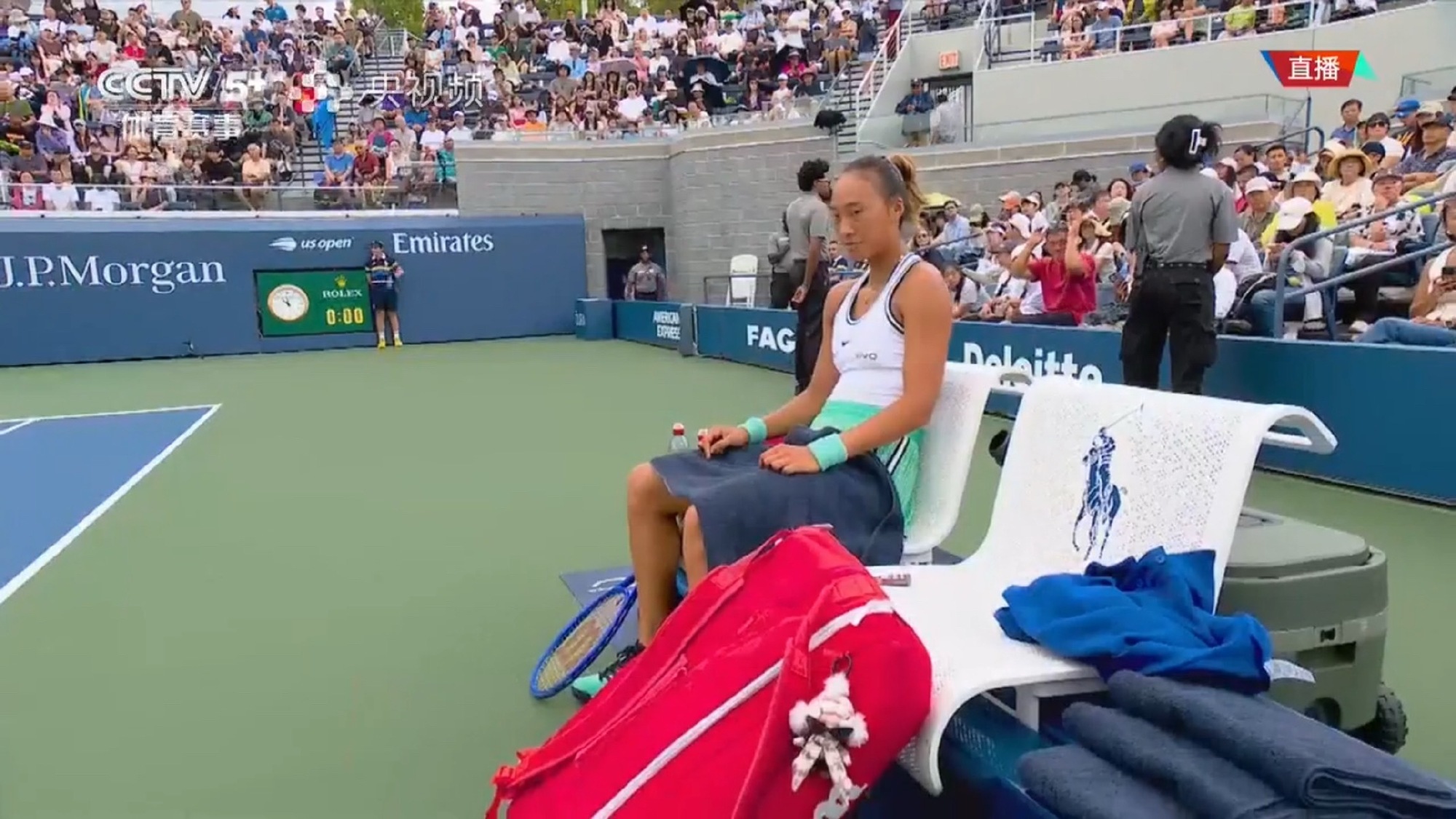
The last time Zheng Qinwen needed to win a match to enter a Grand Slam main draw, she was an unknown junior. This week, the 2024 Olympic champion and former world No. 5 is doing it at the US Open — in qualifying, a tournament-within-the-tournament she has never played in her professional career. A wrist-injury-hit season has dropped the 23-year-old to 121st in the world, outside the cutoff for automatic entry in New York, and so China's most bankable tennis star is fighting her way up from the qualifying draw like a newcomer. She beat Canada's Briere 6-1, 7-5 in the second round, then took the first set 6-4 against Russia's Anastasia Pridankina, ranked 186th, in Thursday's decisive round — one win from the main draw.
The sight has produced the strangest television of the Chinese sports week. Qualifying broadcasts are usually narrated by lesser-known voices, but Zheng's matches drew the veteran commentator known to tennis fans as "Auntie Tong," whose opening lines instantly went viral: "Our country's former No. 1, currently down to 121st in the world... setting aside her pride, for the first time in her career, playing US Open qualifying." Her flubbed renderings of Pridankina's name — "Prijin... Prits" — kept the clips multiplying; one fan account's compilation of her stumbles drew hundreds of appreciative comments, fans treating the flustered dignity as the emotional register of the moment itself.
The audiences in New York are doing their part. A video of Zheng's second-round match point shows a stadium chanting her name with the intensity of a home crowd — a "half home-court" atmosphere, in one fan's phrase, for a qualifying match on an outer court. The WTA's own account announced her straight-sets win to nearly two thousand likes, an engagement level most main-draw qualifiers never see.
What kind of champion ends up here? Zheng herself, in a long interview with the tennis site Hard Court published last week, was unusually direct about the mechanics of a fall: results drive sponsorship, injuries compress schedules, and the tour's loneliness — she avoids close friendships on the circuit, she said, because rivals rarely make reliable confidants. Chinese readers seized on the candor. On Zhihu, a thread asking why Zheng still falls short of Li Na, China's only Grand Slam singles champion, became one of the day's widest sports debates — the kind of comparison that follows every Chinese tennis player of ambition, and that Zheng, at 23 with an Olympic gold already banked, has more time than most to answer.
The match against Pridankina stretched into the New York evening as this was written, with Zheng a set up. Either way, the qualifying episode has already rewritten her public script: not the heir to Li Na stumbling, but a 121st-ranked athlete visibly doing the unglamorous work of climbing back.