Her Family Hid Her Grandmother's Death So She Could Keep Studying
On the variety show 'My Little Girl', actress Chen Yao revealed her family never told her when her grandmother died — to protect her studies. The episode turned one family's regret into a national argument about the silences Chinese parents keep for their children.
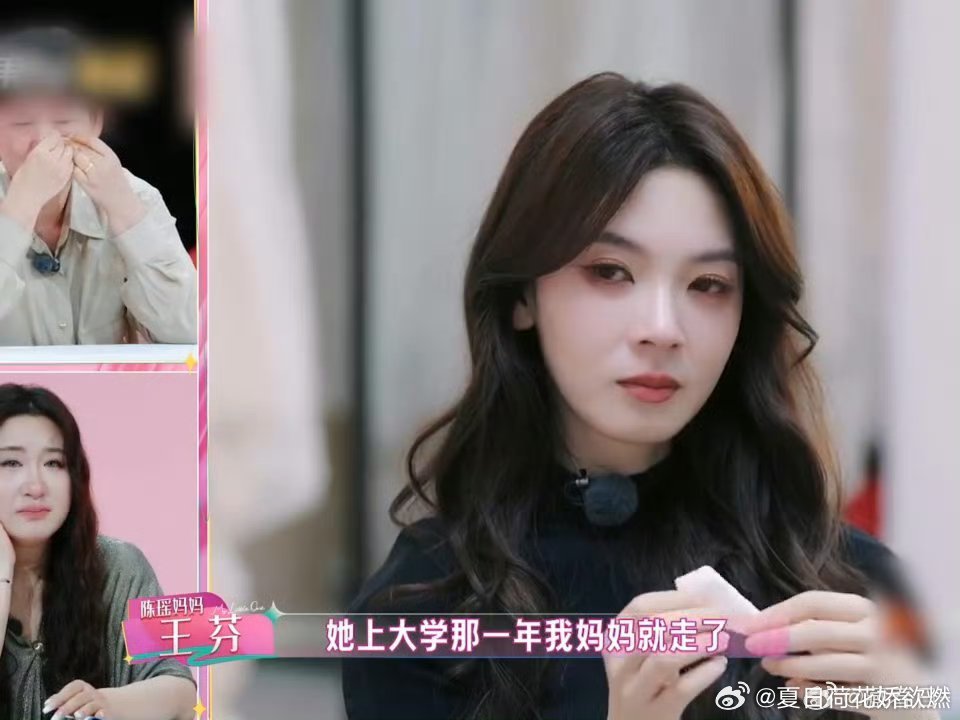
The moment came near the end of the second episode of "My Little Girl" (我家那闺女), the Mango TV observation show that seats celebrities' parents in a studio to watch their children's lives play back on screen. Chen Yao, a 31-year-old actress, was telling the story of a phone call her family never made. When her grandmother died years ago, her mother chose not to tell her — Chen Yao was a student, and the adults around her agreed the news might derail her studies. Her grandmother, it turned out, had left the same instruction herself: don't tell Yaoyao, let her study. By the time Chen Yao learned the truth there had been no farewell at all. On screen, her mother Wang Fen said the guilt had stayed with her ever since. On the split screen, both parents were crying.
The custom of the kept silence
What might read elsewhere as one family's private grief landed on Weibo as a recognisably Chinese dilemma, and the hashtag #外婆去世妈妈没告诉陈瑶# — "Grandma died, and Mum never told Chen Yao" — gathered tens of thousands of people arguing about it. The details the family offered were the part that cut. Per hometown custom, the family cut a corner from the grandmother's clothing to keep as a memento for the granddaughter, a stand-in for a last meeting that never happened. Chen Yao said she had never blamed her parents: "Some love is expressed through silence. The regret is real, and so is being loved."
The silence had a logic, and the logic is generational. In the years when a Chinese student's exam results are treated as the family's collective project, parents routinely absorb shocks — deaths, illnesses, bankruptcies — to keep a child's study uninterrupted, delivering the news only after the exam is over, sometimes years after. Chen Yao's own letter to her parents, read out on the show and posted to her Weibo account, where it was liked more than 50,000 times, described the same reticence from the other side: parents of the 1960s who "never learned to say tender things", who kept every sacrifice quiet.
"Tell the child, whatever else you do"
The argument underneath the trending topic was not about an actress. It was about whether that protective silence is love or theft. "A relative's death is a lifetime of dampness," one user wrote, using the internet's current idiom for grief that never fully dries — "you can hardly imagine what it feels like to miss the last goodbye, and that regret can't be waved away with 'it was for your own good.'" Others sided with the mother: a family shielding a child mid-preparation did what families have always done, and the blame belongs to a system that makes one exam weigh so much.
The episode itself supplied the counter-image, and it was the picture the show had engineered the episode around: Chen Yao taking her parents to re-shoot the wedding photographs they never had, the mother in pink, the father in a borrowed suit, a double-happiness cutout on the wall. The family that once withheld its grief was photographed, forty years late, making its happiness public.