Hidden Cameras in China's Public Restrooms: An Investigation Traces a Black Market That Filmed an Estimated 140,000 Women
An undercover investigation by Henan's Elephant News maps China's hidden-camera trade end to end — devices sold under coded words, footage monetized through encrypted groups and niche cloud drives — and puts the number of identifiable victims at around 140,000, with videos of minors priced the highest.
A months-long undercover investigation published on November 5 by Elephant News, a Henan broadcaster, has mapped China's hidden-camera trade from the factory floor to the subscription page — and put a number on its victims that is hard to look away from: roughly 140,000 women, filmed in restrooms, changing rooms and hotel rooms across every one of the country's 34 provincial-level regions.
The figure comes not from police but from a volunteer. Zhou Ninghe, who once worked in commercial inspection, began collecting footage in 2022 after recognizing the shower room of a Fuzhou water park he had personally visited in a clip he had assumed was staged. Since then he has identified filming locations from the backgrounds of videos and passed the coordinates to police: eighteen cases have been solved on his leads in the past year, two of them involving primary-school children. The drives he keeps hold several terabytes of footage; the investigation's estimate, deduplicated, is about 140,000 victims — a figure The Paper's commentary placed at 200,000 to 300,000 before deduplication.
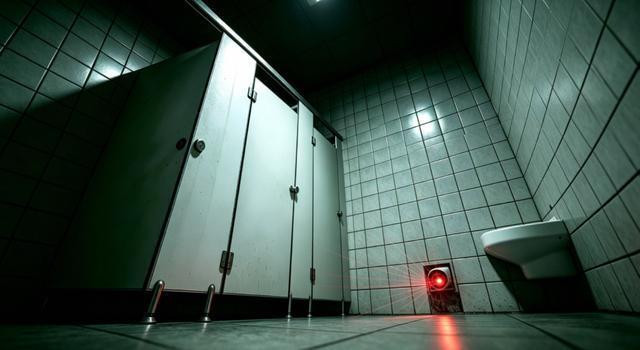
The trade runs on ordinary infrastructure. Cameras disguised as everyday objects are sold on major e-commerce platforms under deliberately vague keywords, with sellers advising buyers to wear gloves during installation; admission to the encrypted trading groups requires a toushangzhuang (投名状) — the oath of shared guilt from the classic novel Water Margin, here meaning proof that a newcomer has committed an offence of his own. The footage is then monetized through paid memberships on niche cloud-drive services, and it is priced by the victim's age: videos of minors sell for five to ten times what footage of adult women fetches.
The investigators' most dispiriting finding is who is behind the cameras. Far from all matching the stereotype, operators include women, married couples, the highly educated and company executives — and the motive, the report concludes, is simply profit. The market also has geography: hotel filming clusters in the mid-range guesthouses and small chains near university campuses, while the most coveted locations are the restrooms of upscale malls and bars, where alcohol lowers the alertness a shooter is counting on.
The reporting has landed in a system that responds case by case, after the fact. Zhou's eighteen prosecutions show that a determined outsider with a hard drive can convert footage into arrests; what no one has yet demonstrated is the other half of the chain — the storefronts and platforms that make the first sale possible. As Elephant News put it in closing its report: protecting privacy cannot mean women living in dread inside a public restroom.