From Kung Fu to 'Duanju': China's Micro-Dramas Get Their Own English Word
China's vertical-screen micro-dramas have entered the English language as 'duanju' — a word now listed on Wikipedia and used in overseas industry circles — as Chinese companies come to supply roughly nine-tenths of the international market for the format.
Chinese netizens have been following the news the way one follows a word being born. The country's micro-dramas — the minute-long, vertical-screen serials that have become a global export — now have their own English name: duanju, the romanization of 短剧, "short drama." The word has been added to Wikipedia, where page views have been climbing sharply, and it has started appearing in the trade conversations of foreign producers, China News Service reported, which framed it as a successor to kung fu and tofu: a loanword that arrives only when a thing itself has arrived.
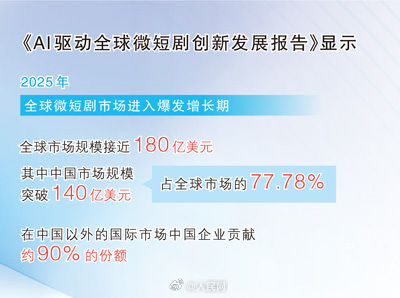
The scale behind the word is the more substantive story. A People's Daily data card circulating on Weibo puts the global micro-drama market approaching 18 billion US dollars in 2025, with China's own market above 14 billion — more than three-quarters of the world total — and Chinese companies supplying roughly ninety percent of the international market outside China. In other words, the format being named abroad is overwhelmingly a Chinese export, watched on apps built in Beijing and Shanghai by viewers from Jakarta to São Paulo.
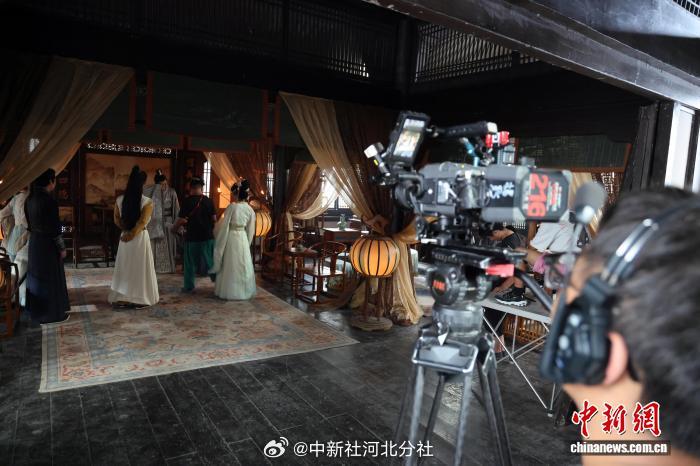
The industry behind it has changed shape accordingly. HK01 profiled the phenomenon through the foreigners now working inside it: European and American actors who came as extras have shot dozens of titles and gone full-time, and production companies run localized shoots for overseas platforms — as in this competition shoot in Langzhong, Sichuan, where a foreign cast worked a period set with Chinese crew. The People's Daily's own account stresses localization: French, American and Canadian practitioners adapting the format to their home markets rather than simply translating it.
Domestic commentary read the naming as a marker of standing. "Status is something you fight for yourself. Chinese micro-dramas now have an English name: Duanju," one commentator wrote, in a post shared more than 2,000 times — the point being that no committee awarded the word; overseas usage forced it into existence.
What the word will have to outlast is the format's reputation at home, where micro-dramas are still shorthand for melodrama, recycled tropes and quick-money production. The loanword is the industry's bid to change that perception from the outside in: once a format has a name of its own in another language, it has stopped being a genre of Chinese video and become a category the rest of the world recognizes — and, going by the market numbers, one the rest of the world mostly buys from China.