Academic-Misconduct Blogger 'Geng Tongxue' Hired as a University Lecturer
Geng Hongwei, the science blogger whose misconduct exposés have toppled senior academics, has been hired as a specially appointed lecturer by Zhejiang Media University. The hire is being debated as either the professionalization of online accountability — or its domestication.
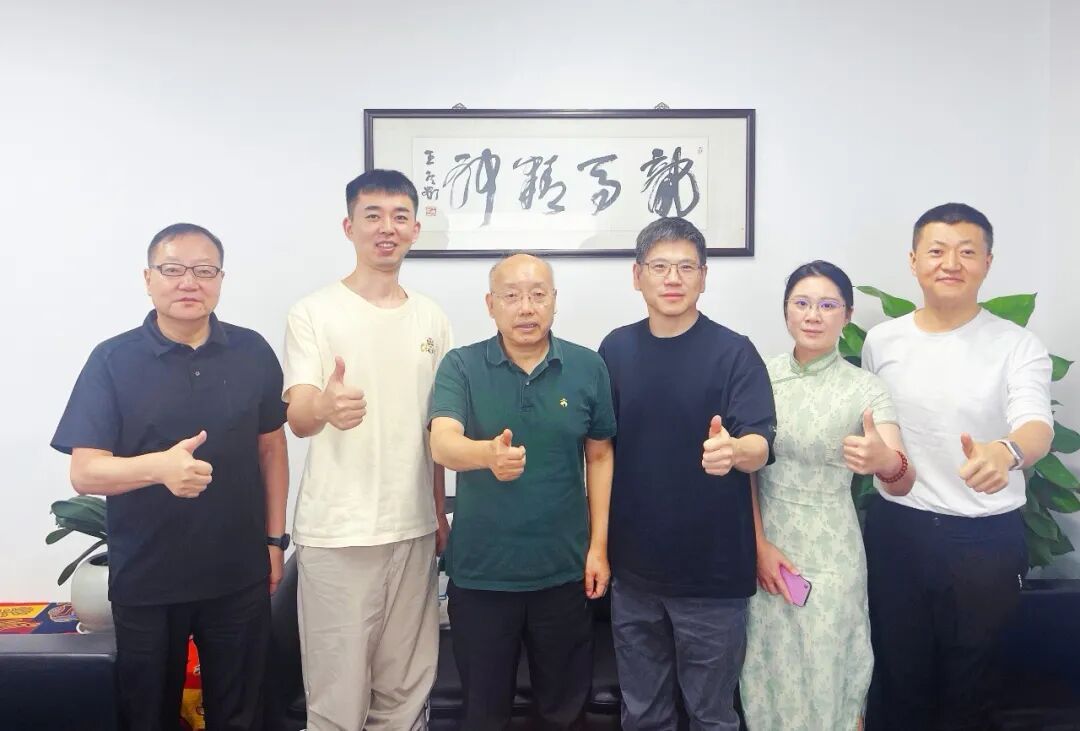
The blogger known across the Chinese internet as “Geng Tongxue” — Geng Classmate — has spent years doing what universities' own channels often fail to do: documenting and reporting academic misconduct, paper by paper, until institutions acted. This month he got an institutional home of his own. Geng Hongwei, the man behind the account, has settled in Hangzhou and been hired as a specially appointed lecturer at Zhejiang Media University's science-popularization industry college, according to a September 7 announcement by the Zhejiang Science Popularization Federation, picked up by ThePaper and a trending topic on Zhihu the next morning.
His CV is unconventional for a campus post: bachelor's and master's degrees from Jilin University, doctoral studies at Beihang left unfinished — and, in place of publications, a public record of whistleblowing that has taken down multiple senior academics. In April he began a run of high-profile campaigns that culminated, this summer, in the case of a Wuhan University professor placed under investigation after two sisters published an 86-page report of allegations; the story became a test of whether online evidence-making can force slow institutions to move.
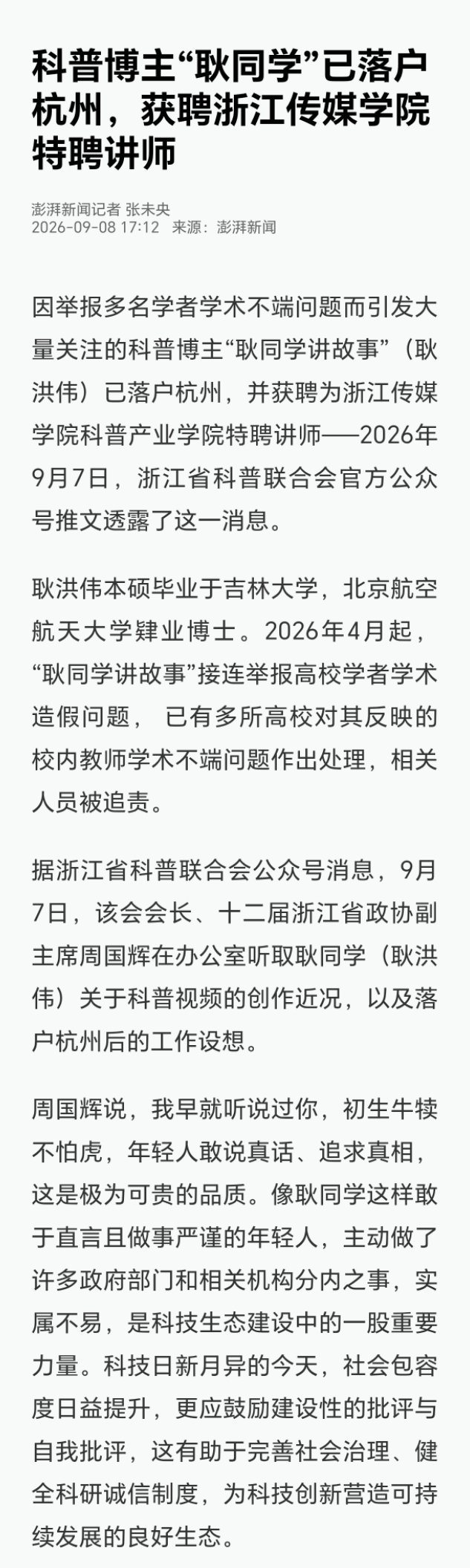
The Zhihu discussion has framed the hire as an experiment with two possible readings. One is professionalization: an accountability researcher gets a salary, a platform, student collaborators, and the implicit blessing of a state-affiliated media school — resources that could make his investigations harder to dismiss. The other is domestication: a man who made his name attacking institutions goes on one's payroll, and the edge that made him useful dulls the moment it is funded. “What does this mean for his academic anti-fraud work?” asks the question board that drew the debate — help or hindrance first.
Both readings say something real about how accountability works in Chinese academia, where formal complaint channels are slow and public exposure — a viral document dump, a sustained blogger campaign — has become the reliable accelerant. Universities have mostly treated such campaigns as weather to be endured. Hiring one of the forecasters is something new.
Geng, for his part, gains a formal base in Hangzhou's growing science-communication industry, of which myth-busting and fraud-exposing accounts are a profitable corner. What the university gains is unclear, and is precisely the open question: whether a campus appointment amplifies China's most effective academic watchdog, or quietly retires him — a verdict his next investigation will deliver.