He Sold His House to Open a Franchise Hotpot Buffet — and Lost It All in Four Months
A man surnamed Wang put more than 1.5 million yuan — most of it from selling his home — into a self-serve hotpot franchise whose short-video ads promised he would break even within six months. Four months on, the store was shut and the franchisor's contract had promised nothing at all.
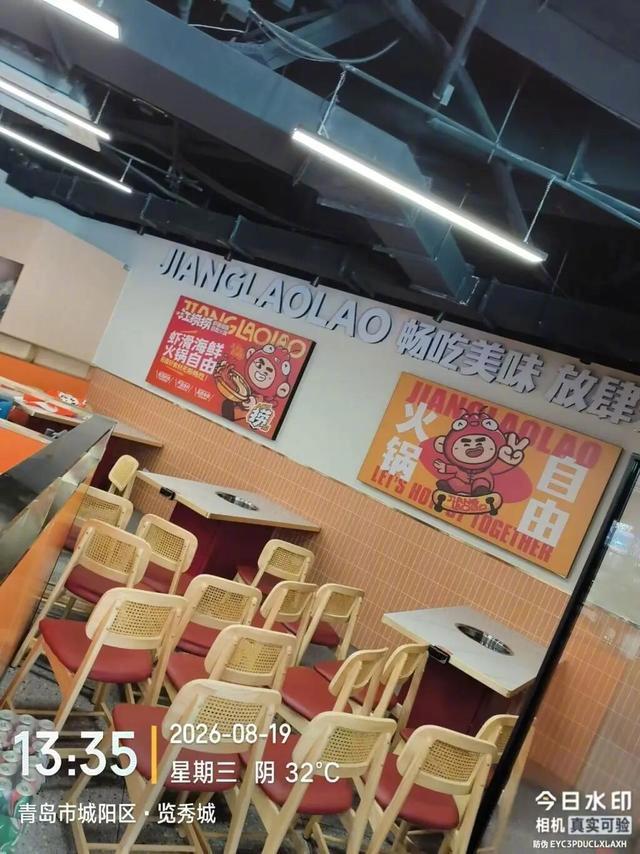
The ads ran in the feed between joke clips and shopping vlogs: a national self-serve hotpot chain called Jiang Laolao, shrimp paste and seafood "hotpot freedom," and, for anyone who joined early, figures that looked like arithmetic rather than hope — monthly takings of 700,000 to 800,000 yuan, investment recovered in half a year, a million or two in profit every year. A man surnamed Wang, from Shanxi, believed them. He sold his house, borrowed against what was left, and put more than 1.5 million yuan into a franchise outlet. In his telling to Top News, the account that broke the story, the first month lost more than 200,000 yuan; by the fourth he could not make payroll, and the doors closed.
The interior the photographs show — built-in burners at every table, orange tiles, wall posters promising "hotpot freedom" — was assembled under the franchisor's direction, and that is where the story turns from bad luck into an industry. The renovators and equipment suppliers, Wang says, were nominated by headquarters, their quotes inflated; the air conditioners turned out to be second-hand. When he went back with his losses, the brand's answer was one sentence: the contract never promised a profit.
Commentators across Weibo recognized the shape of what had happened. "This is the classic quick-franchise playbook," one widely shared post put it — the franchisor makes its money not from the restaurant but from the franchisee, on joining fees, mandated renovations and marked-up equipment, and hands over all the risk with the keys. "Nobody running a genuinely profitable business begs you in short videos to join it."

China's restaurant sector has become the landing pad of choice for the country's displaced white-collar money, and franchising is how most newcomers enter it: the China Chain Store & Franchise Association counts restaurant franchising among the fastest-growing corners of retail even as store mortality climbs. Regulators require franchise brands to file their operational details and to disclose realistic financial expectations to prospective franchisees — a rule aimed precisely at the gap between a recruitment video and a contract — but enforcement mostly arrives after the money is gone, and a franchisee who wants to sue must argue against a document his own signature says he read.
Wang's account was shared hundreds of times within a day and echoed across the comment sections as a warning to exactly the audience the ads target. The line they kept quoting was his own: they said half a year to break even, and he sold his house for this.