Photos From a Sealed Changsha Surrogacy Clinic Turned Up in the Industry's Own Chat Groups
Weeks after Changsha authorities sealed two underground surrogacy clinics, photographs of a health-enforcement raid surfaced inside the surrogacy trade's own chat groups — and the anti-trafficking volunteer who triggered the raid says the leak means someone inside enforcement is tipping the industry off.
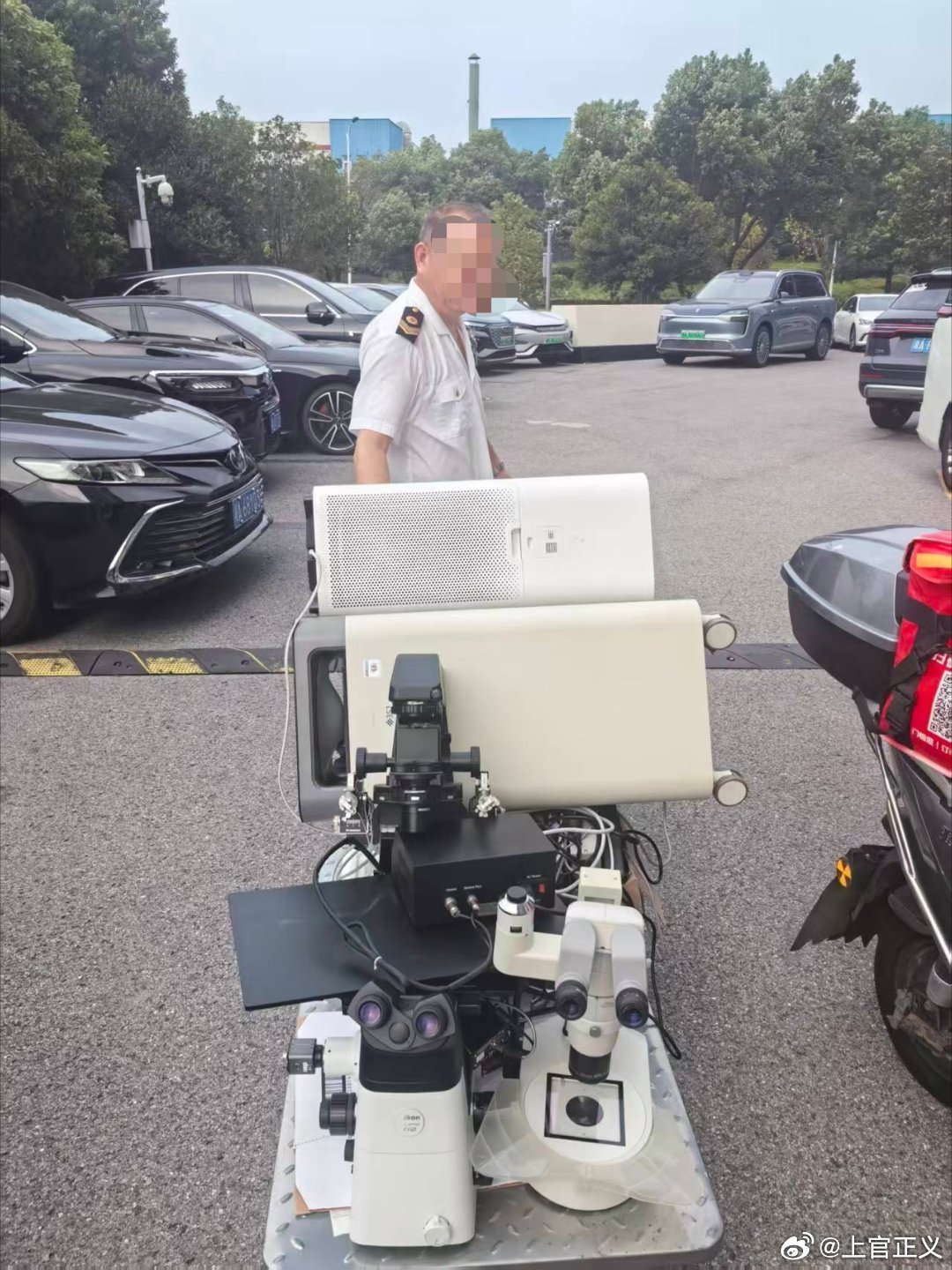
The photographs were not meant for the public. They show the inside of an illegal surrogacy clinic in Changsha's Yuelu district the moment health inspectors arrived: white cryogenic tanks on a metal cart, microscopes and control units carried out into a parking lot, a laboratory bench cleared of its equipment. Within days, anti-trafficking volunteer Shangguan Zhengyi wrote on Weibo, the same images were circulating in a WeChat group of 325 people who make their living from the trade — posted, he says, by a member whose screen name promises a reliability that words cannot describe.
Shangguan had reported the clinic's operating room to Changsha's Yuelu district health-enforcement bureau only days earlier, and the seized photos are enforcement images. That is the point of his post: how did they travel from a government raid to the industry's own group chat? "How did he get hold of these? Is there a mole passing tips?" (内鬼通风报信吗?) he asked his readers — a post that drew more than 10,000 likes — before asking Hunan's provincial discipline-inspection commission to trace exactly who inside the enforcement system, if anyone, is feeding information to the surrogacy networks. The leaked messages, he noted, also warned associates that two Changsha districts were sweeping buildings again — operational intelligence that only someone close to the raid could have offered.

The warning matters because Changsha was supposed to be a success story. In May, after Shangguan staked out a house in Changsha county and filmed unlicensed cars ferrying women in and out, he reported two illegal surrogacy sites; New Beijing News reconstructed one in animation — operating room, laboratory, ward — and local authorities went on to control 18 people, including the operation's backstage head and two medical workers from a private hospital. Among the women found surrogating in the May raids, reporting at the time said, were deaf-mute women.
China permits assisted reproduction only inside a tightly licensed hospital system, and commercial surrogacy is banned outright — a scarcity that has built a persistent underground market, run out of converted houses and improvised labs, that regulators periodically raid. The underground IVF laboratory sealed in Wuhan this summer belongs to the same economy, and the Changsha leak suggests its response to enforcement: an early-warning system of its own.
The same chat groups, Shangguan says, have turned on him: users accuse him of extorting the clinics and mock that he "rides a traffic wave and then sells goods" — and one message asked why "no one has finished him off yet." He has heard worse before; documenting the trade is his full-time occupation and the threats are part of it.
For the women in the groups' client lists, the risks are medical as much as legal. "Egg stimulation and retrieval are invasive procedures," one Weibo user warned under the trending topic; done in underground conditions they can cause hemorrhage, severe infection and ovarian hyperstimulation, "at worst fatal" — and because the contracts are illegal, a woman or a client cheated of several hundred thousand yuan has no way to sue. The sealed door in the leaked photographs says the enforcement is real. The question Shangguan has put to Hunan's discipline inspectors is who, inside that system, keeps opening it.