He Exposed a Scam Boss. Two Years Later, China Learned He Was Murdered for It.
The anti-fraud blogger Huijian vanished in 2024, and Weibo assumed he had been arrested. A court verdict now shows he was kidnapped by men posing as police, tortured, and killed for a million-yuan bounty — ordered by the Cambodian scam-boss he had named.
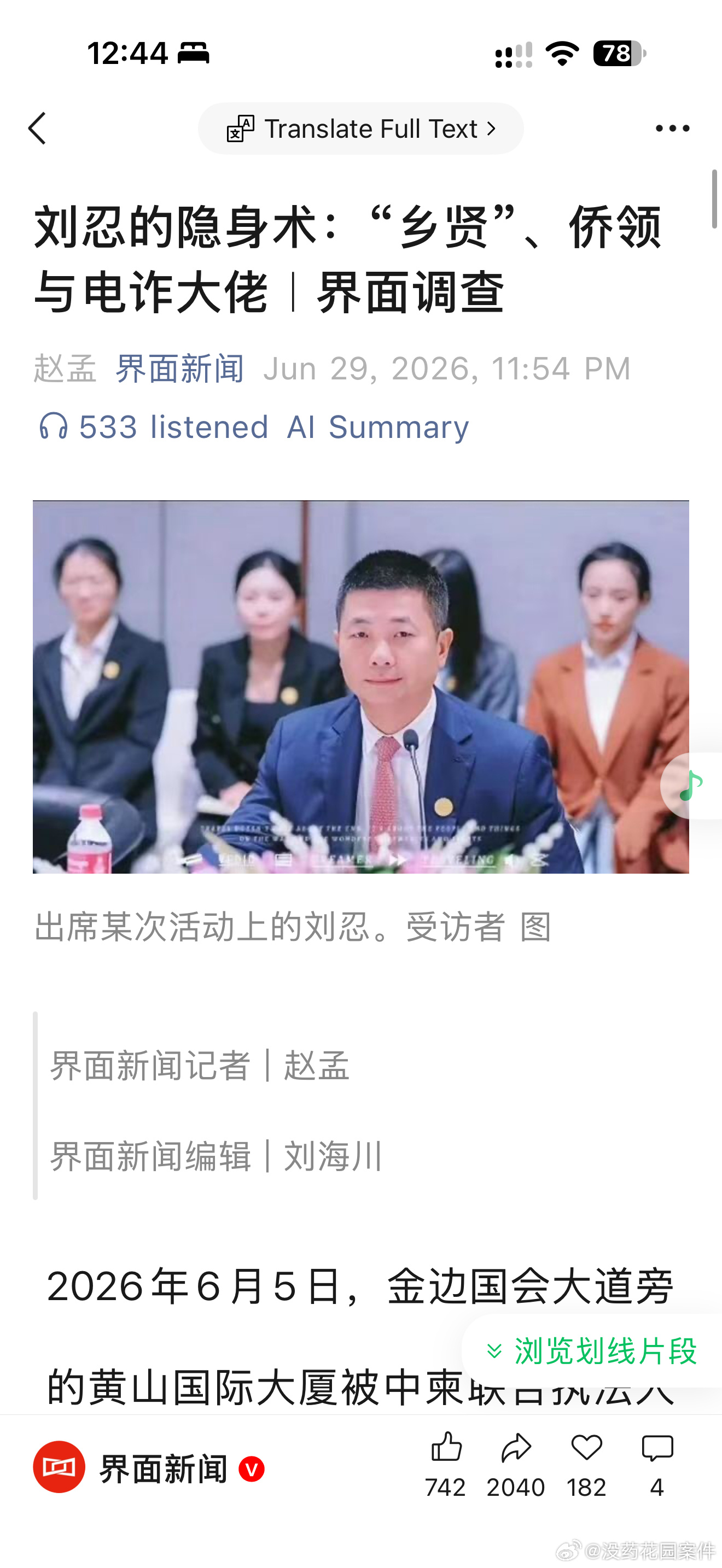
For two years, the story of the blogger known as Huijian was a story about a silence. A Weibo account with tens of thousands of followers who had spent years exposing the inner workings of Southeast Asia's scam compounds — Myanmar, then Cambodia — stopped updating in November 2024. Every article disappeared. The rumor that circulated in its place was that its author, Wu Kai, had been arrested on suspicion of blackmail and defamation. That was what the record said; when the site's users asked today, an AI chatbot would still repeat it.
The truth, reported by Jiemian News this week and confirmed by a court verdict, is worse. Wu Kai was the first to name Liu Ren, the president of the Cambodia Anhui Chamber of Commerce and a "patriotic overseas Chinese leader" who had appeared on state television discussing China-Cambodia business — and who was, in fact, the operator of two scam compounds around Sihanoukville that had lured more than 2,000 Chinese citizens across the border, confiscated their passports, and held them under electric-shock discipline and beatings. Liu Ren's network offered a bounty of one million yuan through a broker called "Shaoxiao" — Major — to anyone who could silence him. In a parking lot in Huizhou, Guangdong, three men posing as police officers took him away. He was driven across two provinces, beaten for days, questioned about his sources, and finally dumped in the hills near Ganzhou, Jiangxi, where villagers found his body on November 13, 2024. The lead killer, Zhao Bing, was sentenced to death with reprieve; thirteen accomplices got prison terms of up to 10 years each.
The story resurfaced on Monday because the man Wu Kai had named is now in custody. In June 2026, Liu Ren was captured in a joint China-Cambodia operation at a Phnom Penh tower, and footage of his extradition, released on October 27, shows him head bowed, handcuffed, silent — the man who had once commanded the compounding of thousands of victims. The day's trending topic paired the two: the arrest footage on one side, and on the other, the long-delayed proof that the man who had been smeared as a blackmailer was a murder victim.
One of the account's readers, the writer behind the crime-analysis blog 没药花园, wrote that she had followed Huijian since 2019 and assumed he had been arrested for a crime. "Now you ask an AI, and it tells you the same thing," she wrote. He was 40-something, unmarried, both parents dead; when he was taken, nobody noticed for two years. That detail, more than any of the lurid facts, is what the posts dwell on: the blogger who exposed a scam empire had no one to speak for him.
The case is the clearest of the week's warnings about the sector's economics. Huijian was killed for a million-yuan bounty — a sum small against the fortunes of the scam parks he covered — by a team of five strangers who split 400,000 yuan between them. It is the first confirmed killing of a Chinese anti-fraud blogger by a scam-compound boss, and the case files show a man who had been warned: he had been approached by intermediaries before and refused to delete.
His name, the account's, the articles that vanished: the platform's record is now of a posthumous vindication. Liu Ren faces charges of fraud, illegal detention, and intentional injury, among others. The order of the day's trending topics put the man's extradition image first — and the blogger's death two years after the fact one notch below.