In One Morning, China's Brands Erased Kylian Mbappé
When Real Madrid's forward named a meme photoshopping his face onto a Mao Zedong portrait as his favorite, China's football platform refused to translate his remarks — and by Tuesday morning, every major Chinese brand had dropped him.
When asked about his favorite meme of himself, the Real Madrid forward Kylian Mbappé named the picture that photoshopped his face onto Mao Zedong's iconic portrait — and said it was the one he liked most. What he said next was never published in Chinese: Dongqiudi, a football platform that had covered Mbappé for years and that was among the first to report his remarks, issued a statement on the night of October 26 saying it would not translate them — "we will not translate them, and we will not accept them" — because his words had, in the platform's words, "hurt the feelings of China and the Chinese people."
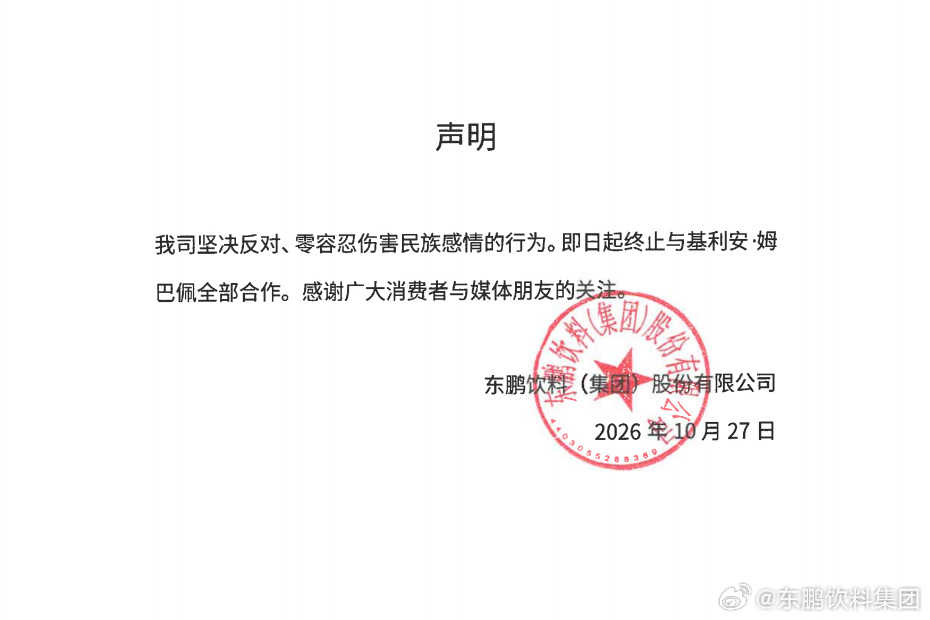
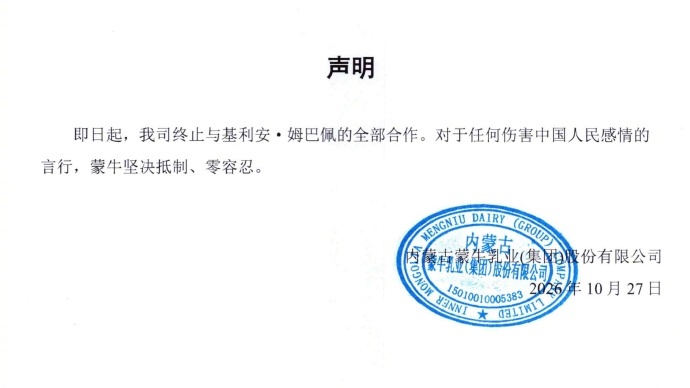
By the next morning, the country's brands had made up their minds. At 9:43, Dongpeng Beverage, the drinks group that had signed Mbappé in April 2026 as a global ambassador for its electrolyte brand Bushuila, published a termination statement with zero tolerance for acts that "hurt national sentiment" and severed all cooperation. At 11:13, Mengniu Dairy — Mbappé's longest-running Chinese partner, signed during the 2021 Qatar World Cup cycle — followed with a stamped statement. At noon, the cheese brand Milkground followed. At 12:13, Xiaohongshu clarified that its content deal with Mbappé had ended at the end of 2024, and said it was removing his materials from the platform. CCTV, in the meantime, had removed Mbappé coverage from its Weibo account and site.
The speed was not accidental. Under the standard endorsement contract, a spokesperson's words or deeds that break the public-value line — "hurt national sentiment" — give the brand a unilateral right to terminate without compensation and, in principle, to claim damages. "This is the standard clause in every endorsement contract," the lawyer Li Zhenwu told media. "Once a spokesperson's words or deeds break the public-value line, the basis of the contract is gone. Offending national sentiment is the highest-priority trigger, and there is essentially no room for a brand to be found in breach."
The reaction framing was "eating the rice while smashing the pot" (吃中国饭砸中国锅) — one of the day's trending phrases. One user wrote that the Bushuila ads had made Mbappé famous beyond young fans — "he even became known to the elderly, and this is how he repays that?" Another user argued that Chinese brands should stop assuming they need a foreign celebrity: "China has plenty of excellent sports stars — do we lack one Mbappé?"
The Mbappé episode landed within hours of the Ballon d'Or ceremony, at which Mbappé was among the runners-up to Harry Kane — and the reaction says a lot about China's consumer-brand culture. Real Madrid's popularity in China is deep enough that one of China's table tennis stars went undercover as a Madrid fan at El Clásico; the club's fandom is not a small thing. But the fandom is not the point. The point is the contract: the standard clause that gives a brand a unilateral right to terminate, and the fact that the brand used it — in writing, with a stamped statement, within hours of the platform's statement.
The story broke on Baidu, Zhihu, and the Taiwanese wire CNA; the topic on Baidu put the brands' statements at rank two, and the Zhihu question on Dongqiudi's refusal to translate drew a crowd. The exact words were never published in Chinese. That is the genre of the day's news: the remarks were described, not quoted, and the brands' statements were published in full.