Nepal–Tibet Border Floods Kill More Than 290 as a Glacial Dam Lake Threatens Rescuers
A glacial collapse on the Nepal side of the border sent debris through Tibet's Gyirong port, and by Wednesday night the two countries were counting nearly 300 dead and close to 1,400 missing. Premier Li Qiang arrived at the disaster zone as rescue teams watched a growing debris-dammed lake.
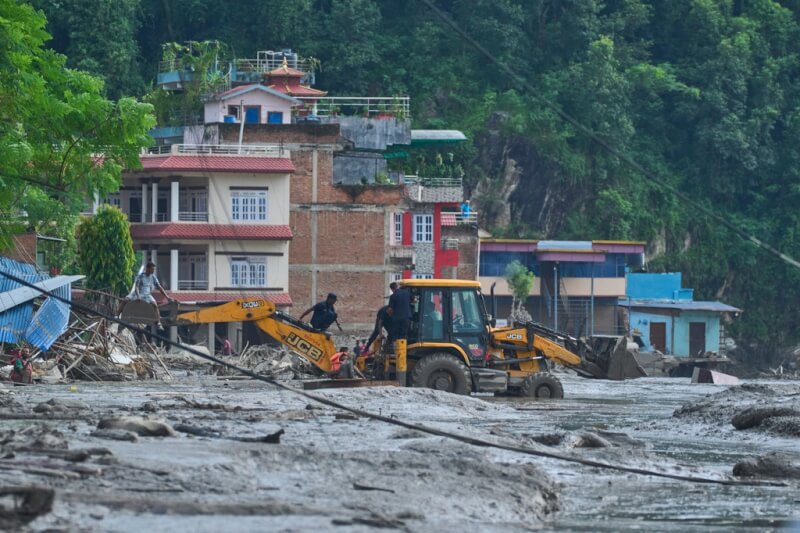
The death toll from the Himalayan border flood climbed sharply on Wednesday as rescuers on both sides of the Nepal–Tibet frontier searched for nearly 1,400 people and engineers warned that a dam of mud and ice on the border river could fail.
The catastrophe began Tuesday morning above Gyirong, Tibet's largest land port, when a wall of ice, rock and melted snow swept down from the Nepal side. It buried parts of the port and transformed a steep valley into a grey flood plain. Chinese officials said three people were confirmed dead and 558 were missing on the Tibetan side, including about 260 foreign nationals. Nepali authorities raised their count to 289 dead and 826 missing, many of them trekkers from India, the United States, Britain and elsewhere.
When the first wave of mud struck on Tuesday, roads, power and phone links to the border were cut. By Wednesday afternoon, Premier Li Qiang had arrived in Gyirong on instructions from Xi Jinping, state media said, to direct rescue work and visit displaced residents. Military transport aircraft and helicopters flew into the high-altitude zone, and the first 141 rescuers reached the port area.
What made this flood different from ordinary monsoon flooding was its trigger. Meteorologists and geologists said there was no torrential rain over Gyirong that morning. Instead, experts pointed to a possible glacial collapse: a large volume of ice and rock appears to have broken off high on the Nepal side, poured into the Donglin Tsangpo river system and sent a debris wave downstream. A Chinese seismometer recorded what officials described as a typical 'collapse earthquake' about 20 kilometres from the port around the time of the slide.
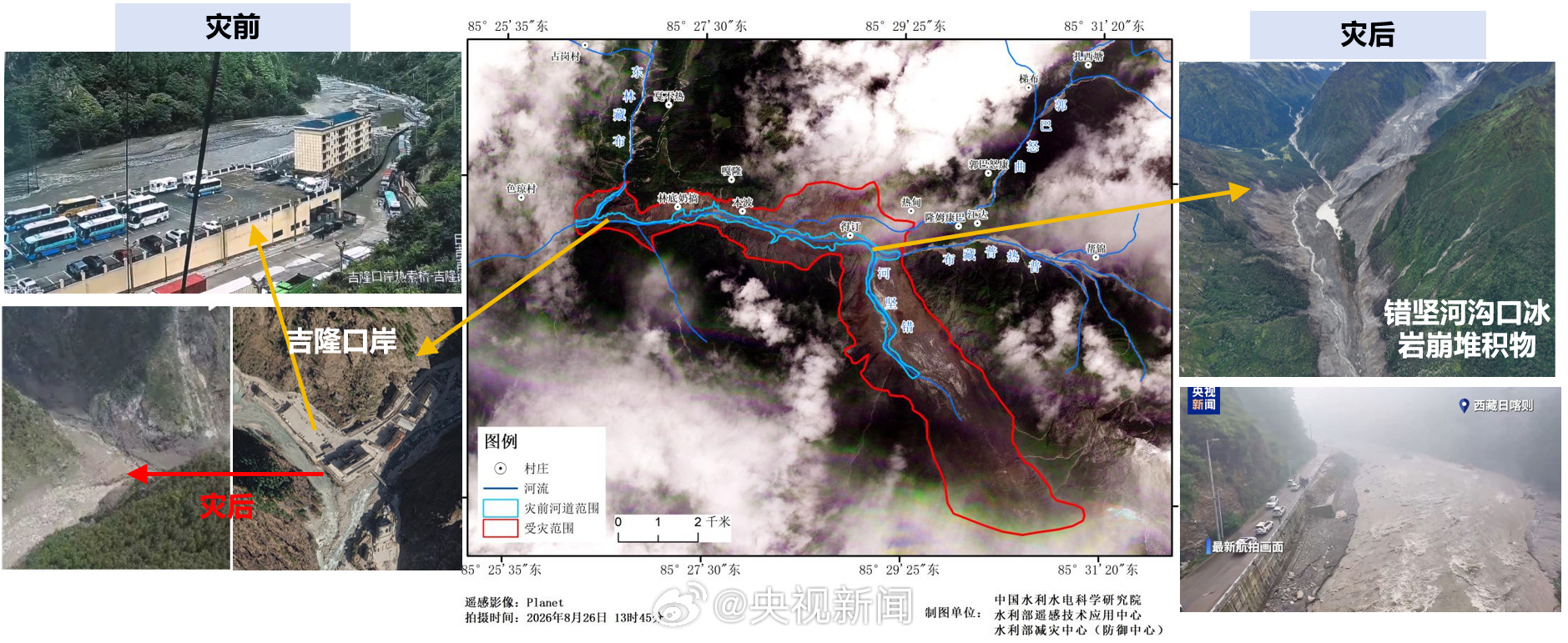
By Wednesday evening, the most urgent worry was a lake forming where the debris had blocked the river. China's water ministry estimated it already held two million cubic metres of water, was overflowing, and could take in another three million cubic metres within three days. A sudden release would send a second flood downstream, complicating a search already slowed by unstable slopes and mud.
The scale crossed borders in both directions. Chinese foreign ministry officials said nearly 100 Chinese citizens were missing on the Nepal side, while Nepali tourism authorities reported more than 500 foreign visitors among their missing. The disaster dominated Chinese search rankings and state-broadcast bulletins, and was followed closely by newsrooms in Taiwan, Germany and elsewhere that cover the Himalaya.
At the border crossing, the immediate task is no longer just rescue; it is rescue under the shadow of a second wave. Officials said search teams were pressing toward the port while monitoring the dammed lake upstream, aware that the same mountains that produced one flood could release another.