China's Pinglu Canal, First Major Canal Since 1949, Opens September 16
Geng Hongwei, the science blogger whose misconduct exposés have toppled senior academics, has been hired as a specially appointed lecturer by Zhejiang Media University. The hire is being debated as either the professionalization of online accountability — or its domestication.
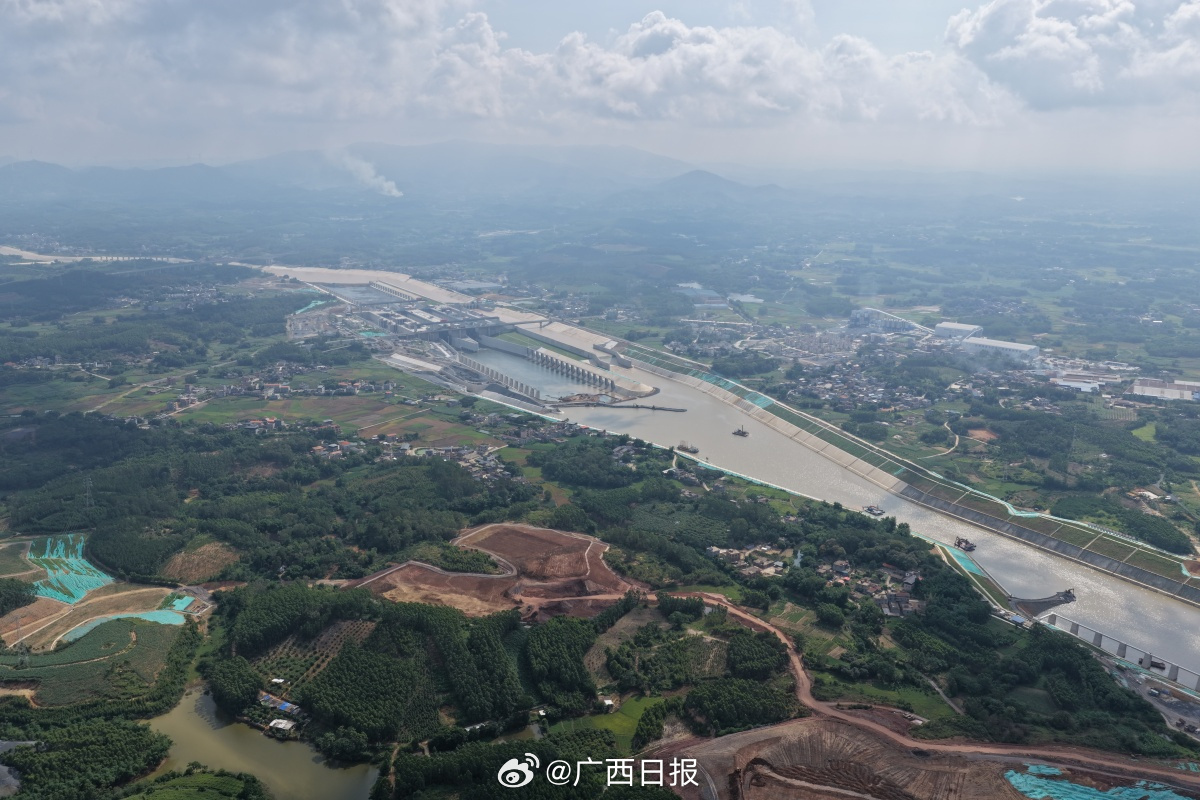
On September 16, the Pinglu Canal will open to navigation: the first river-to-sea canal built in China under national-level coordination since the founding of the People's Republic in 1949, and the close of a four-year build. Announced at a Guangxi government press conference on September 7 and confirmed by CCTV, the opening date puts an eight-day countdown on the project.
The numbers are enormous by any standard: 134.2 kilometers of new channel running from Hengzhou on the Xijin reservoir south of Nanning down the Qinjiang valley to the Gulf of Tonkin; roughly 72.7 billion yuan (about $10 billion) of investment since ground was broken in August 2022; and locks built to inland waterway Grade I, China's highest class, able to pass vessels of 5,000 tons — which, state media notes, makes it the highest-rated inland waterway in the country.
What the canal actually changes is the shape of trade in China's southwest. Until now, cargo from landlocked provinces such as Guizhou, Yunnan and Guangxi itself has had to travel east along the Pearl River system to reach the sea, a detour of hundreds of kilometers, before doubling back south toward Southeast Asia. The Pinglu Canal points that flow almost straight south: goods from Nanning move by rail to the port, onto barges, and out through the Gulf of Tonkin to ASEAN. The pieces were tested this week, with the first foreign-trade export train arriving at Nanning port and the first international vessel already berthed there.
State media has framed the canal as the keystone of a "rail-river-sea" intermodal corridor, and a unified smart-dispatch platform covering Guangxi's rivers and coastal ports went live ahead of the opening. On Weibo, where the announcement drew a post liked nearly 2,000 times, the scale itself was the hook. "This will directly redraw the way all of China's southwest reaches the sea," one user wrote.
For an international reader, the canal is a reminder that China still builds the old economy alongside the new: while the country's AI and EV exports get the attention, Beijing is spending billions to move bulk cargo a few hundred kilometers more efficiently, betting that trade with Southeast Asia, now its largest, needs physical channels to keep growing. Whether the canal's traffic justifies its price tag will take years to judge. The first test arrives on September 16, when the lock gates open on schedule.