Xiaohongshu Found a Taiwanese Man's Long-Lost Family in One Night
A Taiwanese man posted his grandfather's photograph and a decades-old Guangdong address on Xiaohongshu; within a night, the platform's recommendation engine had found his relatives, and this Mid-Autumn he was welcomed back to the village with drums and a 'family reunion' arch — a story Weibo is reading as an argument about the strait.
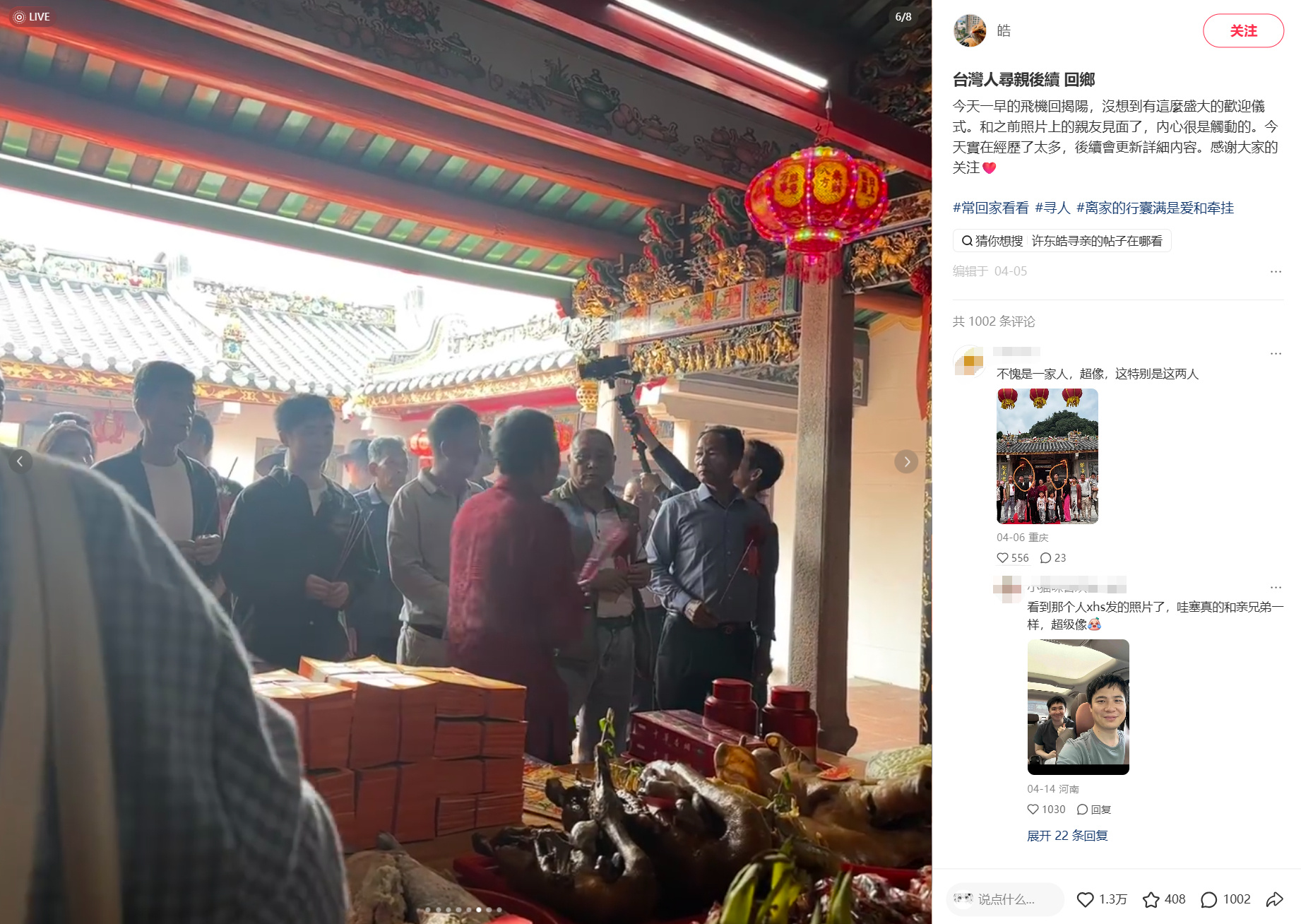
A Taiwanese man going by the handle Hao posted two things on Xiaohongshu while looking for his father's family: an old photograph of his grandfather, and an old address in Jieyang, a city in Guangdong. Commenters passed the post along; the platform's recommendation engine, tuned to push content to users near its subject, did the rest. Within one night, relatives had been found. When Hao returned to the village this week, he was met with drums, a red carpet and an archway reading "family reunion" — a scale of welcome he said he had never imagined (one widely shared account of the story).
The story landed on Mid-Autumn Festival, the holiday of the full moon and of family reunions, when the word 团圆 (reunion) saturates everything from mooncake boxes to state media greetings. It resonated for a second reason as well. The Weibo post that circulated it drew the wider moral: root-seeking and reunion do not require grand preparations, only one sincere expression — and, now, an algorithm. It recalled People's Daily's earlier story of a man who helped a Taiwanese visitor take photographs at Lugu Lake, and realized mid-conversation that they were long-lost relatives.
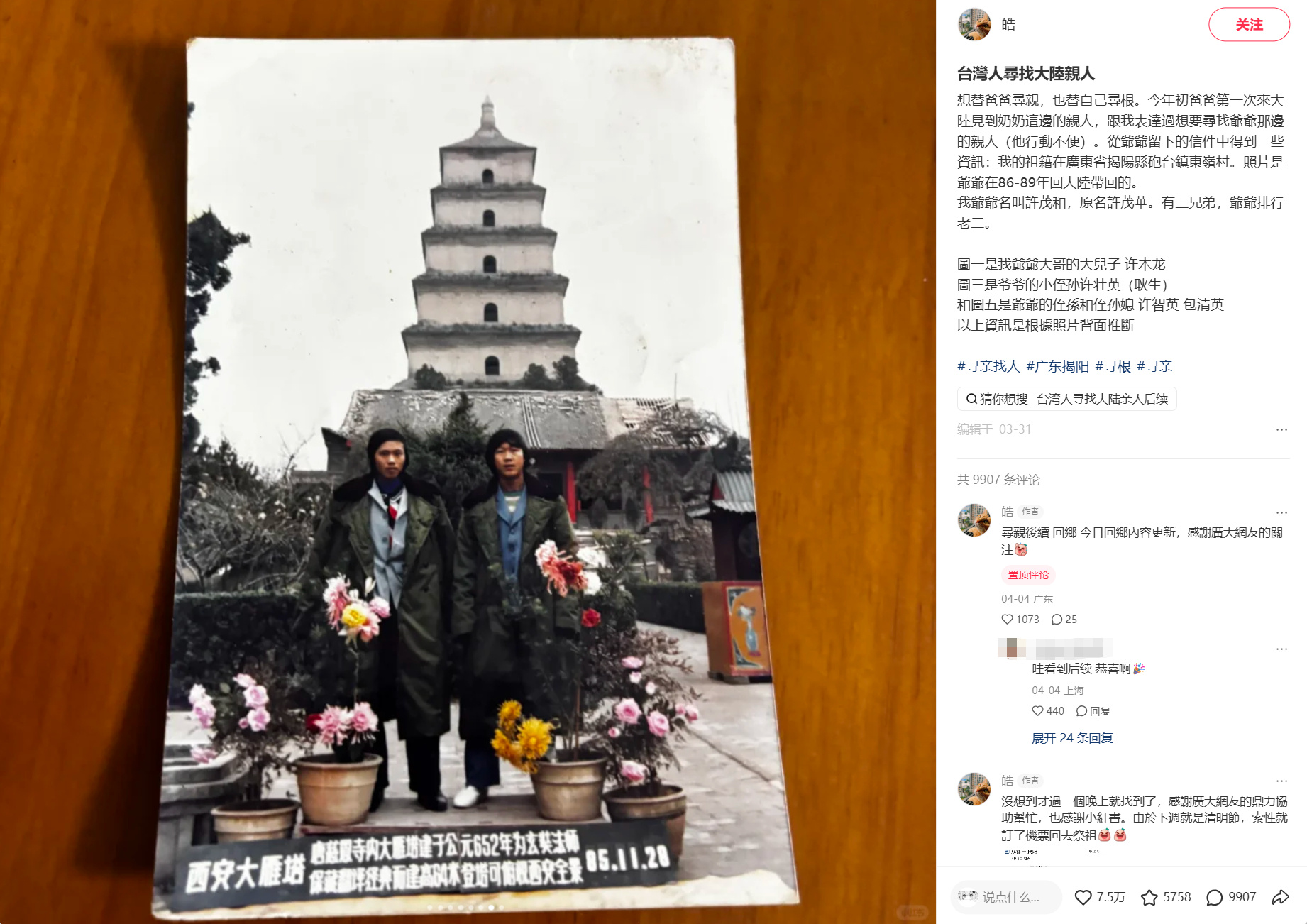
The poster's framing was pointed. People on the other side of the strait who want to ban Xiaohongshu, he wrote, may worry about exactly this — that a recommendation algorithm does not respect the strait, and will deliver a grandfather's photograph to whoever in Jieyang still remembers the house it came from. The platform's role in cross-strait everyday culture is a live political question in Taiwan, in a register familiar to readers of this site's coverage of the C-drama whose finale topped Taiwan's charts.
One viral anecdote is not a trend, and the happy accident of one night owes as much to luck as to any technology. But the story's shape is an old one with a new mechanism. Families separated across the strait in 1949 have spent decades finding each other through red Cross letters, amateur genealogy forums and DNA banks; the tools change, the appetite does not. What is new is the speed — one photo, one address, one night of pushing pixels at the right village — and the fact that the sentimental infrastructure of Mid-Autumn now runs, in part, on an app best known for lifestyle videos. The reunion drummers of Jieyang were beating for one family. The post about them has been read as an argument about many more.