Vigils for a Chinese Delivery Rider Killed in Melbourne Turn Anger on Hungry Panda
Feng, a 47-year-old Chinese courier for the delivery app Hungry Panda, was stabbed to death in central Melbourne on November 6 after confronting a man who was tampering with his electric bike. Five days later, hundreds have gathered at candlelight vigils, riders are questioning the platform's penalty rules, and China's consulate has stepped in.
On the evening of November 6, a 47-year-old delivery rider picked up a food order from a restaurant in central Melbourne. According to the restaurant's manager, who spoke to the Chinese outlet Cover News, five minutes passed between the moment he walked out with the order and the moment he was helped back through the door, bleeding from a stab wound. Paramedics could not save him. He was Chinese, and he rode for Hungry Panda — known in Chinese as Xiongmao Waimai, the delivery app built around Chinese food that serves Chinese communities across Australia.
Colleagues and mourners have filled in the outline of his life since. He was from Shandong province, had ridden for the platform for years, and worked long shifts to put money aside, telling people he planned to go home after his son's wedding, as one summary of his story on Weibo recounts. On the night he died, he and another rider noticed a stranger pushing over and handling their parked electric bikes — the tools of their trade — and stepped in. The confrontation ended with Feng stabbed in the chest and the second rider wounded and hospitalized. Police have arrested a 51-year-old unemployed man and say they are not looking for anyone else.

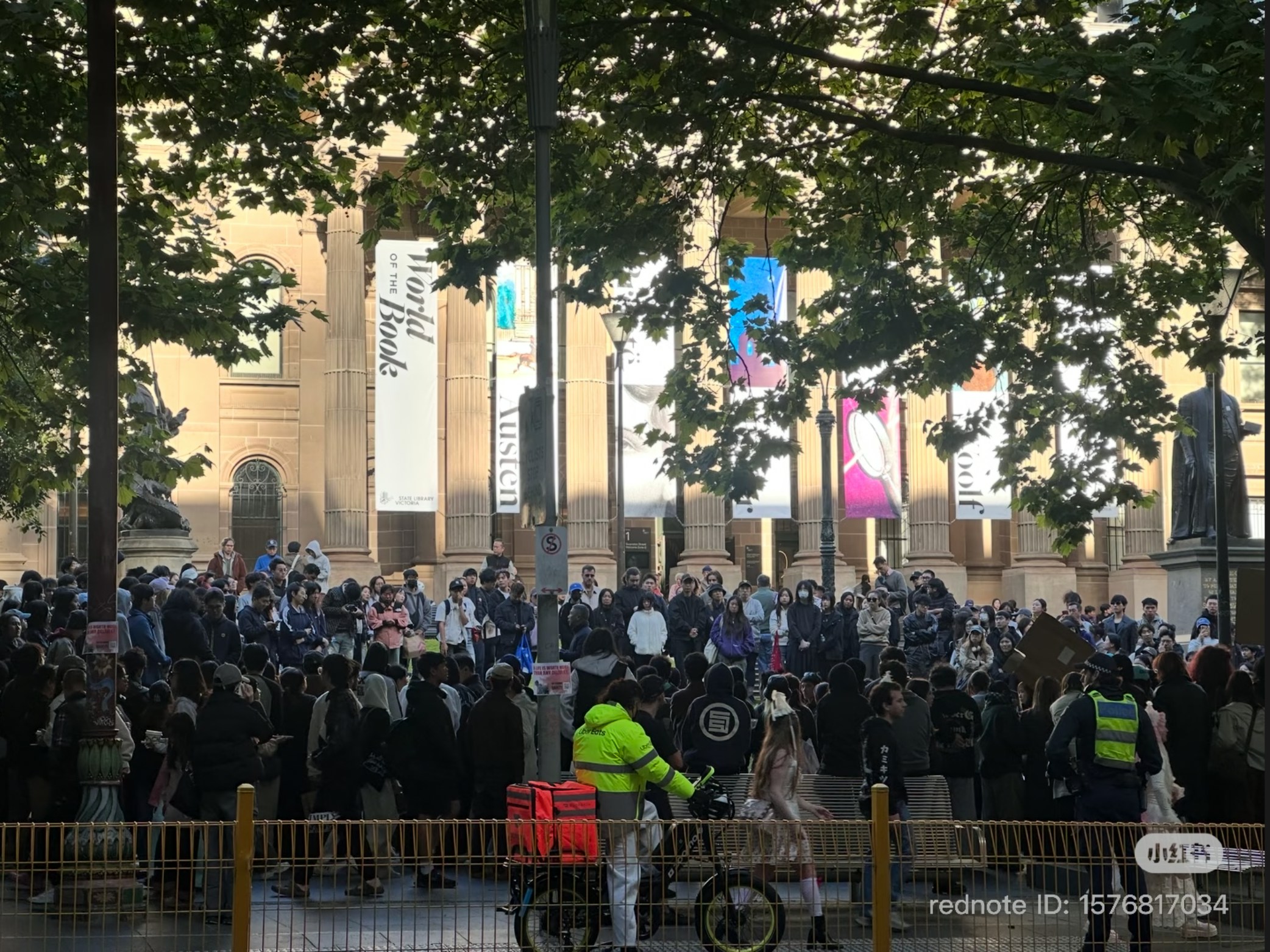
The response has come in two registers. The formal one: China's consulate general in Melbourne confirmed the victim was a Chinese citizen, opened a consular-protection case, is helping his family with visas and arrangements, and has pressed local police to handle the case fairly and punish the killer. The popular one is louder. Hundreds of people have gathered at vigils in Melbourne, and riders across the city have turned the mourning into an argument about the platform itself — several described barely sleeping the night after the killing, and some are now calling for a boycott of Hungry Panda.
The target of that anger is specific. Riders point to the platform's full-compensation rule: if an order is lost or stolen, the cost comes out of the rider's own pocket. As a post from a rider circulating on Chinese social media lays out, the American apps Uber and DoorDash carry no such rule. The same post puts the dilemma in a line that has been quoted widely: "The rules are written on paper, but the pressure is carved into the bones" (规则写在纸上,压力却刻在骨子里). A rider who sees a stranger tilting his bike cannot simply walk away and write off the loss — the bike and the orders on it are his livelihood, and the penalty for losing them is his. Another post from the overseas Chinese community put the mood more bluntly: people were uniting to speak up for the victim, "don't let silence become an accomplice."
Hungry Panda has answered. In a statement reported by Hong Kong outlet HK01, the platform promised to cover all of the family's subsequent costs and announced policy changes meant to remove riders' safety concerns — including confirming that a rider who abandons an order because he feels unsafe will not be penalized or deducted for it. Whether that reaches the street is the open question. Australia passed legislation in 2024 giving platform workers minimum protections approaching those of employees, but as the same rider's post noted, the law's arrival in practice "still needs time" — a gap that leaves riders, many of them new immigrants or middle-aged men supporting families, without a union or a firm fallback. It is an argument Chinese readers will recognize from home, where the president of courier giant YTO mourned publicly that his own son worked too hard and couriers answered that the problem is not one family's workload but the system's incentives. In Melbourne, the test is whether the platform's new rules are written into the app before the next rider decides that walking away is too expensive.