The Last of China's 1,614 Founding Generals Dies at 104
Major General Wang Fuzhi, who joined the Red Army as a 12-year-old in 1935 and served as deputy commander of the Urumqi Military Region, died in Dalian on November 7. With him, the cohort of officers created by the PLA's 1955 rank system is now entirely history.
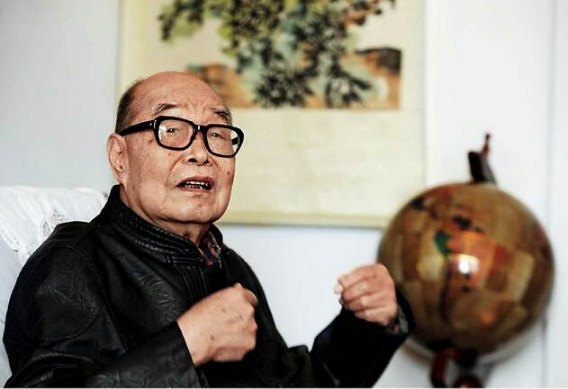
Wang Fuzhi was twelve years old when he joined the Red Army in July 1935 — a boy from Zizhou, in China's northern Shaanxi province, enlisting in the final months of the Long March era. He joined the Communist Party the following year, fought through the war of resistance against Japan in North China, and lived to see the centenary of almost everything he took part in. On November 7, he died in the northeastern city of Dalian at 104, and with him a page of Chinese military history closed: state media confirmed that he was the last surviving "founding general" — kaiguo jiangjun — of the People's Liberation Army.
The title is a formal one with a specific meaning. In 1955, the PLA introduced a military rank system and awarded honours across its officer corps; through a decade of additional awards and promotions before the system was abolished in 1965, a total of 1,614 officers became founding generals — 10 marshals, 10 grand generals, 57 senior generals, 177 lieutenant generals and 1,360 major generals. Wang received his own rank late in that window: senior colonel in 1955, major general in 1964. He went on to serve as deputy commander of the Urumqi Military Region in Xinjiang. Every one of the 1,614 has now died.
The announcement trended across Chinese platforms on November 8 — on Baidu's board, on Hong Kong's HK01, on the financial wire Yicai — and the tone of the Weibo reaction was less grief than inventory-taking. The PLA's own commentary account Junzhengping framed it plainly: "Their silhouettes have receded into the distance; the red country they fought to build is now ours to guard." Another military-adjacent account put it more simply: his life, it said, witnessed China's passage "from the fires of war to peace."
That generational bookend is why the story carries weight in China. The state has been marking this passing deliberately all year: in October it held the 76th anniversary ceremonies for the Korean War and brought new cohorts of the war dead home from the DMZ soil — an occasion we covered last month. Wang belonged to the generation whose deaths turn those commemorations from living memory into archived record. The rank system that made him a general was itself abolished in 1965, so the cohort can never be enlarged; it could only shrink, one funeral at a time, until a Saturday in November when the number reached zero.
He is survived by the institution he joined as a child — and by the arithmetic of a milestone few countries reach: an army's entire first officer corps, 1,614 men, now entirely the work of historians.