What 100 Yuan Buys: Weibo Users Re-Price China's Biggest Banknote
A photograph of a wet-market haul — 115 yuan of vegetables, eggs and beef — has become the centrepiece of a trending debate about what China's largest banknote is actually worth, complete with cross-border comparisons from Bangkok to Zurich.
The 100 yuan note is the largest banknote China prints, and for years the running joke about it has been how quickly it disappears — tapped away in seconds on a phone screen, gone in a single delivery order. This week Weibo is arguing the opposite case. Under the trending phrase "严重低估了100块的购买力" — "we have severely underestimated the purchasing power of 100 yuan" — users are photographing what the note still buys, and the results are startling them.
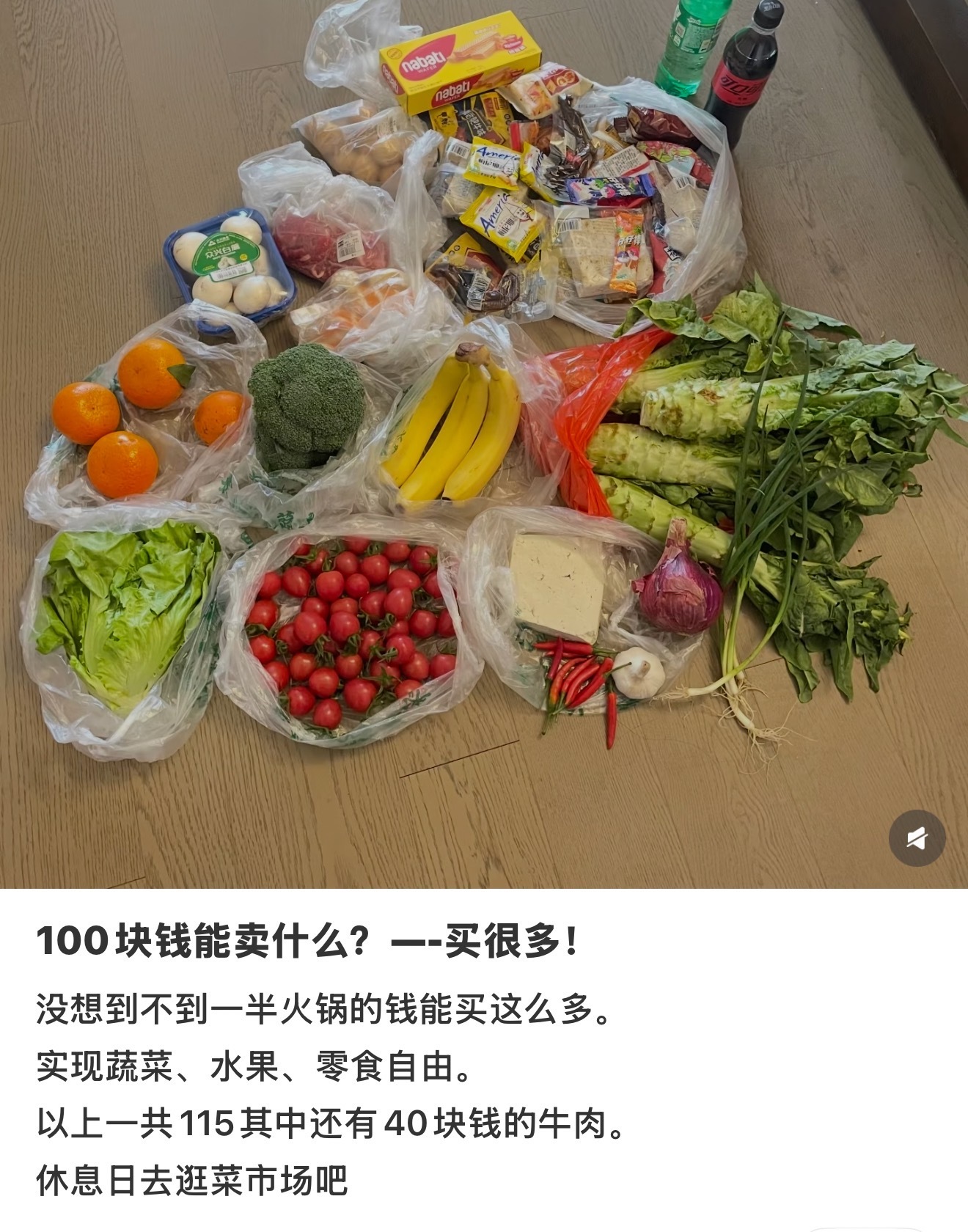
The post that set the tone came from a user who photographed a vegetable-market run laid out on the floor: oranges, bananas, broccoli, cherry tomatoes, leafy greens, eggs and a cut of beef, the whole basket coming to 115 yuan — of which the beef alone was 40. Less than half the price of a hotpot dinner, the user noted, had filled a kitchen for days. The photo has been shared more than 600 times, with commenters confessing they would have guessed the haul cost triple.
Others took the exercise abroad. One video post priced 100 yuan across its foreign equivalents: four plates of mango sticky rice in Thailand, two bowls of ramen in Japan, a single order of fried chicken in South Korea, four or five jin — about two kilos — of fresh beef in Russia, several bowls of pho in Vietnam. In Switzerland, the user conceded, the money vanished almost on arrival. The comparisons come with a disclaimer, a rare bit of rigour for a viral format: prices are from local supermarkets and street stalls, not tourist districts, and exchange rates move.
The thread's underlying point is less about arithmetic than about where Chinese consumers now form their sense of prices. Most daily spending happens through phone payments, where a sum is deducted without being seen; the reference prices people carry are delivery apps and chain cafés, not market stalls. When one user wrote that only a walk through the vegetable market reveals what money is worth (自己去菜市场逛一圈,才知道100块钱的购买力), the post resonated because it describes a sensory loss — a population that no longer handles its own currency discovering, via a market photo, that its biggest note is not decorative after all.
None of this makes China cheap; the same feed carries plenty of complaints about what 100 yuan no longer covers in a city centre. But it explains why a supermarket photo outperformed the day's celebrity news. In an economy that runs on scanned QR codes, the wet market is the last place the largest banknote still feels like money.