A Reunion Show for Half-Forgotten Celebrities Has Become China's Biggest Variety Hit
Mango TV's "Houhui Youqi" reunites singers and actors from the mid-2000s and lets them talk, travel and occasionally quarrel without a script. It now commands a 74 percent audience share, its lines have leaked into everyday speech — and its biggest fight this week happened off-camera, in Ma Tianyu's livestream.
The premise of "Houhui Youqi" — the title plays on "meet again" and "friends" — is almost embarrassingly simple: put a group of semi-forgotten celebrities from China's mid-2000s talent-show era around a table, send them travelling together, and film what happens. There is no competition, no prize money and, crucially, no script. In a variety market crowded with polished formats, that roughness has turned the Mango TV show into the year's biggest new hit. Its latest episode reached a 74.3 percent share of all variety-show viewing, the first new show of 2026 to break 70 percent, according to data firm Yunhe, as the Shanghai outlet The Paper reported.
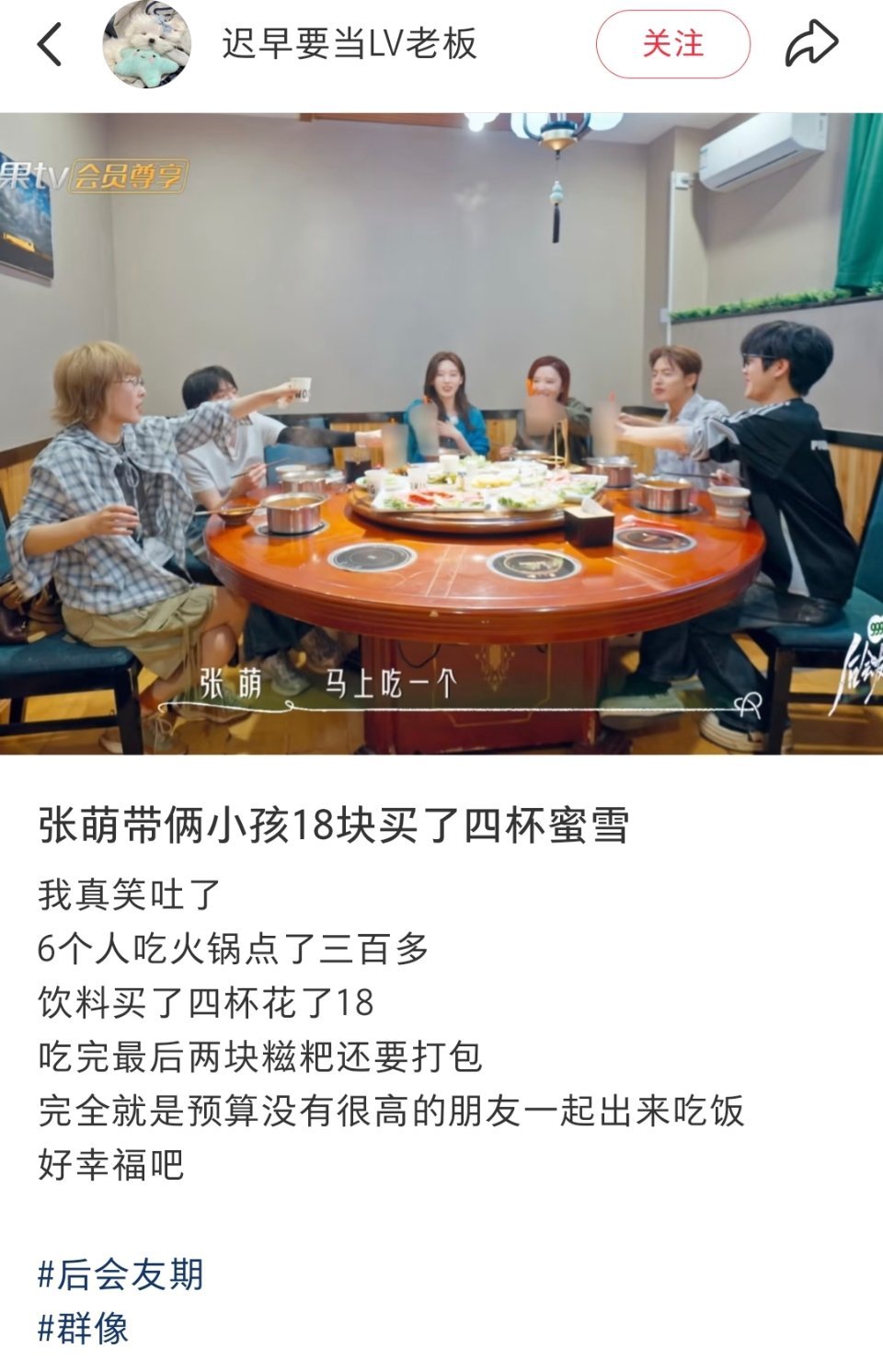
Viewers have turned its small, human moments into national benchmarks. When the cast agreed to leave for an airport at four in the morning and actually departed almost exactly on time, one well-liked post marvelled that "even real travel shows can't manage a punctual departure" (真正正经的旅游节目都做不到准时出发) — a compliment that doubled as an indictment of every glossy travel format that promises spontaneity and delivers choreography.
The show's biggest export is a sentence. Watching singer Xu Fei confront her old friend Li Na on a plateau, viewers heard her cry "I walled myself in, Li Na!" (我画地为牢啊,厉娜) — and within a month the phrase had escaped the show entirely, becoming a national sentence template appended to complaints about work, autumn and unrequited love, in the internet-wide meme cycle The Paper traced. Xu Fei's renaissance has even resurrected an old anecdote: in 2017, Li Jian wanted to pay her an authorisation fee before covering her song "The Prose Poem Father Wrote" on a TV contest, she declined, and he insisted on signing a formal contract anyway — a story now retold across Baidu's trending board as a parable about respecting songwriters, where it is trending again.
This week the show's reality reached past the cameras. Actor Ma Tianyu, one of the cast, opened a brief livestream that lasted under five minutes before his staff shut it down. The reason: his comment sections had flooded with people demanding he relitigate a 2024 dispute from an old drama set, in which fellow actor Li Mingde accused him of diva behaviour and the production accused Li Mingde of breaching his contract — an ugly episode that ended with Li Mingde jailed for six months over a separate car-smashing incident. Ma Tianyu has said the affair was a "calamity" in his life and does not want to discuss it; on the show itself he talks about trauma and boundaries, and fans read the shutdown as him practising what he preaches. The episode has reignited a debate the show keeps provoking: one commenter defending another cast member, Li Yitong, after strangers read malice into her playful fan replies, put it bluntly — a celebrity's "alive-person flavour" (活人味) is being eaten away by people determined to take offence.
All of it redounds to Mango TV, whose writing team is trending in its own right this week under the heading "a group of geniuses has joined Mango's copywriting team". Users quote the network's International Women's Day promo — "Don't ask what she does, for all the world's hardness, softness, sharpness and sweetness are her; may she be steely, may she soar" — as evidence the house style was no accident.
On Zhihu, the question being argued is why the show works in a market of interchangeable formats. The finale will test whether unscripted friction can hold a national audience to the last credit roll.