Romance Novelist Files Real-Name Tax-Evasion Report Against Actress in Escalating Feud
One of China's most-read romance novelists has escalated her public feud with an actress into a real-name tax-evasion report — the kind of accusation that has ended entertainment careers before, even though the tax authorities have yet to say a word.
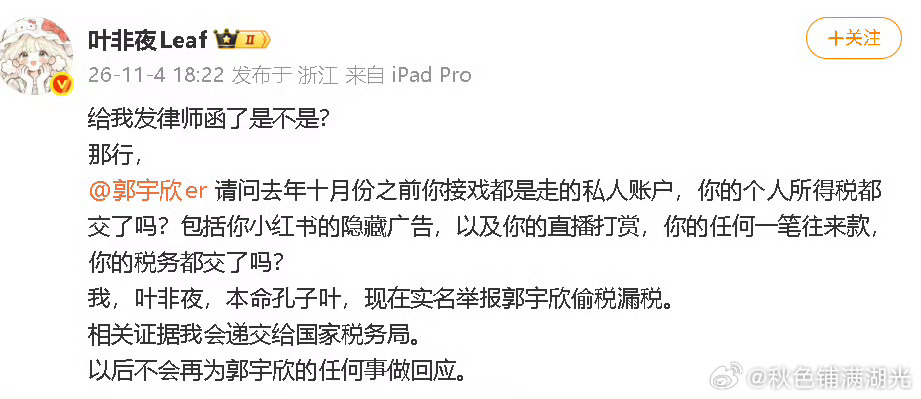
On the evening of November 4, the novelist who publishes as Ye Feiye (叶非夜) — her real name is Kong Ziye — turned a gossip feud into something with regulatory weight. In a post aimed directly at the actress Guo Yuxin, she alleged that before October 2025, every acting fee Guo collected was paid through private accounts, that sponsored posts on Xiaohongshu and livestream tips went untaxed, and that she had reported Guo under her real name for tax evasion. In the post itself, which drew more than 20,000 likes within hours, she said the evidence would go to the State Taxation Administration and that she would not respond to anything else about Guo Yuxin.
The accusation matters because of what a confirmed tax case does in China's entertainment industry. Since the Fan Bingbing case in 2018 and a wave of follow-up investigations, a substantiated tax scandal reliably ends endorsement contracts and pulls an actor's completed works off streaming platforms. That is why a real-name report — even one the tax bureau has not acknowledged — is not just another salvo in a celebrity spat.
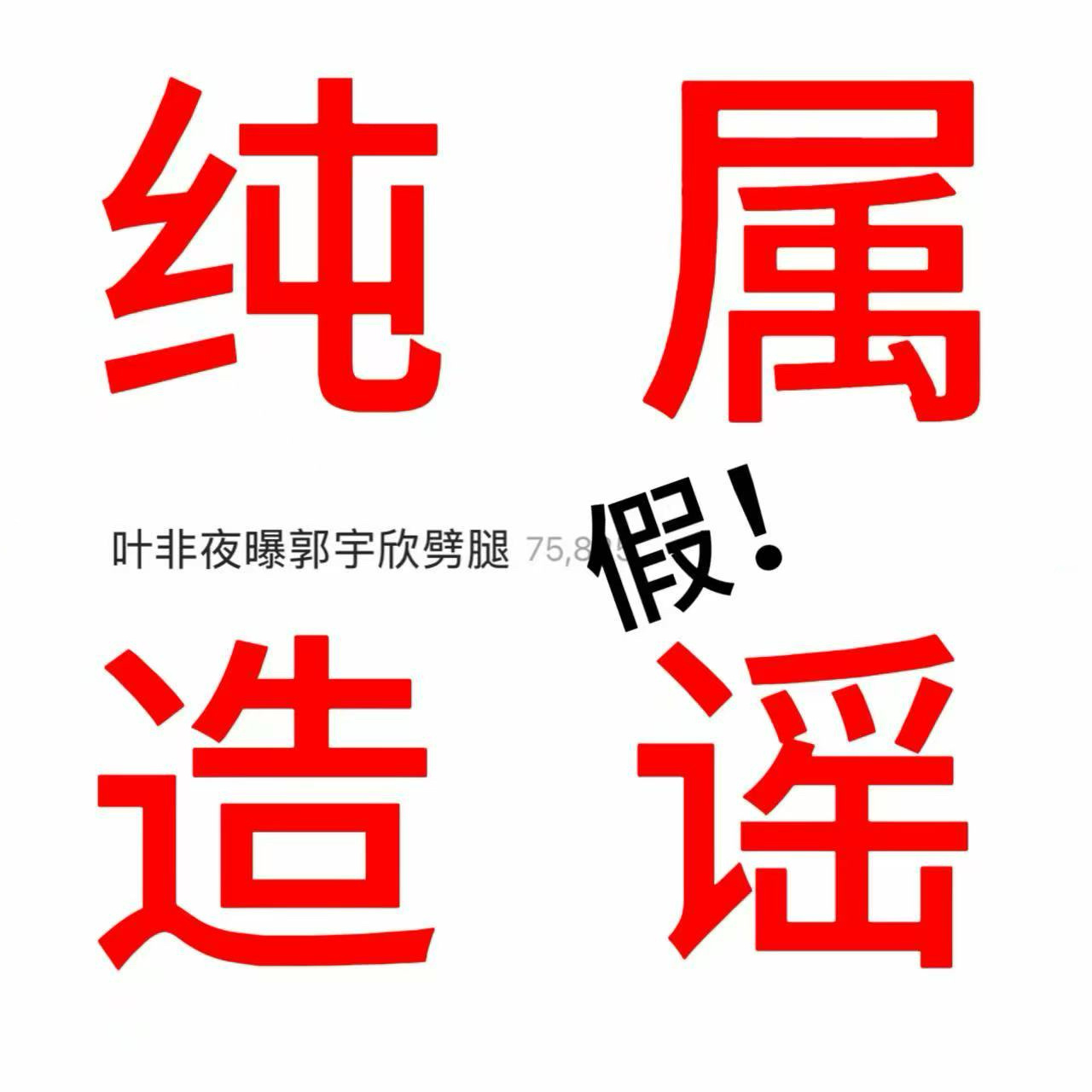
The report is also a counter-escalation. Guo's side had moved first the same evening: her studio account called Ye's earlier cheating allegations "pure fabrication" (纯属造谣), posted a red-stamped graphic saying exactly that, and circulated a lawyer's statement from attorney Xie Mengchuan of Beijing Zhongjing Law Firm. The statement, published by Sina Entertainment, invokes Article 1024 of the Civil Code, demands that defamatory posts be deleted, says evidence against the accusing account has been preserved, and confirms that Guo will sue.
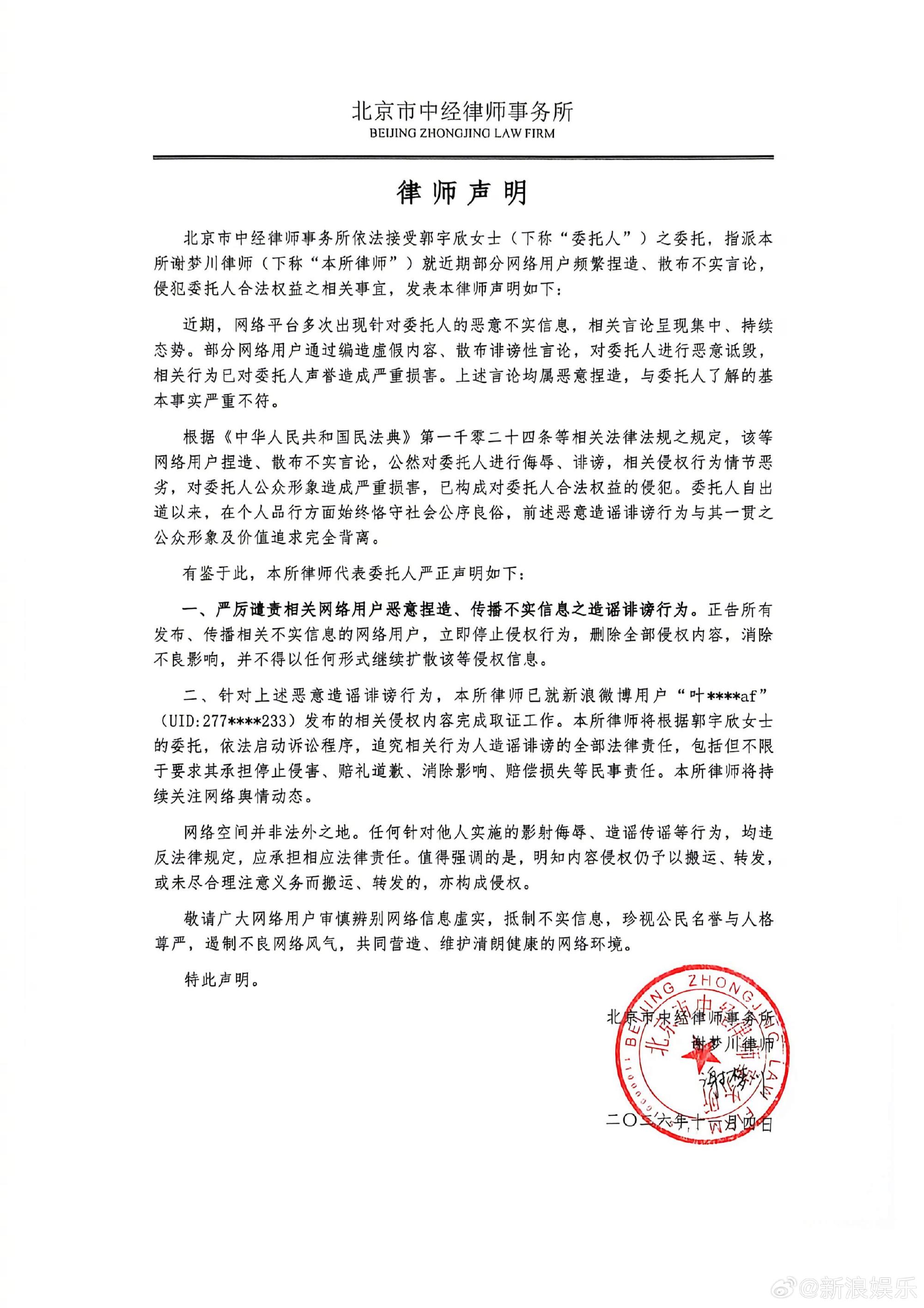
"The internet is not a lawless place" (网络并非法外之地), the statement declared — a phrase Chinese readers know as the standard opening move of a defamation campaign. Ye's response was to move the battlefield somewhere harder to fight: the tax office. And her critics did some digging of their own. Cover News reported that Kong Ziye's media company, founded in December 2024 with 500,000 yuan in registered capital, has reported zero employees enrolled in social insurance for two consecutive years — a detail netizens read as ammunition against someone demanding tax compliance. The two have form: the novelist and the actress had collaborated on four adaptations of Ye's work, a reminder that in China's drama economy, the writer whose IP feeds a production and the actress who stars in it are bound together long before a feud blows up the contract.
Ye also fired a public question at the other person her account implicates, actor Zhang Liren — "you told a lot of people on your birthday that your girlfriend cheating wasn't true?" — as Sina Entertainment's roundup of the evening reads like a legal docket in the making: a cheating accusation, a denial, a lawyer's letter, a counter-letter, and now a report to the tax authorities.
Where it goes is an open question. China's tax authorities do not comment on reports under review, and if past cases are a guide, confirmation can take months — or never come at all. What is already clear is the choreography: entertainment disputes that once played out in gossip accounts now escalate, within a single evening, from relationship allegations to the kind of financial accusation that regulators cannot ignore.