Viewers Spotted an AI Watermark — Printed Backwards — in China's Biggest Costume Drama
Frame-by-frame audits of the hit drama Jia Jin Chai found an AI-generation watermark left in the broadcast — mirrored, as if the shot had been flipped. The studio and platform have said nothing, and the find lands on a show that already ended its run with 255 ad slots.
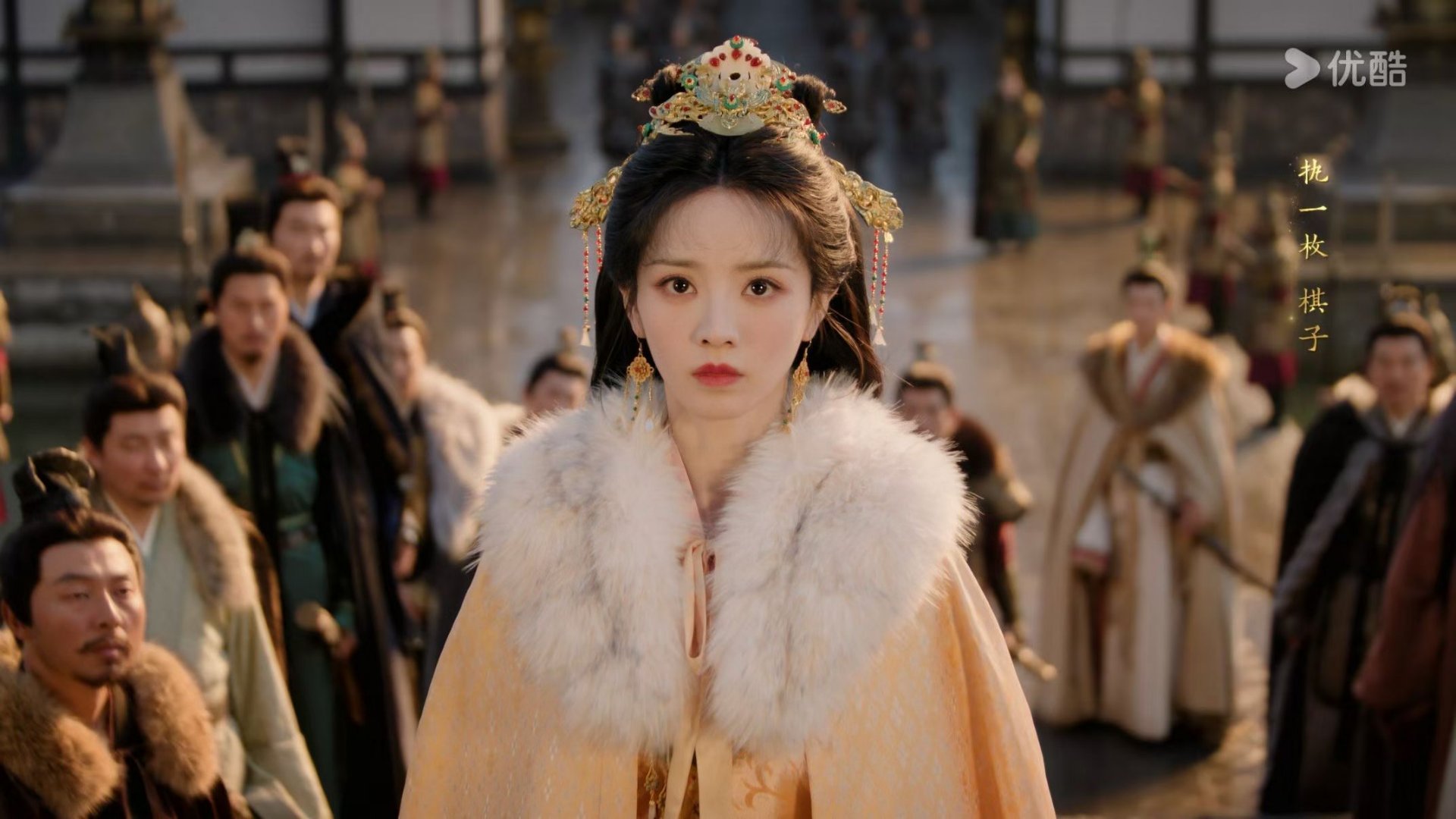
The audits that Chinese viewers run on their hit dramas have found something new: an artificial-intelligence watermark that the production forgot to remove — and left facing the wrong way. The show is Jia Jin Chai (嫁金钗, roughly "Marrying the Golden Hairpin"), the Youku costume drama that just ended its run with a finale packed with 255 ad slots. This time the story is not what was added to the picture, but what was left in it.
A post that drew nearly 12,000 likes this week reported that a shot in the drama carries a leftover AI-generation watermark — and that the mark is reversed, as if the frame had been mirrored in editing. The drama's official account and the platform have made no comment.
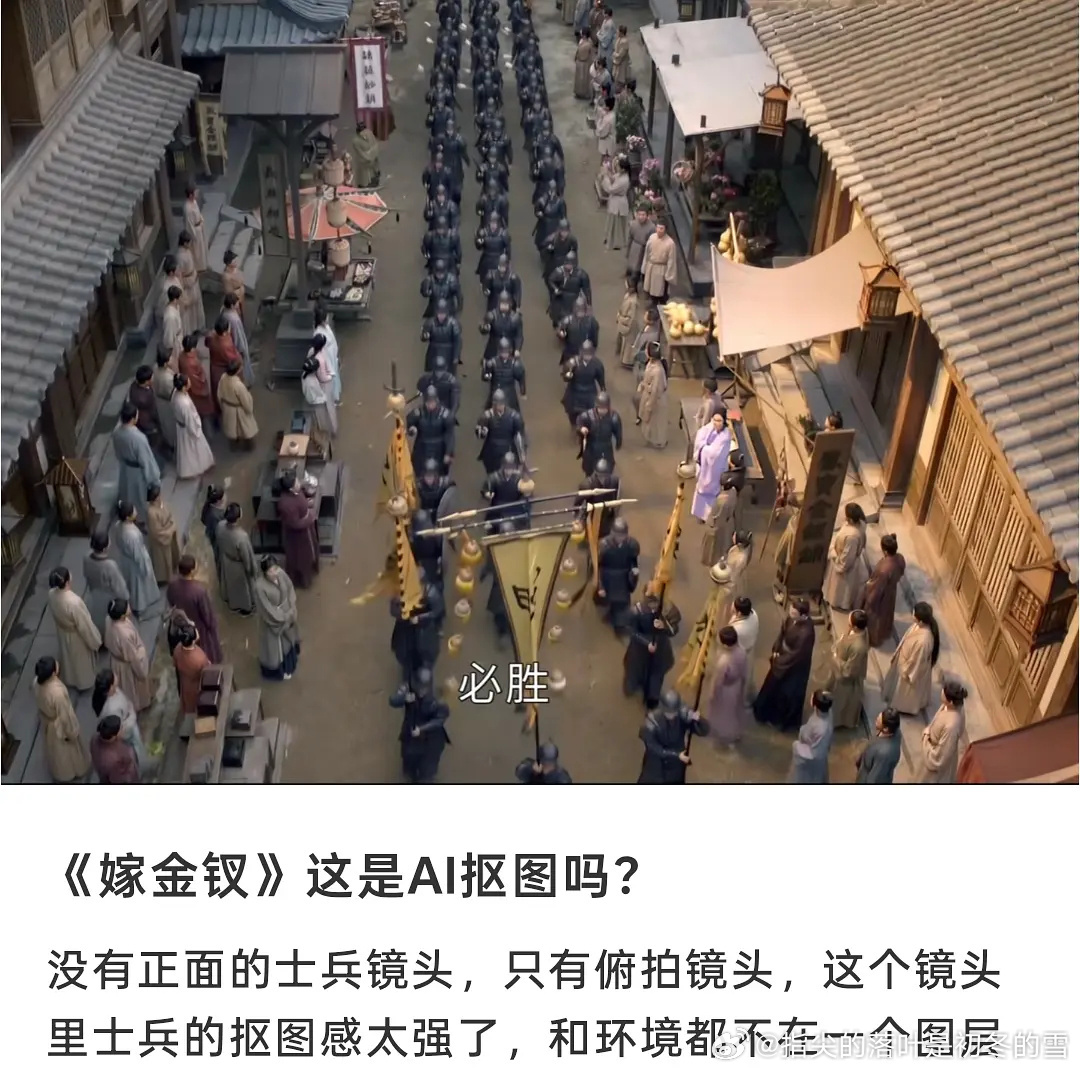
The scene audiences zeroed in on is an overhead view of soldiers marching, with no frontal shots anywhere in the sequence — commenters argue the figures look cut out, "not even on the same layer as the environment," the tell of a generative composite dropped onto a plate rather than filmed. It is exactly the kind of forensic scrutiny that has become routine for Chinese hits: viewers now put their dramas on trial frame by frame, pausing to catch continuity errors, stunt doubles and, increasingly, machine-made imagery.
The reaction is notably softer than the find itself. One fan's post — "the slip with the empty shots is a regret, but Wei Rao's comeback story and the slow trust rebuilding between two people across a misunderstanding still carry real feeling" — treats the watermark as an embarrassing blemish on a drama she otherwise wants defended. The show has genuine goodwill to spend: it has been a ratings phenomenon, drew lines of overseas fans at a Singapore event, and its finale monetization was covered breathlessly in the trade press.
The scrutiny outside the fan bubble is less forgiving. In Hong Kong, HK01 catalogued two "anti-intellectual" plot flaws in the drama — headlined by the heroine walking into the crown prince's residence and castrating him, then walking out without facing the death penalty the setting's own laws demanded. A Zhihu question asking how to evaluate that plot beat is trending on the platform's board.
What the watermark episode really exposes is a production detail international viewers rarely see from the outside: generative AI is now woven into mainstream Chinese drama pipelines — for crowds, empty shots and set extensions — and the quality control has not caught up with the marketing. A watermark a compositor forgot to crop, printed backwards, is a small thing. That it survived to broadcast on one of the year's most-watched shows says the pipelines are running faster than anyone is checking.