A Leaked 4,000-Yuan Salary Exposes the Economics Behind China's Esports Reunion Hits
Two professional gamers who reconciled on camera have become China's biggest variety-story — and a leak that one was paid 4,000 yuan a month by his club, with an apology demanded before any raise, has turned their friendship into a debate about how esports actually pays.

The two most talked-about people on Chinese social media this week are professional video-game players, and the argument is not about their play. Bai Xiaochun and Qingzhi — the game tags of two stars of Tianba, a club in China's Peace Elite League (PEL) — rose to national fame the way almost nothing does: by repairing a broken friendship on camera. Since October 22, Mango TV's reunion format 《后会友期》 has followed the pair as they "settled accounts" over two years of silence caused by distorted second-hand messages. Both have gained more than 400,000 followers since; the show itself hit an 81.2% market share on streaming charts, a figure normally reserved for hit dramas.
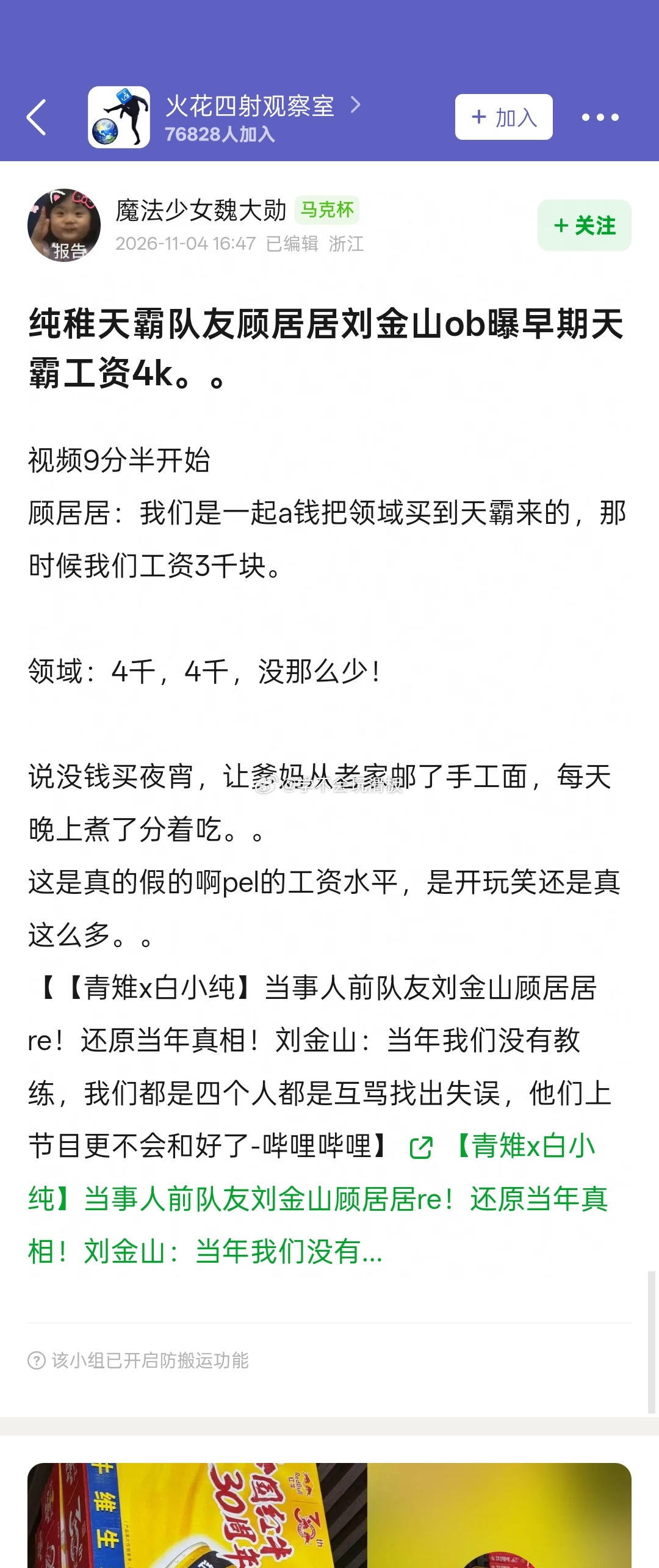
This week the story turned from heartwarming to damning. Leaked posts claim that in his early Tianba days, the club paid Bai Xiaochun 4,000 yuan a month — a fraction of what top PEL players earn — and that management demanded he apologise before any raise. One circulating screenshot of a handwritten note carries the line "it's not my problem, but management insists I proactively apologise to get a pay raise" (不是我的问题,但是管理层非要我主动道歉才能给涨工资). A widely shared thread assembled the receipts, including a group-chat screenshot in which former teammates recall pooling money to buy out his contract and asking whether "4k, 4k — not that much!" was really the going rate in the league.
The leak has landed differently than a typical esports scandal because the audience is no longer just gaming fans — and the two fandoms are now colliding. When the show's next-episode preview showed the pair "falling out" again, gaming commenters judged it by competitive standings: one viral post accused Qingzhi of "labelling" Bai Xiaochun an alcoholic and a slacker, invoking the arena creed that "being bad at the game is the original sin" (电子竞技菜就是原罪). Variety-show viewers pushed back — one put it directly: "This is a show about friendship. We're talking about people, not your rankings. Take 'skill is destiny' back to your own forum."
Fame has its own costs. On November 5, Qingzhi was mobbed at Hangzhou's Xiaoshan airport — corralled by a crowd of phone-wielding fans until he took refuge in a toilet, unable to move through the terminal. He is 21 years old, a 2005-born PEL champion and former finals MVP whose celebrity now rests on a friendship narrative rather than a trophy.
Underneath the drama sits the thing Chinese readers are actually arguing about: what a young professional gamer is worth, and who decides. Esports presents itself as a meritocracy of skill, yet the leaked wage and the apology-for-raise story suggest something closer to the club-shop indenture that Chinese workers will recognise from other industries. A reunion show meant to settle old wounds has instead opened the ledger. Whether Tianba — or the league — answers the 4,000-yuan question may matter more to its future than anything that happens on camera.