Markets Split the Day After the Midterms: Blue Chips Rally While AI Hardware Sinks
The Dow hit a record above 53,000 the day after Democrats swept Congress, while the Philadelphia Semiconductor Index fell more than 10% in two days — and Chinese analysts are reading the split as a policy verdict on the AI trade.
On the first full trading day after Democrats swept both chambers of the US Congress, the market delivered two opposite verdicts at once. The Dow Jones Industrial Average surged more than 3% to a record close above 53,000, with Microsoft and Apple pulling the blue chips higher. In the other direction, the Philadelphia Semiconductor Index dropped more than 10% across two sessions, leaving Nvidia down 6.7% at a 4.5-trillion-dollar market value and wiping double digits off memory-chip makers: SanDisk fell 17%, Micron 12.6% and Western Digital 13.5%. The VIX volatility gauge jumped more than 60% in a single day.
Chinese analysts were quick to supply the mechanism. The split, one widely shared post by the finance commentator 岚论 argues, is about policy rather than earnings: a Democratic Congress is expected to push AI regulation and tighten approvals for new data centers — and, crucially, the Texas governorship flipped to a Democrat who had campaigned on pausing data-center construction in a state that is the world's data-center capital. "Funds instantly fled the 'burn-cash-with-no-return' hardware narrative," the post reads, "for cloud providers and consumer blue chips with certain cash flows" (资金瞬间就从"烧钱没回报"的硬件叙事,跑到了有确定现金流的云厂商和消费蓝筹里).
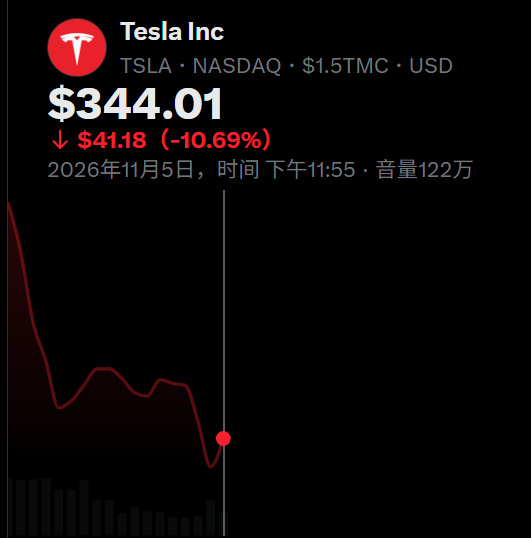
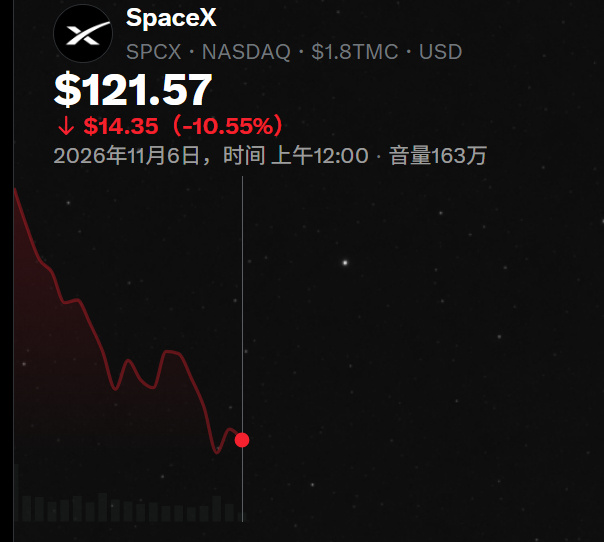
The other casualty was Elon Musk, whose record $474 million bet on the Republicans came up empty on Tuesday. Tesla fell 10.1% and SpaceX 7.4% the following day, and the Weibo finance account 包容万物恒河水 summed up the mood in four words — "Poor Ma, poor Ma" (牢马啊,牢马) — above screenshots of both share charts in free fall. Speculation that President Trump might issue an emergency pardon for Musk has begun circulating alongside the market coverage, as a trending hashtag of its own.
For Chinese readers, none of this is an abstract American story. China's own tech boards spent October unwinding the same trade, closing the month down more than 23%, and the line that has haunted Chinese retail investors all autumn — first your savings, then your job — was coined about exactly this kind of repricing. The Baidu hot list carried the semiconductor rout alongside the election results, and Yicai, a Chinese financial wire, ran live briefs on every leg of the decline.
The next test arrives quickly: US jobs data due the following evening, which the same Weibo post warned readers to brace for — "if you can't read this market, don't force it." Whether the split between record blue chips and a cratering AI trade holds, or the whole board takes the hardware route, is now the question both Washington's new Congress and China's chip-heavy retail portfolios are waiting on.