Prosecutors Indict Former Securities Chief Yi Huiman on Bribery Charges
Yi Huiman, who ran China's securities regulator through the boom-and-bust years of its stock market, has been formally indicted for bribery, with prosecutors tracing the alleged graft back a quarter century. The case is the anti-corruption campaign's biggest move into finance this year.

The announcement came from the Supreme People's Procuratorate on Wednesday morning, in the terse formula Chinese readers know well: Yi Huiman, former deputy director of the Economic Affairs Committee of the national advisory body, has been arrested and indicted for suspected bribery, with his case assigned to the Intermediate People's Court of Qingdao, in Shandong province.
The rank is what makes it land. Before his political appointment, Yi spent his career at Industrial and Commercial Bank of China — rising from deputy chief of the Jiangsu branch to president and chairman of the world's largest bank by assets — and then served as Party secretary and chairman of the China Securities Regulatory Commission, the agency that writes and enforces the rules for China's stock markets. Prosecutors allege he used each of those positions, in turn, to seek benefits for others and illegally accept property in "especially huge amounts."
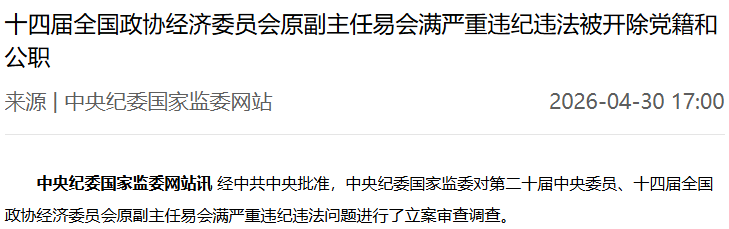
Two details in the business-press coverage carry the story's weight. Caixin's report noted that the investigation reaches back twenty-five years — to his time as a provincial branch deputy chief — a signal that auditors worked through his entire career rather than a single office. And the expulsion from the Party and public office, announced in April, came five months before the indictment, the usual interval in Chinese corruption cases between internal discipline and prosecution.
On Weibo, where the news ranked third for the morning, the reaction was filtered through retail investors' long grievances about the market. One commenter recalled that traders once read the chairman's face as auspicious, "saying he would make everyone rich." Another posted screenshots of a fund portfolio down nearly 11 percent over the year, next to the verdict that losses like these were the work of "worms" in the system. The market itself, meanwhile, was digesting the news on the last trading day before the National Day holiday, with the A-share hashtag trending alongside the arrest.
For an outside reader, the case is a window into how China polices its financial establishment: investigation by the national discipline inspection system, expulsion, transfer to prosecutors, and a trial in a province chosen to be far from the capital. Yi's indictment puts the man who led China's securities regulator on the same track. A verdict, when it comes, will close one file — the question of what the case says about the years he presided over is the one investors are still arguing about.