China Finally Puts a Face to 'Aunt Mei,' the Country's Most Notorious Child Trafficker
A 2010 registration photograph has revealed the real face of 'Aunt Mei,' China's most notorious child trafficker, as her trial opens — ending a decade in which the country knew her only through a police sketch her own neighbours doubted.
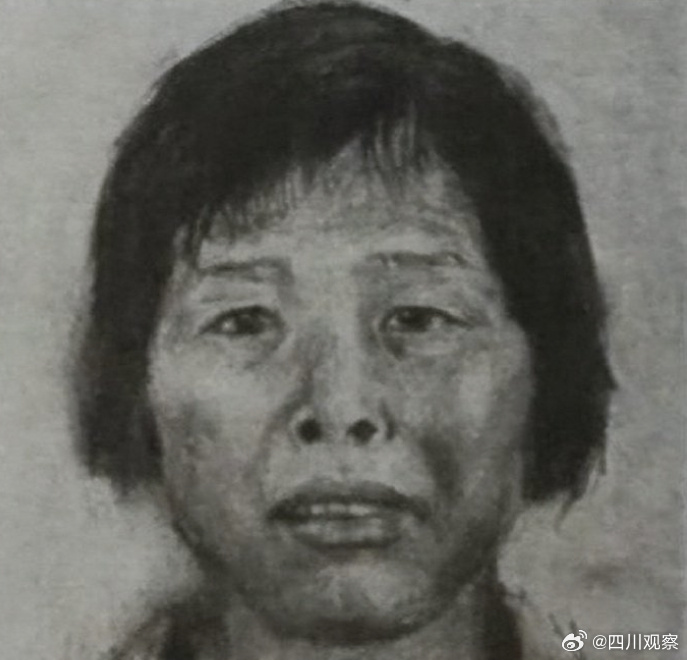
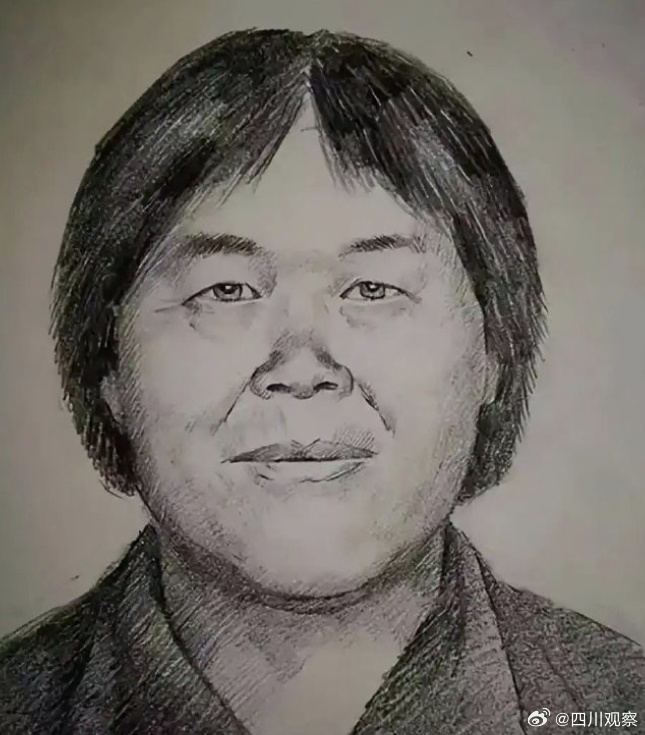
For more than a decade, China knew its most notorious child trafficker only as a pencil sketch: a round-faced woman with centre-parted hair, circulated for years in missing-children campaigns under the alias "Aunt Mei." On September 9, that changed. The Paper reported that a registration photograph of Xie Jiamei, taken in 2010 and confirmed through multiple sources, shows the real face of the woman accused of brokering the sale of at least nine children — the first time the public has seen her.
The reveal answered a question her own neighbours had been asking. When Aunt Mei was captured in a Guangzhou urban village late last year, the people who bought mangoes from her tricycle for years said the famous police sketch looked nothing like her — a detail we covered when her life in hiding first came to light. The 2010 photo, grainy and scanned, now settles it: a woman about 1.5 metres tall, short-haired, unremarkable in every frame.
Xie, 65 and originally from Guangxi, was the downstream half of a trafficking ring that terrorised southern China. Ring leader Zhang Weiping and accomplice Zhou Rongping were executed in 2023; court findings described Aunt Mei's role as finding buyers, moving the children between provinces and taking a cut — a complete "abduct, transport, sell" chain. All nine children taken in the case were located by 2024. Xie herself was arrested in December 2025 in Guangzhou's Baiyun district, and with the case now before a court, details once sealed inside the investigation are finally emerging.
The photo's release was met first by the parents. Shen Junliang, whose son was among those taken, told Sichuan Observer: "That's the face. I've waited too long for it." In the same statement he counted the cost differently than a verdict ever could — not only the years of watching a child grow up, but "the peaceful life a family should have had." A post carrying his words spread across Weibo within hours.
Another of the nine, Zhong Bin, abducted as a child and found in 2024 through facial-recognition matching, learned Xie's real name only in August, from a formal notice naming her in his own case file. He told Dahe News he holds no illusion about what any sentence can restore. "Even if she gets the death penalty, it can't make up for what nine families lost all these years," he said. "It would just let a stone drop from the heart." His adoptive parents, he added, have since deleted his phone number — a detail that resonated sharply in a country still arguing over how to punish the buyers side of trafficking.
What has gripped readers since is how ordinary her hidden life was. Red Star News reporters traced her to a ten-square-metre rented room in Baiyun district, 500 yuan a month, where she lived with a son who has intellectual disabilities and is now in state care. Her WeChat carried no photo and the nickname "Yuzhen 2"; her Moments feed had been silent for years, its last entry a 2022 photograph of a red-brown iron door with a silver padlock. Police who sealed the room catalogued, among the rubbish and clothes, a bottle of an oil-like substance labelled "not for consumption, pending testing."
The story is running at the top of Baidu's search board and sits among Zhihu's most-followed questions of the day. The case has entered trial at a Guangzhou court, and the sentence — with nine families weighing what justice can mean — is the open question everything now waits on.