Why Chinese Girls Hang 'Borrow a Pad From Me' Badges on Their Bags
A charm reading 'you can ask me to borrow a sanitary pad' has become a quiet fixture on Chinese bags — and this week it startled Japanese and Korean users, and surfaced on Simone de Beauvoir's grave in Paris.
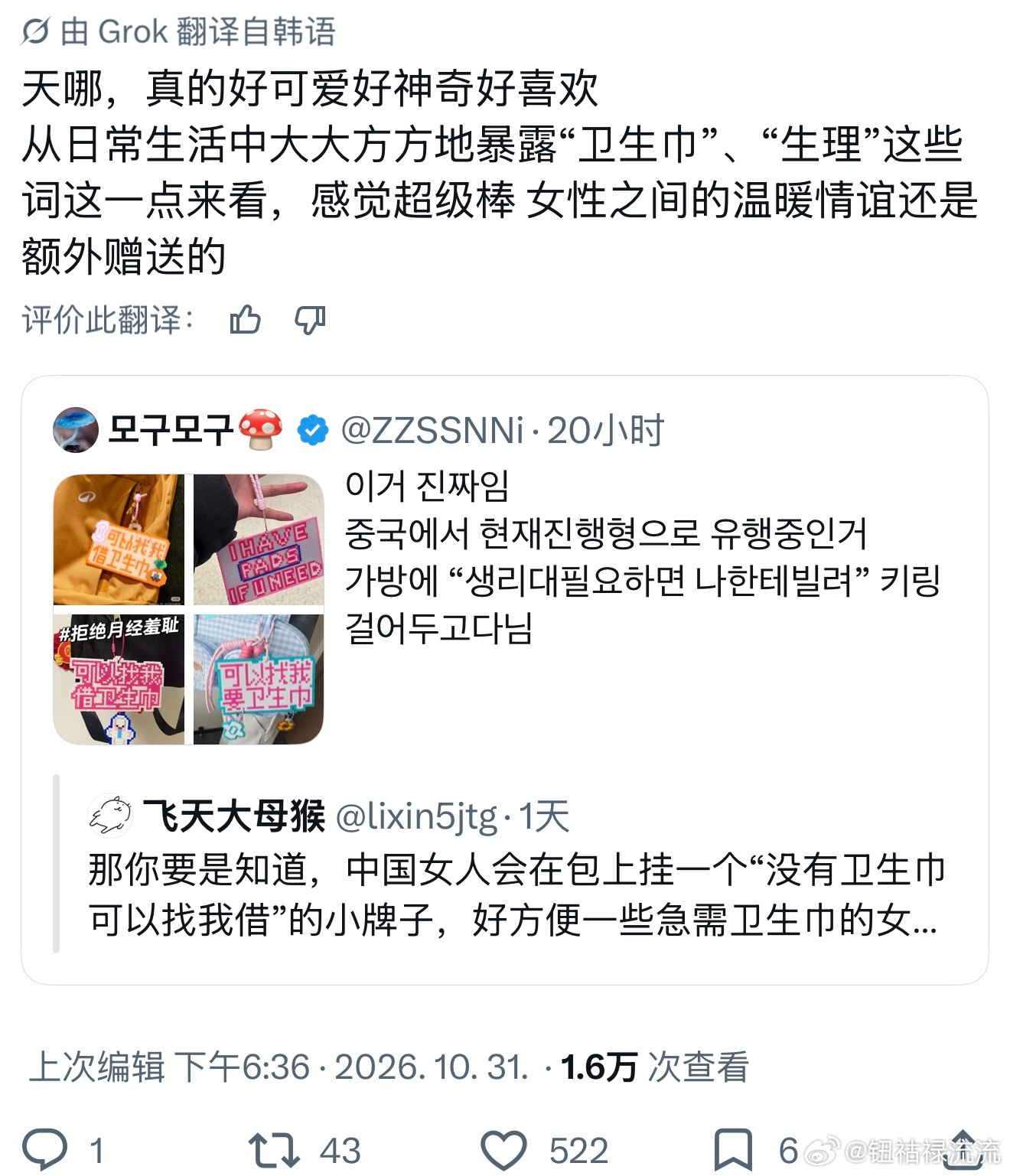
A small charm hung on a schoolbag has become this week's most unexpected export. The badge reads "可以找我借卫生巾" — "you can ask me to borrow a sanitary pad" — and on Saturday night a screenshot of it being explained to Japanese users, relayed by a Weibo post liked more than 10,000 times, set Chinese social media laughing about the culture gap it exposed.
The exchange began with a Japanese man's post: he had been startled to see a schoolgirl openly checking a period-tracking app on a train, and wondered whether such a thing should be looked at in public. A reply answered him flatly: if he ran into a Chinese girl wearing a badge that said she had pads to lend, he would be truly startled. A Korean user chimed in to confirm the custom, and a Chinese blogger compiled the thread under the trending hotword "中国女生借卫生巾震撼外国网友" — Chinese girls' pad-lending shocking foreign netizens. One Chinese comment in the thread became the story's catchphrase: the local ethos, it explained, is that even an enemy asking to borrow a pad would be lent one.
The badge itself is a real object, not a joke. Photos circulating this week show beaded and embroidered keychains clipped to bags, sometimes in English — "I HAVE PADS IF U NEED" — and users explain them plainly: the charm marks its wearer as someone a stranger can approach, turning a private, awkward need into an open offer. Posts tagged with the phrase frame it as part of 拒绝月经羞耻, "rejecting menstrual shame" — one video post urges women to tear off the label entirely, treating menstruation as simply part of life rather than something to hide.
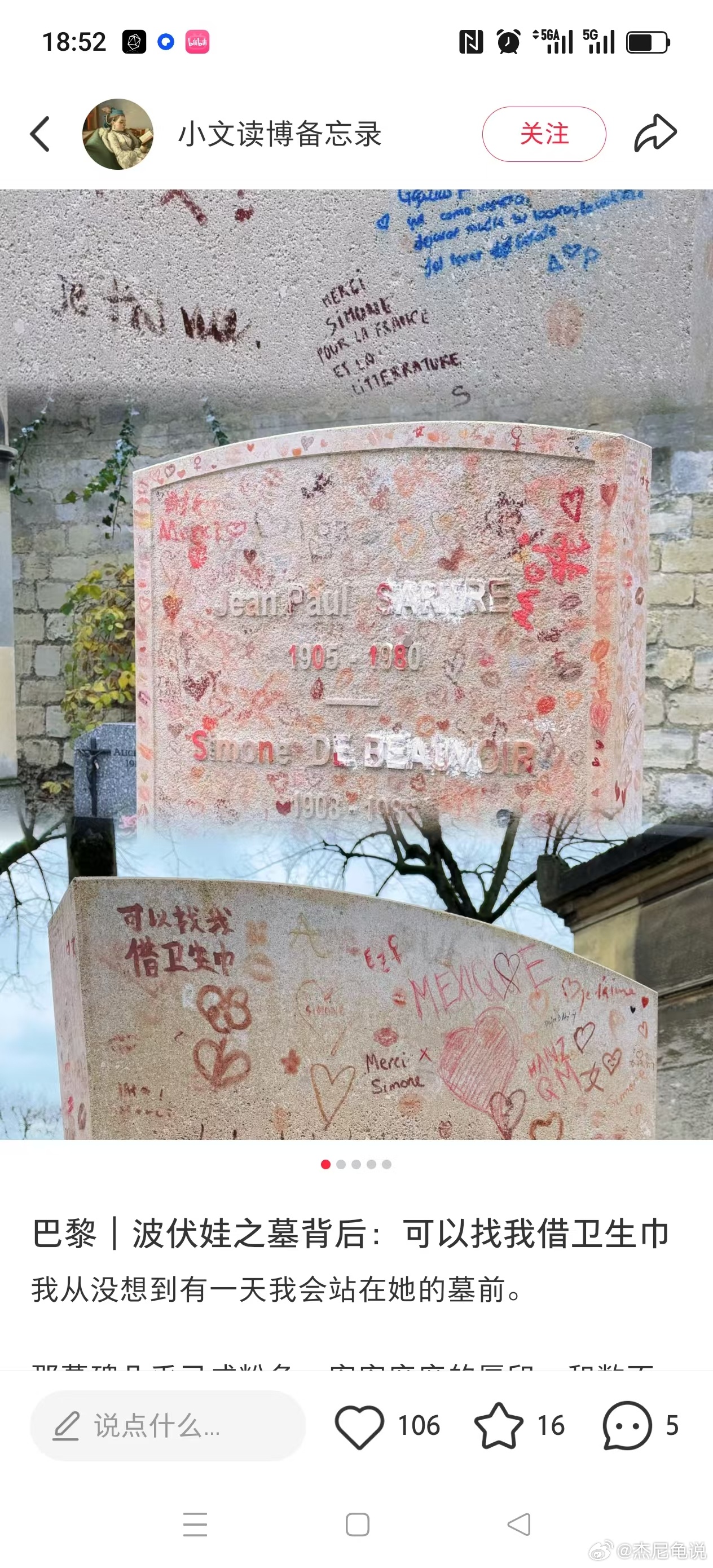
How far the idea has traveled was the surprise. A post from Paris showed the same phrase handwritten in red on the gravestone of Sartre and Simone de Beauvoir in Montparnasse Cemetery, with the photographer's caption: "I never thought I would one day stand in front of her grave." Whether the writer knew the Chinese custom or arrived at the same idea independently, Chinese commenters read it as their gesture, translated.
What outsiders find startling, the posts suggest, is the register. In the viral thread, menstruation is not euphemized as "that time of month" nor bundled into discreet packaging — it is a promise made in public, on a bag, in embroidered letters. The charm's power is that it is unasked: nobody has to build up courage to make the request, because the offer is already hanging there. As one user put it in the compiled thread, the badge says what Chinese girls mean: whoever you are, if you need one, you need only ask.