Why China's AI Short Dramas Skip the Qing Dynasty
The algorithm-made mini-dramas filling Chinese phones have one conspicuous absence: no Qing palace intrigue. The avoidance is a window into the gap between official historiography and popular feeling.
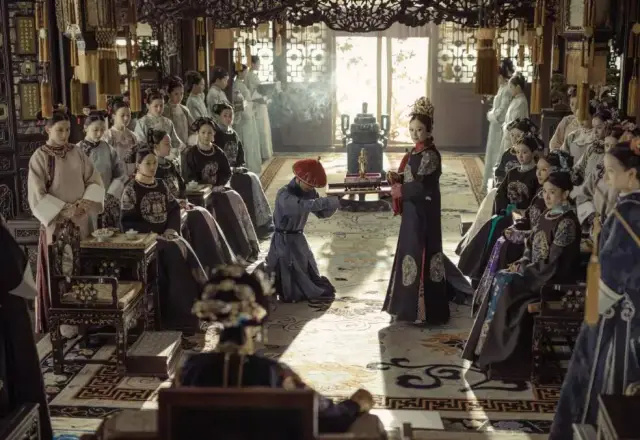
On the endless feeds of China's short-drama apps, one setting has gone missing. The homemade, AI-assisted mini-dramas that now churn out immortal-cultivation sagas, rebirth revenge plots and urban-plutocrat romance by the tens of thousands have almost entirely abandoned the most bankable backdrop in Chinese television: the Qing palace.
A commentator who writes on technology and strategy under the name Chen Jing put it bluntly in a post liked nearly 6,000 times this week: AI short dramas have "completely abandoned" the genre that traditional Chinese television perfected over decades. Palace intrigue, eunuch politics, concubine rivalries — the costume drama that once filled prime time — is nowhere in the new feed. What fills it instead are cultivation fantasy, rebirth revenge and urban wealth drama, with war-heavy stories set in the Northern and Southern Dynasties, the Tang, the Song and the Ming.
The scale of what is being avoided is enormous. Hongguo, the short-drama platform, counts 168 million daily users and annual revenue above 15 billion yuan, making it one of China's biggest apps — and, as this site has reported, half of China's AI compute at one point this year was busy making short dramas. These are not fringe experiments; they are where a vast audience gets its fiction.
Chen Jing's explanation is a lesson in how Chinese historical memory works. In web fiction, he notes, there is an unwritten rule: any story that time-travels into the Qing must end in rebellion against it. Writing a Qing setting where the hero simply serves the dynasty is a "poison point" — a premise readers reject outright. In the popular imagination, he says, the Qing is simply a dynasty with a bad name, and the AI short dramas, made cheaply and without the industry's institutional investment, reflect that feeling with unusual directness. Their war stories, he writes, carry a "grassroots people's history" that professional television, bound by its own conventions, does not attempt.
There is a regulatory edge to it, too. Another commentary on the trend lists the three gates an AI drama must pass — technology, censorship review and traffic — and notes that Qing palace settings, with their ethnic and political sensitivities, sit awkwardly with the official "unity" framing of Chinese history, in which the Qing is the dynasty that assembled modern China's territory. Depicting it as villainous at court is a risk the big studios manage carefully; the AI studios, which can make a series for a few hundred yuan, simply skip it.
Chen Jing ends by hoping the two worlds converge — that AI short dramas grow more polished while the traditional industry listens harder to its audience. Whether that happens, he suggests, will say a lot about whose sense of history Chinese entertainment ultimately serves.