2027 Is Already China's Favorite Year: A Nine-Day Spring Festival Without Make-up Workdays
A viral breakdown of China's 2027 calendar shows Spring Festival will run nine straight days without a single make-up workday — and the excitement says a lot about how Chinese holidays actually work.
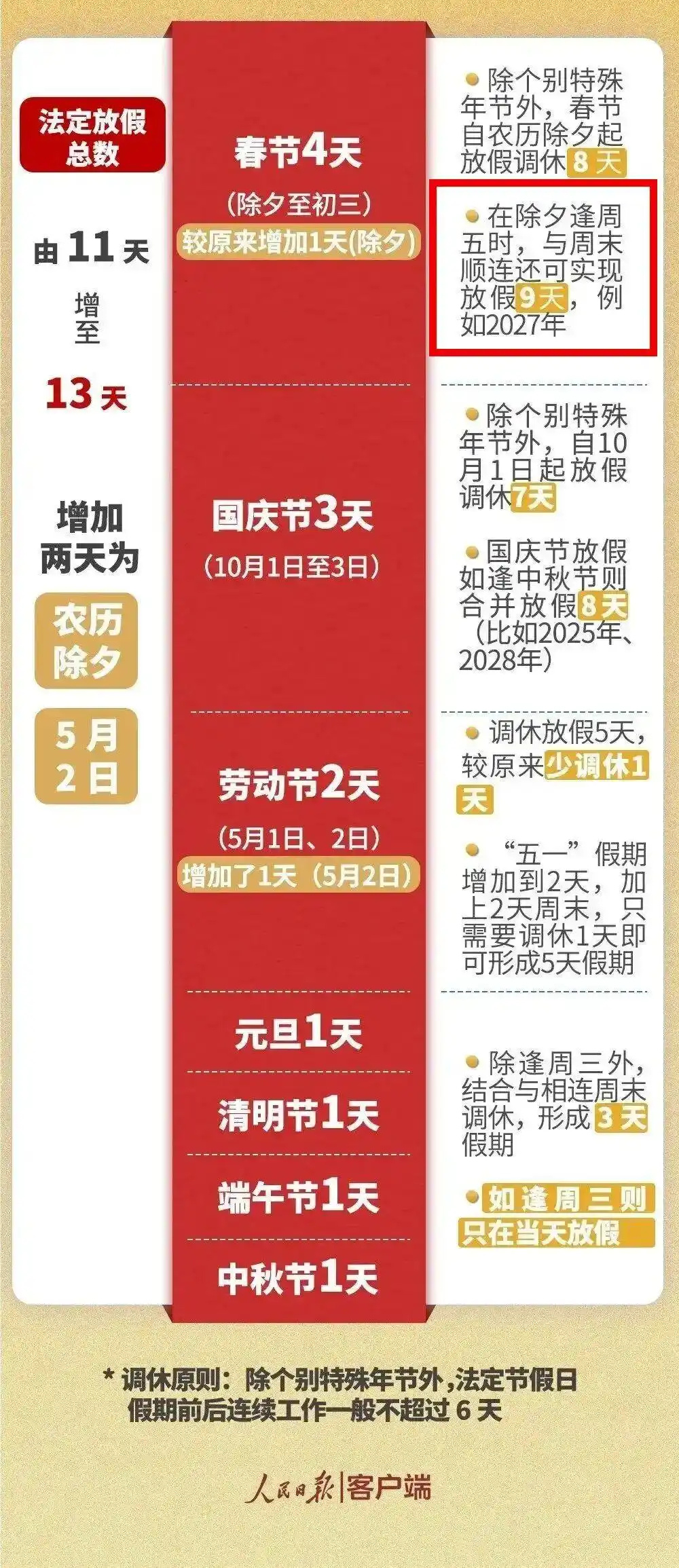
When a Sina News post broke down the 2027 holiday calendar this week, it read less like an announcement than a forecast for the national mood. New Year's Day falls on a Friday, so 2027 opens with three days off and no make-up workday. Qingming lands on a Monday, gluing itself to the weekend. And the Lunar New Year — the big one — begins on Friday, February 5, when New Year's Eve coincides with the start of a weekend. Under China's current holiday rules, that means a nine-day Spring Festival stretch, the longest possible without the make-up workdays Chinese workers love to hate.
Within hours, the phrase sweeping Chinese social media was that 2027 will be the most comfortable year in recent memory — an odd thing to say about a year that has not started, and a revealing one about how Chinese holidays actually work.
Since January 2025, when a revision to the national holiday rules took effect, Chinese workers have had 13 statutory days off — two more than before, with Lunar New Year's Eve and May 2 added to the official calendar. A reminder of that total, posted by the news outlet Vista Comma, drew more than 20,000 likes this week. But the number on paper matters less than how those days are stitched together, which is where the much-disliked system of tiaoxiu comes in: to manufacture a longer break from a midweek holiday, the state "swaps" a weekend, declaring a Saturday or Sunday a workday in exchange. The result is longer holidays purchased with six-day workweeks before and after — an arrangement resented widely enough that a year in which the calendar aligns naturally is treated as a gift.
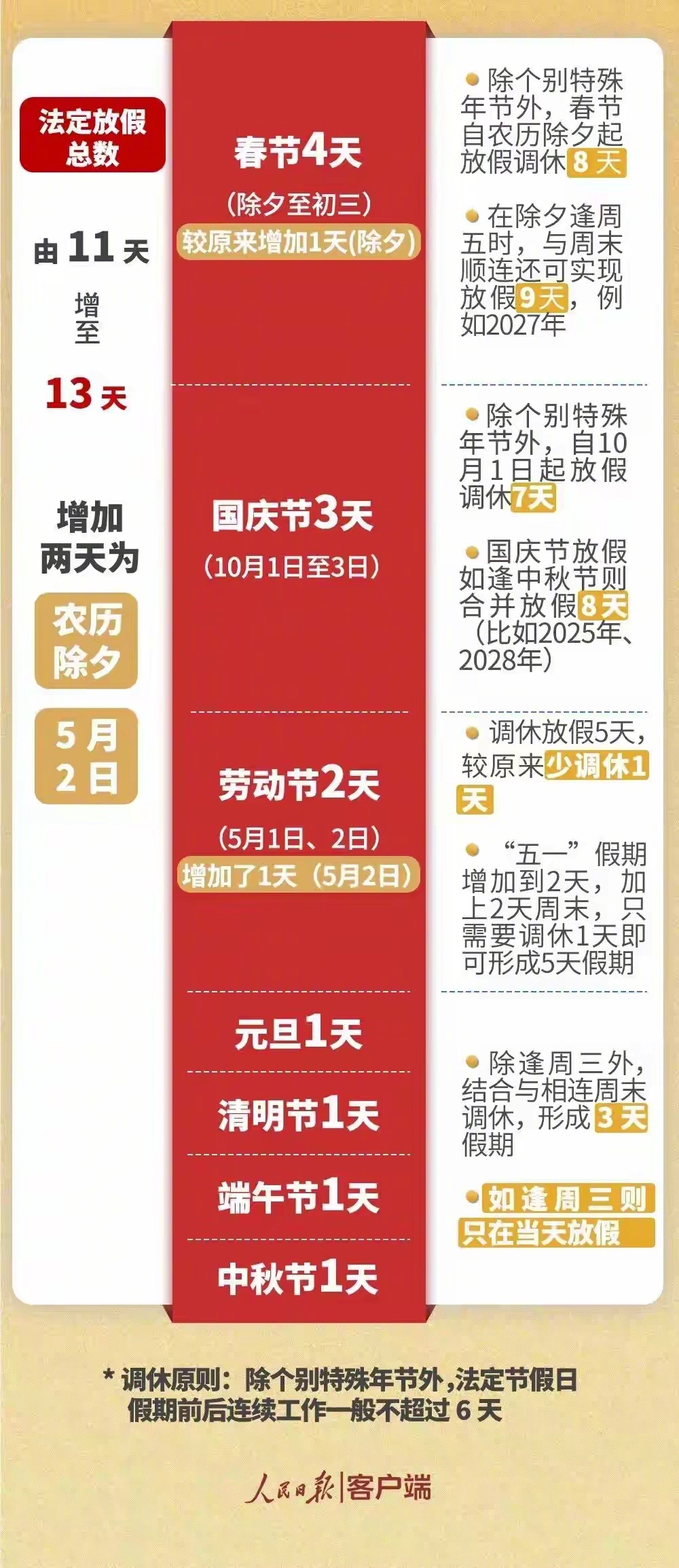
Not everyone was swept up. One commenter put the catch plainly: "There are more holiday days now, but the number of workdays hasn't fallen. Isn't that something?" (放假天数变多了,但工作天数没减少,你说神奇不神奇). A Weibo science commentator went further, pointing out that nothing about the 2027 calendar is new: the two extra statutory days date from the 2025 revision, which simply made New Year's Eve and May 2 official holidays — and that under the current rules, any adjusted run of consecutive work before a holiday should not exceed six days.
For now, the next statutory holiday on the calendar is New Year's Day 2027, more than a year away. The nine-day Spring Festival that has Chinese social media counting the days falls in February 2027 — and for once, the country won't have to work a Saturday to earn it.